.png)
Q2 Construction Forecast 2026: Trends, Risks, and Opportunities Ahead
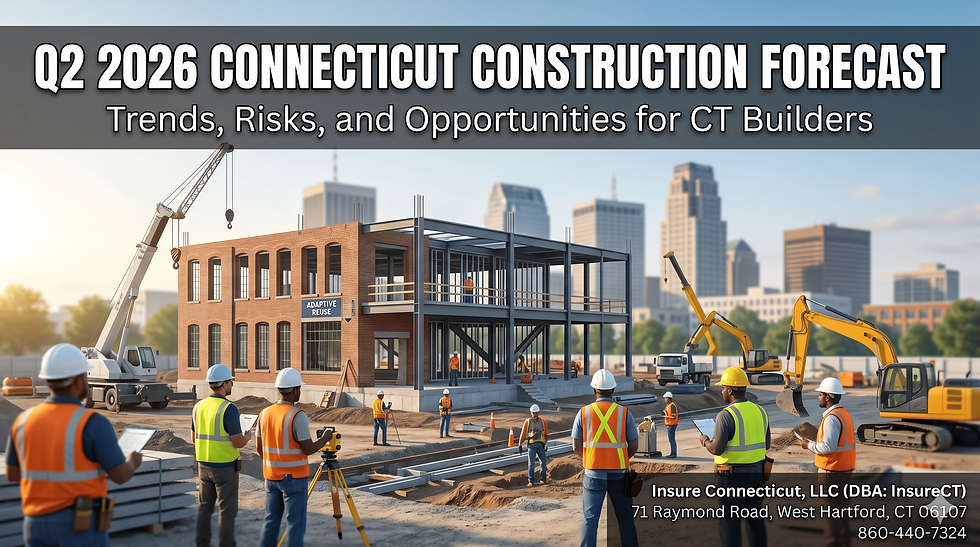
The Connecticut construction landscape in 2026 is a study in "cautious optimism." As we move into the second quarter, the "uncertainty" that defined the previous year has shifted into a period of stabilization—but it is a stabilization that requires a more sophisticated approach to risk management than ever before.
For contractors in West Hartford, developers along the I-395 corridor, and tradespeople across the Nutmeg State, Q2 marks the beginning of the peak building season. However, the ground beneath the job site has changed. While interest rates have leveled off, creating a "predictable runway" for project delivery, new challenges like 50% tariffs on certain raw materials and a 20% spike in commercial auto insurance premiums are forcing a total rethink of the traditional "bid-and-build" model.
At Insure Connecticut, LLC (InsureCT), we’ve spent the last several months analyzing these shifts to help our clients stay ahead of the curve. Whether you are managing a massive adaptive reuse project in a former mall or a focused suburban residential build, understanding the Q2 forecast is the first step toward a profitable year.
Key Benefits & Challenges in the 2026 Market
The Opportunity: Sectors Driving CT Growth
Despite a cooling in traditional office and retail spaces, several "powerhouse" sectors are fueling Connecticut’s construction engine this quarter:
Infrastructure & Public Works: As we approach the sunset of major federal funding cycles later this year, there is a frantic push to "shovel-ready" status for bridge, transit, and utility projects across CT. Many firms are currently browsing the CT Department of Administrative Services (DAS) bid board for high-value state projects.
Data Centers & Tech: Driven by the AI boom, data center spending is projected to grow significantly this year. These projects require specialized electrical and HVAC trades who carry specific professional liability endorsements.
Multifamily Stability: While single-family starts remain selective, multifamily housing remains a primary driver of growth in urban hubs like Hartford and New Haven.
The Reality Check: Persistent Risks
While the work is there, the risks are more complex. 2026 has introduced a "mixed market" for insurance and logistics that can catch a growing firm off guard.
1. The "Social Inflation" of Liability
General liability and umbrella rates are under sustained pressure. "Nuclear verdicts"—jury awards exceeding $10 million—are becoming more common in the Northeast. For a CT contractor, this means that the $1 million or $2 million limits that were "standard" five years ago may now leave your entire business exposed.
2. The Material Volatility Hangover
While raw material markets have calmed from their 2025 peaks, new tariffs on steel and aluminum (reaching up to 50% in some categories) mean that "flat" pricing is a myth. Projects bid 18 months ago are seeing a high volume of change orders as contractors struggle to absorb these costs without going into the red.
3. The Labor-Safety Paradox
The industry needs to attract approximately 349,000 net new workers in 2026 to maintain equilibrium. This shortage has led to a reliance on less experienced crews, which has historically correlated with a rise in workers' compensation claims due to inadequate safety training. Furthermore, new Connecticut labor laws (HB 5275) are increasing contractor responsibility for subcontractor wages, adding a layer of financial and legal risk to every job site.
Best Practices & Strategic Tips for Q2
To thrive in the current climate, CT firms must move from reactive to proactive. Here is how you can insulate your business from the volatility of 2026:
1. Reassess Your Replacement Costs
With building material costs still 25-30% higher than pre-2025 levels, many property and "Builders Risk" policies are dangerously undervalued. If a fire occurs on-site today, your 2024-era coverage limit might only cover 70% of the rebuild costs.
Insure Connecticut LLC Tip: Ask us for a mid-project valuation update. We can help you adjust your limits to reflect real-time Connecticut market rates.
2. Implement "Telematics" for Your Fleet
Commercial auto insurance is the "pressure point" of 2026, with rates jumping up to 20% for larger fleets. Carriers are now demanding proof of safety.
Action Step: Install GPS and driver-monitoring systems. Showing an underwriter that your team avoids hard braking and speeding can be the difference between a standard renewal and a massive premium hike.
3. Review Subcontractor Agreements
As margins thin, subcontractor default risk is rising. Ensure your "Hold Harmless" agreements and "Additional Insured" endorsements are airtight. You don't want to be held liable for a sub's mistake simply because their insurance lapsed or was inadequate.
4. Leverage "No-Regret" Procurement
Given the tariff situation, successful firms are moving away from "just-in-time" delivery.
Strategic Stockpiling: If you have the capital and the storage, lock in your steel and lumber early in the quarter.
Escalation Clauses: Never sign a fixed-price contract in this environment without a "tariff-adjustment" or "material escalation" clause.
Trends & Future Outlook: Looking Toward 2027
As we look beyond Q2, two major trends will define the winners in the Connecticut market.
Sustainable & Climate-Responsive Design
In 2026, we are seeing a shift toward "Whole-Life Carbon" standards. CT state projects are increasingly prioritizing environmentally preferable purchasing (EPP).
Insurance Impact: Green building certifications (like LEED) can sometimes lead to specialized "Green Upgrade" coverage in your property policy, which pays for the extra cost of eco-friendly materials after a loss.
The Rise of the "Digital Twin"
More Connecticut firms are using AI and sensors to create "Digital Twins"—virtual replicas of their projects. This allows for predictive maintenance and real-time safety monitoring.
The Future: Expect insurers to offer "Smart Site" discounts for firms that use AI to predict and prevent water damage or structural failures during construction.
Frequently Asked Questions (FAQ)
Is my current liability coverage enough for the 2026 legal climate?
Likely not. Due to "social inflation" and rising legal costs in Connecticut, we recommend that most mid-sized contractors review their Umbrella and Excess Liability limits. A single serious accident can now result in a multi-million dollar settlement.
How can I reduce my Workers' Comp premiums while labor costs are rising?
Focus on your Experience Modification Rate (X-Mod). By implementing a formal "Return-to-Work" program and partnering with a local CT clinic for immediate injury care, you can keep your X-Mod low, which acts as a multiplier to lower your premiums.
What is the "Builders Risk" stabilization I’m hearing about?
After years of volatility, the Builders Risk market is finally leveling off (0-5% increases for non-hazard areas). However, if your project is in a high-wind or flood-prone zone in coastal CT, you may still see tighter terms and higher deductibles.
Should I bundle my business insurance?
Absolutely. Bundling your General Liability, Commercial Auto, and Workers' Comp with a single carrier—or through a strategic agency like InsureCT—often unlocks "package discounts" and eliminates coverage gaps between different policies.
What are the "small business insurance essentials" for a new CT contractor?
At a minimum, you need General Liability, Workers' Comp (required by CT law for almost all employers), and a Tool/Equipment floater. As you grow, professional liability and cyber insurance become critical.
Conclusion: Securing Your Seat at the Table
The construction forecast for the remainder of 2026 is bright, but the margin for error has never been thinner. The "cautious optimism" of the market means that while the projects are plentiful, the risks—from tariffs to "nuclear" lawsuits—are lurking just beneath the surface.
At Insure Connecticut, LLC, we don’t just sell policies; we act as your risk management partner. We understand the specific nuances of the West Hartford business community and the broader Connecticut regulatory environment. Our goal is to ensure that when you win a bid, your profit stays in your pocket, not in a legal settlement or a surprise insurance hike.
Ready to bulletproof your Q2 projects?
Don't wait for a claim to find out if your coverage is sufficient. Contact us today for a comprehensive "2026 Risk Audit." Whether you're looking for a quick quote or a deep dive into your current policy structure, our team is ready to help.
Insure Connecticut, LLC (InsureCT)
📍 71 Raymond Road, West Hartford, CT 06107
Your local experts in Connecticut construction and business insurance.


Comments