.png)
How Much Does Wine Collection Insurance Cost and What Does It Actually Cover?

For many residents across the Gold Coast of Connecticut: from the historic estates of Greenwich to the waterfront properties in Old Saybrook: a wine collection is more than just a hobby. It is a tangible asset, a liquid investment, and a labor of love that often takes decades to curate. Whether you have a modest 500-bottle cellar or a multi-million dollar subterranean vault, the question isn't just about how you store it, but how you protect the financial value of that liquid history.
Many collectors operate under the dangerous assumption that their high-value home insurance automatically covers their wine. Unfortunately, standard homeowners policies are rarely equipped to handle the unique risks associated with oenology. From power outages during a Connecticut Nor'easter to accidental breakage during a move, the gaps in standard coverage can lead to devastating financial losses.
In this guide, we will pull back the curtain on wine collection insurance. We will address the "Big 5" topics: cost, problems, comparisons, reviews, and the best-of lists: to ensure you have the transparency you need to protect your private cellar effectively.
Why Standard Homeowners Insurance Often Fails Wine Collectors
The most common fear among collectors is that a catastrophic event will wipe out their cellar. While a standard homeowners policy does provide some coverage for personal property, it is usually capped and restricted.
The Problem with Sub-limits
Most standard policies have a "sub-limit" for collectibles. For example, your policy might cover your home’s contents for up to $200,000, but it might limit coverage for "jewelry, furs, and collectibles" to just $2,500 total. If you have a single bottle of 1945 Château Mouton-Rothschild, a standard policy wouldn't even cover the tax on that bottle, let alone its replacement value.
Excluded Perils
The second issue is the cause of loss. Homeowners insurance typically covers "named perils" like fire, lightning, and theft. However, the greatest risks to a wine collection are often "unnamed" in basic policies. These include:
Mechanical Breakdown: If your cellar’s cooling system fails while you are vacationing in the Hamptons, the resulting heat spoilage is usually excluded.
Accidental Breakage: If a guest or a member of your household staff drops a rare magnum, a standard policy will not pay for the loss.
Power Failure: While fire might be covered, a loss resulting from a power surge or a long-term outage: common in coastal Connecticut: is often a gray area or explicitly excluded.
To truly protect your assets, you need a personal article floater insurance policy specifically designed for wine.

How Much Does Wine Insurance Cost? (The Big 5: Pricing)
Transparency regarding cost is the foundation of a good relationship between an insurance broker and a private client. You deserve to know exactly what you are paying for.
In 2026, the market rate for specialized wine insurance generally hovers around $0.40 to $0.60 per $100 of insured value.
The Cost Breakdown
To put this into perspective:
$50,000 Collection: ~$250 per year.
$250,000 Collection: ~$1,250 per year.
$1,000,000 Collection: ~$5,000 per year.
While these are averages, several factors can influence your specific premium:
Location and Hazards: If your cellar is located in a flood zone (common in coastal Connecticut), or if the home lacks a central alarm system, your rates may be slightly higher.
Storage Conditions: Professional-grade climate control, backup generators, and humidity sensors can lead to "protective device" credits, lowering your premium.
Deductible Choice: Many collectors opt for a $0 deductible on their wine schedules. Choosing a higher deductible (e.g., $1,000 or $5,000) will lower the annual premium significantly.
Blanket vs. Scheduled: Generally, "blanket" coverage is more cost-effective for large, rotating collections, whereas "scheduled" coverage is tailored for high-value individual bottles.
Comparing Your Options: Blanket vs. Scheduled Coverage
When you sit down with a specialist at Insure Connecticut LLC to discuss your cellar, we will typically present two primary ways to structure your policy.
1. Blanket Coverage
Blanket coverage is the most popular choice for collectors who frequently buy, sell, and drink their wine. Instead of listing every bottle, you set a total limit (e.g., $500,000) with a per-bottle maximum (e.g., $2,000).
Pros: You don't have to call your broker every time you buy a case of wine. It offers administrative ease and flexibility.
Cons: You must prove the value and ownership at the time of the loss. If a bottle exceeds your per-bottle limit, you won't be fully reimbursed.
2. Scheduled Coverage
Scheduled coverage (also known as "itemized" coverage) requires you to list specific high-value bottles on the policy with a set "agreed value."
Pros: Total certainty. If a scheduled bottle is lost, you know exactly what the payout will be. This is essential for "blue chip" investment wines like those from Domaine de la Romanée-Conti.
Cons: Requires more paperwork and up-to-date appraisals. Every time you drink a scheduled bottle, you technically need to remove it from the schedule (though many policies have a buffer).
Summary Table: Which is Right for You?
Feature | Blanket Coverage | Scheduled Coverage |
Best For | Daily drinkers, rotating stock | Rare, investment-grade bottles |
Documentation | Required at time of loss | Required at time of application |
Value Basis | Market value at time of loss | Agreed value (fixed) |
Maintenance | Low (Automatic updates) | High (Must update the list) |
New Acquisitions | Usually covered automatically | Must be added within 30-90 days |
Common Problems and Fears: What Could Go Wrong?
In the spirit of radical transparency, let’s discuss the common problems collectors face and the "fears" that keep them up at night.
Spoilage and Temperature Variation
Wine is a biological product. Its chemistry is delicate. According to experts in oenology, even a few days at temperatures above 80°F can "cook" a wine, leading to irreversible oxidation.
Specialized wine policies cover "Mechanical Breakdown." This means if your cooling unit fails or the thermostat malfunctions, the loss of the wine's value is covered. However, many policies require that you have a maintenance contract or a temperature alarm system in place to honor this coverage.
Transit Risks
Buying wine at auction in New York or London and shipping it to Connecticut carries immense risk. Vibrations, heat spikes during shipping, and rough handling by couriers are common issues. A high-quality private client policy provides "Worldwide Transit Coverage." This protects your wine from the moment it leaves the seller until it is safely racked in your cellar.
The "Corked" Wine Problem (Radical Transparency)
One common question we receive is: "If I open a bottle and it is corked (TCA taint), is it covered?" The short answer is no. Insurance is designed to cover "sudden and accidental" physical loss. Natural spoilage, "corked" wine, or "bottle sickness" are considered inherent vices or natural aging processes and are almost universally excluded.
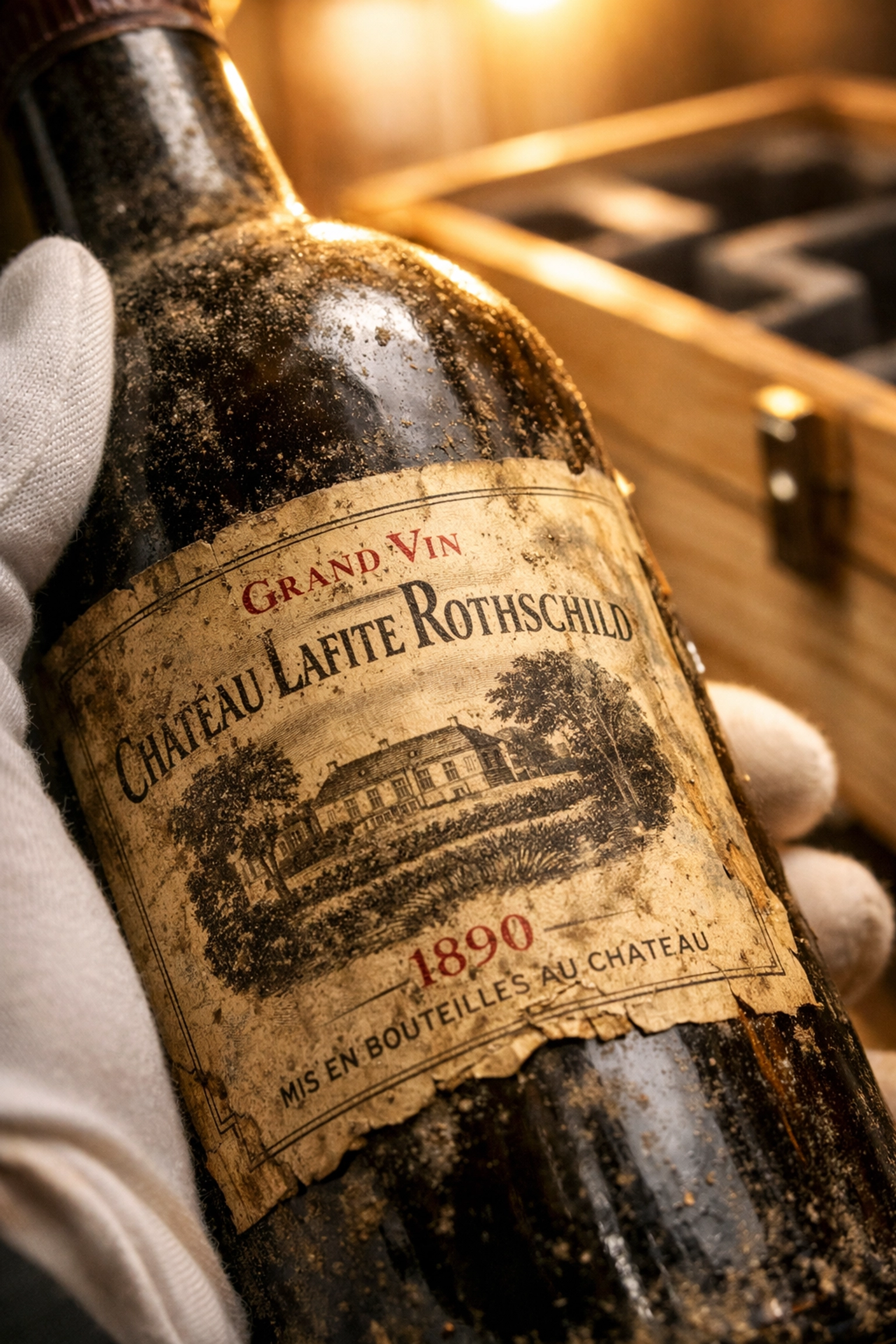
Best Practices for Managing a High-Value Cellar
Insurance is your financial safety net, but risk management is your first line of defense. To ensure your claims are paid and your collection remains pristine, follow these best practices.
1. Maintain a Digital Inventory
Gone are the days of paper ledgers. Platforms like CellarTracker are the gold standard for inventory management. In the event of a fire or total loss, having a cloud-based record of your purchase dates, prices, and bottle locations is invaluable.
Tip: Join the conversation on Reddit’s r/wine to see how other collectors are using technology to track their humidity and inventory.
2. Specialized Cellar Requirements
If you are building a custom cellar in your Greenwich estate, pay close attention to:
Vapor Barriers: Essential in the humid Connecticut climate to prevent mold.
Redundant Cooling: Having two smaller cooling units is safer than one large one.
Backup Power: Given CT’s history with storms, a dedicated backup generator for the cellar is a top recommendation from our risk experts.
Vibration Dampening: Ensure your cellar is not located directly under a high-traffic area or near heavy machinery like a home gym.
3. Professional Appraisals
For collections valued over $250,000, we recommend a professional appraisal every three to five years. The wine market is volatile; a vintage that was worth $500 last year might be worth $1,200 today due to a high score from a major critic or a decrease in global supply.
Trends for 2026: The Rise of Smart Cellars
As we look toward the remainder of 2026, technology is changing how we insure wine. "Smart cellars" equipped with IoT (Internet of Things) sensors can now communicate directly with insurance carriers.
Some insurers are beginning to offer "Parametric-lite" features, where a payout is automatically triggered if sensors detect that a cellar's temperature exceeded 75°F for more than 48 hours. This reduces the need for lengthy claims adjusters and ensures you can replace your stock quickly.
Additionally, we are seeing more interest in coverage for Wine-Adjacent Assets. This includes specialized glassware (like hand-blown Zalto or Riedel stems), professional-grade decanters, and even the cellar architecture itself. If you have invested $100,000 into the custom mahogany racking of your cellar, ensure that it is included in your dwelling coverage or as a separate rider.
FAQ: Questions Every Collector Asks
1. Does my insurance cover wine stored at a professional facility?
Most specialized wine policies provide coverage for "off-premises" storage. Whether your wine is in a bonded warehouse in Napa or a professional locker in Manhattan, your policy can extend to cover those assets. However, you should check if the storage facility has their own "Bailee coverage," which might act as the primary insurance.
2. What happens if I accidentally drop a bottle?
If you have a specialized wine policy, this is covered under "Accidental Breakage." Standard homeowners insurance usually excludes this as "mysterious disappearance" or simply a "user error."
3. How do I prove the value of a bottle that no longer exists (after a fire)?
This is where your digital inventory and purchase receipts are critical. If you don't have receipts, insurers look at historical auction data from sources like Sotheby's or Wine-Searcher to determine the fair market value at the time of the loss.
4. Can I insure my wine while it’s in transit during a move?
Yes. "Transit coverage" is a standard feature of high-end wine policies. Whether you are moving across town in West Hartford or across the country, your collection is protected from breakage and temperature spikes during the move.
5. Are there any "hidden" exclusions?
Common exclusions include:
Damage caused by vermin (mice chewing labels).
War or nuclear hazard.
Intentional acts (you cannot smash your wine and claim it).
Seizure by government or customs authorities.
6. Do I need a separate policy or just an endorsement?
At Insure Connecticut LLC, we can often add a "scheduled personal property" endorsement to your existing high-value home policy. This is usually simpler and more cost-effective than a standalone policy, as it consolidates your billing and simplifies the claims process.
Conclusion: Protecting Your Liquid Legacy
Your wine collection is a reflection of your taste, your travels, and your history. Protecting it requires more than just a sturdy rack and a cool basement. It requires a proactive approach to risk management and an insurance policy that speaks the language of a collector.
At Insure Connecticut LLC, we understand the nuances of the private client world. We don't just sell policies; we help you build a "Shoreline Sanctuary" for your most prized possessions. From Greenwich to Stonington, we are here to ensure that the only thing you have to worry about is which bottle to open next.
Next Steps for Your Cellar:
Perform a Mini-Audit: Count your bottles and estimate their current market value.
Check Your Thermostat: Ensure your cellar alerts are functioning.
Request a Review: Contact our team at Insure Connecticut for a comprehensive review of your current coverage limits.
Whether you are protecting a few cases of Napa Cabernet or a massive collection of Bordeaux First Growths, the peace of mind that comes with specialized coverage is the best vintage of all.
About Insure Connecticut LLC: Located in West Hartford, CT, we specialize in high-net-worth insurance solutions, including classic car insurance, yacht insurance, and luxury home protection. Our mission is to educate our clients and provide radical transparency in an often-confusing industry.
Contact Us: 71 Raymond Road, West Hartford, CT 06107 860-440-7324 www.myinsurect.com
For more information on the technical side of wine storage and maintenance, check out this YouTube guide on cellar cooling systems.
Comments