.png)
Managing the Mess: Operational Safety and Housekeeping for CT Redemption Centers

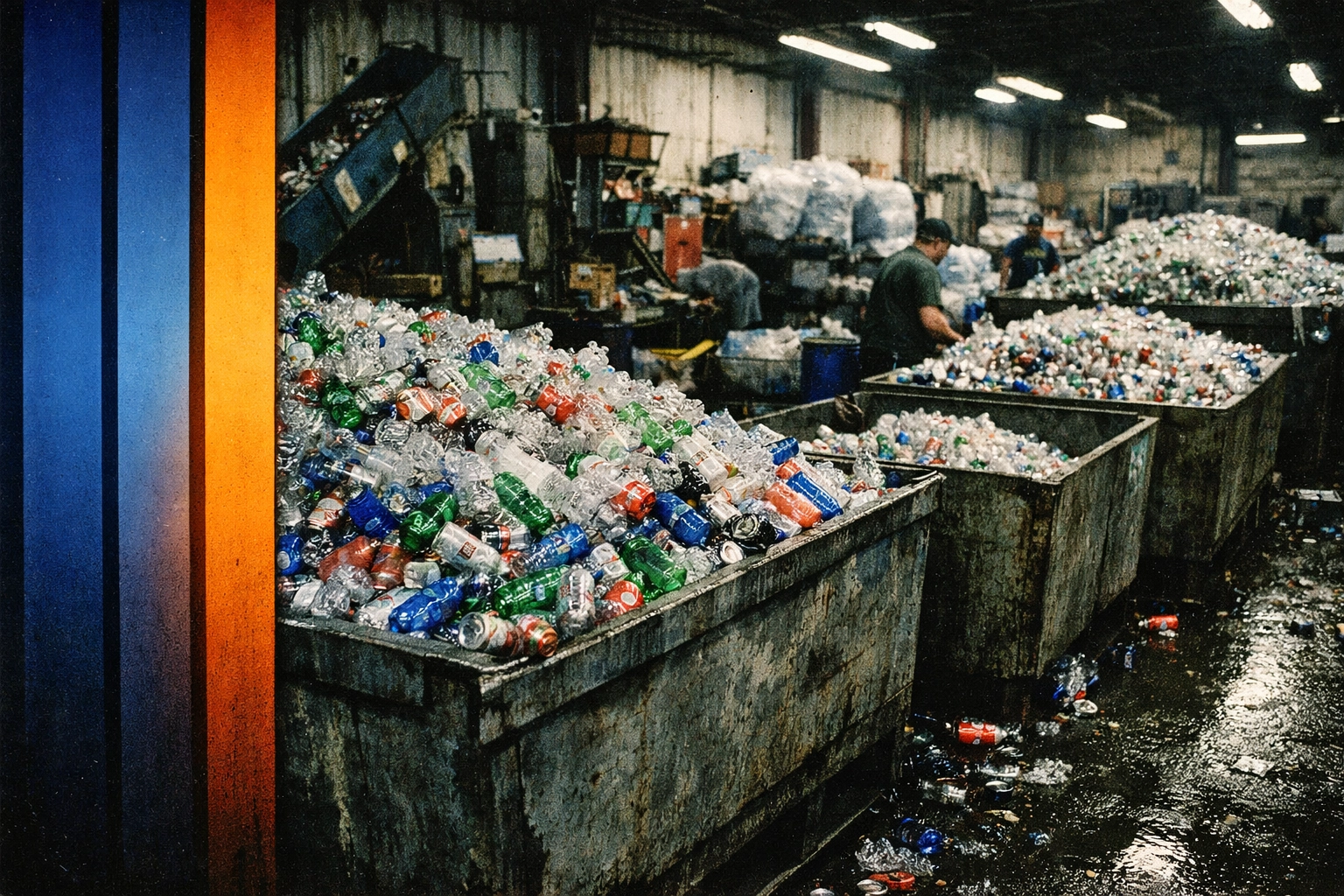
Let’s be honest: If you run a redemption center in Connecticut, your business smells like stale beer and old soda. It’s loud, it’s sticky, and on a hot July afternoon, it’s a logistical gauntlet. Since the state increased the deposit to 10 cents, the sheer volume of material moving through these facilities has skyrocketed. With that volume comes a massive increase in operational risk.
Redemption is not a passive retail business; it is a specialized industrial operation. When you ignore the "mess," you aren't just hurting your brand; you are actively increasing your workers' compensation insurance premiums in Connecticut. A single slip on a pool of leaked liquid or a deep laceration from a jagged glass bottle can send your MOD (Experience Modification) factor through the roof, costing you thousands in the long run.
This is Post 5 of our "CT Redemption Center Roadmap." Today, we are diving into the gritty reality of housekeeping and operational safety. We’ll talk about why the "broken machine" trope on Reddit’s r/Connecticut is a liability warning, how to protect your team from repetitive strain, and why general liability insurance in Connecticut depends on how well you sweep your floors.
The TAYA Perspective: Why Transparency About the Mess Builds Trust
At Insure Connecticut LLC, we follow the "They Ask, You Answer" (TAYA) philosophy. One question we hear often from center owners is: "Does the state of my floor actually affect my insurance rates?"
The short answer is: Yes, absolutely.
When an insurance inspector walks into your facility, they aren't looking at your profit margins. They are looking at your housekeeping. A messy facility suggests a lack of management oversight. If you don't care about the sticky puddle by the Reverse Vending Machine (RVM), the inspector assumes you also don't care about fire safety or machine guards.
Radical transparency means admitting that redemption centers are inherently dirty. By acknowledging the mess, you can create systems to manage it. This honesty builds trust with your employees, your neighbors, and your insurance carrier. When you are open about the challenges of managing 4,000+ containers per person per day, you can proactively address the risks instead of hiding them under a pile of uncrushed plastic.
Managing Public Perception: Odor, Noise, and Neighborhood Relations
You’ve likely seen the complaints. Local neighborhood groups often treat the opening of a redemption center like the opening of a landfill. This "NIMBY" (Not In My Backyard) sentiment isn't just a social hurdle; it’s a legal one.
The Odor Factor
Stale fluids ferment. In a confined space, this creates a biological hazard and a public nuisance. If your facility smells, your neighbors will complain to the Department of Energy and Environmental Protection (DEEP). Frequent inspections from DEEP increase the likelihood of discovering safety violations that lead to insurance claims.
Actionable Tip: Invest in high-grade industrial air scrubbers and daily floor scrubbing protocols.
The Noise Factor
Glass hitting glass is loud. The Wikipedia entry on Occupational Noise highlights how consistent exposure to high-decibel environments leads to permanent hearing loss. In CT, hearing loss is a valid Workers' Comp claim.
Actionable Tip: Require hearing protection for staff near crushers and use rubberized mats to dampen the sound of bin movements.
The Reddit "Broken Machine" Frustration
If you browse Connecticut-themed subreddits, you'll see a recurring theme: "I went to the redemption center, and half the machines were down/leaking."
A broken machine is a safety hazard. People will try to "fix" it themselves or reach into the mechanism to clear a jam. This leads to crushed fingers and General Liability claims when a customer gets hurt. Differentiating your business means being the facility where the machines actually work, and the floors aren't a slip-and-slide.
The Volume Problem: Handling Spikes Without Safety Lapses
Connecticut law (as updated in 2024 and 2025) has placed limits on the number of containers individuals can bring in, usually 4,000 per day for non-profits. However, even with these limits, the flow of containers is often "spiky." Saturday mornings are a combat zone.
When volume spikes, safety is usually the first thing to go out the window. Employees start rushing. Rushing leads to:
Improper Lifting: Resulting in lower back injuries (the #1 cause of seguro de compensación laboral claims).
Machine Overloading: Causing mechanical failure or fires.
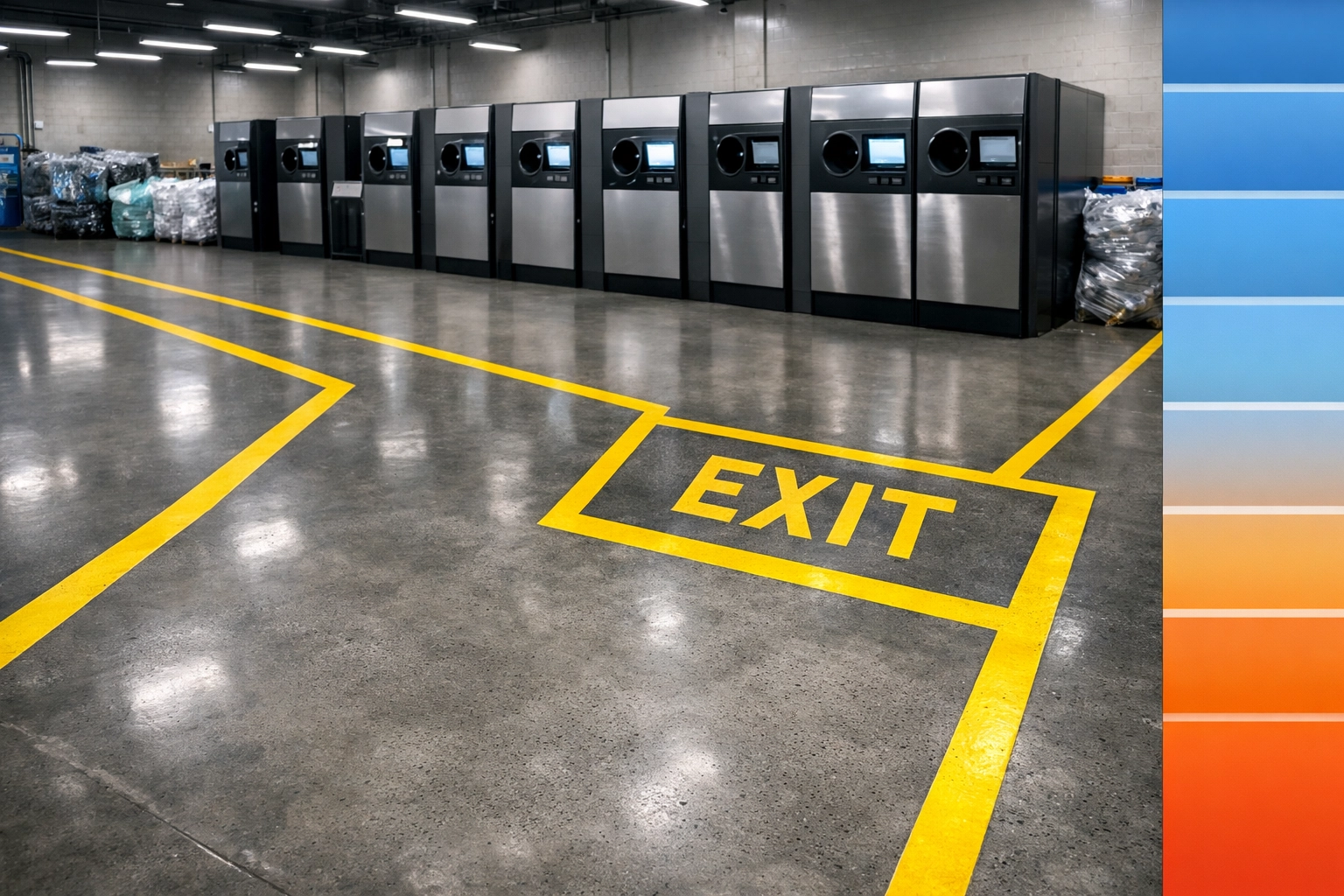
Blocked Exits: Stacking bags in front of fire exits "just for a minute" is a major OSHA violation.
Employee Safety: Reducing Workers' Comp Costs in CT
Workers' compensation insurance in Connecticut is one of the highest overhead costs for any manual labor business. In the world of redemption, your employees face specific "occupational ghosts" that haunt your premiums.
Glass Cuts and Lacerations
Even with "plastic-heavy" loads, glass remains a staple. A single broken bottle at the bottom of a bag can slice through a standard latex glove like butter.
The Fix: Mandatory Level 5 cut-resistant gloves. This isn't a suggestion; it should be a condition of employment.
Repetitive Strain Injury (RSI)
Feeding machines for 8 hours a day is the definition of repetitive motion. According to the OSHA guidelines on Worker Safety, RSI can lead to long-term disability.
The Fix: Rotate tasks every two hours. Move an employee from the RVM line to the loading dock. This keeps them mentally sharp and physically balanced.
Biohazard Exposure
You don't know what was in those bottles before they were brought to you. Needles, chemicals, and mold are common "surprises" in bag-drop scenarios.
The Fix: Implementation of a "No-Touch" policy where possible, using tools or specialized sorting tables to minimize direct contact with unknown materials.
For more on how these costs impact your bottom line, see our guide on 5 ways to save on commercial insurance in CT.
The "Gold Standard Audit": Housekeeping as Risk Management
If you want to lower your small business insurance ct rates, you need to prove you are a low-risk operator. We recommend a "Gold Standard Audit" performed weekly.
Area | Checkpoint | Risk Mitigated |
RVM Area | No standing liquid or sticky residue. | Slips and Falls (General Liability) |
Loading Dock | No loose glass shards or plastic caps. | Puncture wounds (Workers' Comp) |
Electrical | No daisy-chained power strips for machines. | Electrical Fires (Property Insurance) |
Storage | Bags stacked no higher than 6 feet. | Crushing injuries/Falling objects |
Exits | 36-inch clear path to all fire exits. | Life Safety Violations |
By documenting these audits, you create a "paper trail of safety." If a claim does occur, having a log that shows the floor was cleaned at 10:00 AM can be the difference between a dismissed claim and a massive payout.
Protecting Customer Property: Bailee’s Customer Insurance
Most modern CT redemption centers are moving toward a "Drop-and-Go" model. The customer drops off their bags, you count them later, and credit their account.
The moment that bag enters your facility, you have entered a legal state of "bailment." You are responsible for that property. But what if your facility has a fire? Or what if a machine malfunction destroys the barcodes before they are counted?
Standard general liability insurance in Connecticut usually excludes "property in your care, custody, or control." This is where Bailee’s Customer Insurance comes in.
This specific coverage protects the value of the containers your customers have entrusted to you. While 10 cents per bottle doesn't sound like much, if you have 50,000 bottles in the back waiting to be processed, that’s $5,000 of someone else's money. Without Bailee's coverage, you are paying that out of pocket.
Explore more about what small business insurance covers to see where your specific gaps might be.
Practical Cleaning Protocols: The "Sticky" Reality
To maintain a safe environment, your cleaning schedule needs to be more rigorous than a standard retail store.
1. The Mid-Day Flush
Don't wait until closing. Between 1:00 PM and 2:00 PM (usually the post-lunch lull), perform a quick "wet-mop" of high-traffic areas using an enzyme-based cleaner that eats sugar and proteins. This kills the odor at the source.
2. Machine Deep-Clean
RVMs are notorious for sensor errors caused by "soda spray." A dirty sensor leads to a "broken machine," which leads to frustrated customers. Watch the CT DEEP Safety and Maintenance videos for specific machine handling tips. Keeping sensors clean reduces the need for employees to reach into the machine, preventing "caught-in" injuries.
3. Pest Management
Sugar attracts bees, wasps, and rodents. A wasp sting can lead to an anaphylactic reaction, a major medical emergency and a Workers' Comp claim.
Protocol: Professional pest control should be on-site monthly, and all outdoor storage bins must be sealed.
FAQ: Managing the Mess and Insurance Costs
Q: Does my General Liability cover me if a customer slips on a "sticky" floor?
A: It generally does, but if the insurance company finds that you had no cleaning protocol in place, they may choose not to renew your policy or significantly increase your rates. They look for "reasonable care." If the floor is perpetually sticky, that’s negligence, not an accident.
Q: Are my employees covered if they get a disease from handling dirty containers?
A: Yes, illness resulting from workplace exposure is covered under workers compensation insurance connecticut. This is why PPE (Personal Protective Equipment) and hand-washing stations are vital.
Q: Can I use "independent contractors" for cleaning to avoid Workers' Comp?
A: This is a dangerous game in Connecticut. The state has very strict rules on who qualifies as a contractor. If they are performing essential daily tasks like cleaning your facility, the CT Department of Labor will likely view them as employees. If they get hurt and you don't have Workers' Comp for them, you face massive fines.
Q: How does Bailee’s insurance value a bag of uncounted bottles?
A: Usually, it’s based on an average of your historical counts or the weight of the material. It’s important to keep accurate records of "received but uncounted" inventory to simplify claims.
Q: Is "Equipment Breakdown" insurance the same as "General Liability"?
A: No. General Liability covers if the machine hurts someone. Equipment Breakdown insurance covers the cost to repair the machine if it breaks due to a mechanical or electrical failure. Given the cost of modern RVMs, this is a "must-have" for business insurance ct.
Conclusion: Cleanliness is a Risk Management Strategy
In the world of Connecticut redemption, "Managing the Mess" isn't just about aesthetics: it’s about survival. A clean facility is a safe facility. A safe facility is an insurable facility.
By addressing odors, noise, and the "sticky" reality of the job, you protect your employees from injury and your business from predatory lawsuits. Whether you are dealing with the volume spikes of a 10-cent deposit world or the "NIMBY" complaints of your neighbors, your best defense is a rigorous housekeeping protocol and a robust insurance portfolio.
From workers' compensation insurance in Connecticut to specialized Bailee’s coverage, the team at Insure Connecticut LLC is here to help you navigate the specific risks of the redemption industry. We don't just sell policies; we help you build a safer business.
Ready to clean up your risk profile? Contact Insure Connecticut LLC today for a comprehensive coverage review.
Comments