.png)
Homeowners Insurance in Connecticut: What It Covers, What It Costs, and What CT Law Requires


Connecticut homeowners pay an average of roughly $1,900 to $2,700 a year for coverage, depending on dwelling limits, location, and deductible — and that number is trending upward. This guide breaks down exactly what a standard policy covers, what it leaves out (flood damage being the big one), how much coverage you actually need, and what changes if your home is high-value or hard to insure through the standard market.
Table of Contents
What Homeowners Insurance Covers in Connecticut
A standard Connecticut homeowners policy (HO-3) bundles four core protections: your home's structure, your belongings, your liability, and your living expenses if you're displaced.
Dwelling Coverage (Coverage A)
This pays to rebuild your home if it's damaged by a covered peril — fire, wind, lightning, or falling objects, among others. Your dwelling limit should reflect your home's rebuild cost, not its market value. In Fairfield County and along the Gold Coast, rebuild costs often run well above market value because of labor and material costs, which is a common source of underinsurance.
Other Structures, Personal Property, and Loss of Use
Detached garages, sheds, and fences typically fall under "other structures" coverage, usually 10% of your dwelling limit. Personal property coverage protects belongings inside the home, and loss-of-use coverage pays for temporary housing if a covered claim makes your home uninhabitable.
Liability and Medical Payments
Personal liability coverage protects you financially if someone is injured on your property or you're responsible for damage to someone else's property. Most CT homeowners carry at least $300,000 in liability, though an umbrella policy is worth considering if you have significant assets to protect.
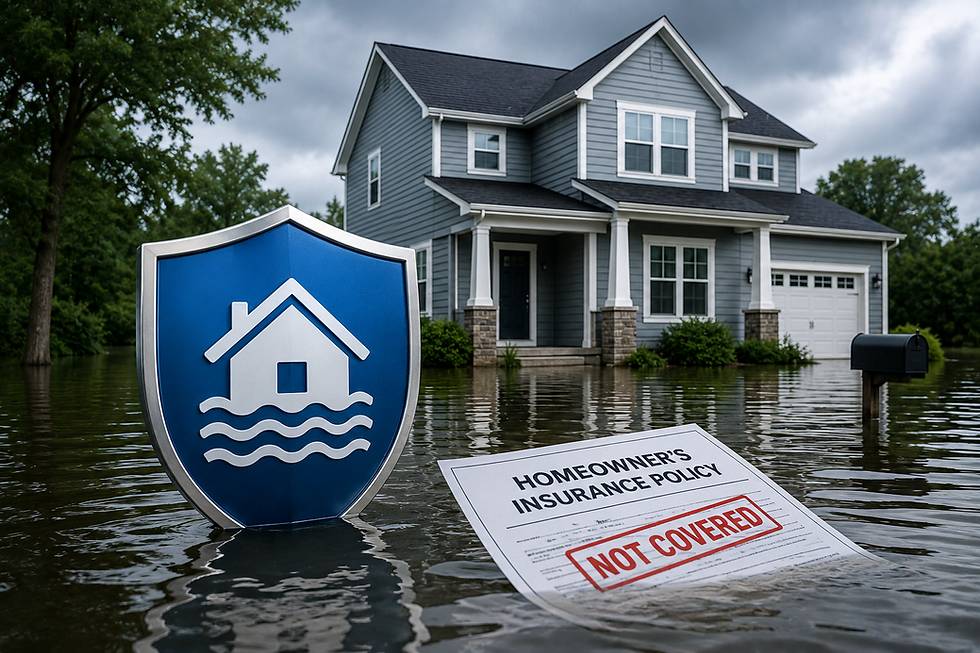
What's excluded: flood damage, earth movement, sewer backup (unless endorsed), and normal wear and tear. Flood is the one that surprises the most Connecticut homeowners, especially near Long Island Sound.
How Much Does Homeowners Insurance Cost in CT?
Industry data from 2026 puts the Connecticut average between roughly $1,900 and $2,700 per year, depending on dwelling coverage amount, with $400,000 in dwelling coverage landing near the middle of that range. Rates have been climbing statewide, driven largely by rebuilding costs and increased storm severity.
Your actual premium depends on:
Location — coastal towns and flood-prone areas typically see higher premiums than inland communities like the Farmington Valley or Litchfield Hills
Home age and construction — older homes with original wiring or plumbing often cost more to insure
Dwelling coverage amount — higher rebuild costs mean higher premiums
Deductible — a higher deductible lowers your premium but increases out-of-pocket cost at claim time
Claims history and credit-based insurance score
Roof age and condition
What Connecticut Law Requires—and What It Doesn't
Connecticut does not legally require homeowners insurance the way auto insurance is required. However, if you have a mortgage, your lender will require coverage as a condition of the loan. Connecticut insurance is regulated under Connecticut General Statutes Title 38a, which governs how insurers operate, handle claims, and disclose policy terms in the state.
The Connecticut Insurance Department also oversees consumer protections, including how insurers can non-renew or cancel a policy, and requires advance notice before non-renewal in most circumstances. Laws and requirements can change, so always confirm current rules with the department or a licensed CT agent before making coverage decisions.
High-Value Home Insurance: What Changes Above $750K
Standard HO-3 policies are built around average-cost homes. Once your home's rebuild cost climbs into high-value territory—common in parts of Fairfield County and along the coast — a standard policy can fall short in a few specific ways:
Feature | Standard Policy | High-Value Policy |
Dwelling valuation | Replacement cost, standard caps | Guaranteed or extended replacement cost |
Personal property | an umbrella | |
Liability limits | ||
Water/backup coverage | Often limited or excluded | Broader water damage protection available |
Loss of use | Capped percentage of dwelling limit | Higher or unlimited loss-of-use options |
If your home would cost significantly more to rebuild than a standard policy's caps allow, it's worth a coverage review rather than assuming your policy scales automatically.
Private Flood Insurance vs. NFIP
Standard homeowners policies exclude flood damage entirely—you need a separate policy. In Connecticut, that means choosing between the National Flood Insurance Program (NFIP) and private flood carriers.
NFIP is backed by the federal government through FEMA's FloodSmart program. Coverage caps at $250,000 for the structure and $100,000 for contents, and pricing is standardized regardless of carrier.
Private flood insurance often allows higher coverage limits, broader coverage (including additional living expenses in some policies), and sometimes faster claims processing, with pricing that can be more competitive for lower-risk homes. Coastal Connecticut homeowners—particularly those near Long Island Sound—should compare both, since neither is automatically cheaper or better for every property.
When You Can't Get Standard Coverage: The CT FAIR Plan
Some Connecticut homes — older properties, those with prior claims, or homes in high-risk coastal zones — don't qualify for standard market coverage. The Connecticut FAIR Plan (Connecticut Property Insurance Underwriting Association) exists as a last-resort option, providing basic named-peril, actual-cash-value coverage when private carriers decline to write a policy.
FAIR Plan coverage is generally more limited and more expensive than standard insurance, and it excludes perils like theft and water damage. It's a safety net, not a long-term strategy — most homeowners are better served working with an independent agency that can shop the broader private and excess/surplus markets before resorting to the FAIR Plan.
How to Compare Home Insurance Quotes the Right Way
Comparing quotes by price alone is the most common mistake homeowners make. Compare these instead:
Checklist for comparing CT home insurance quotes:
Dwelling coverage amount (based on rebuild cost, not market value)
Replacement cost vs. actual cash value on personal property
Liability limit
Deductible—including separate wind/hurricane deductibles common in coastal CT
Water backup and sewer coverage (often an add-on)
Whether flood insurance is included, excluded, or needs to be purchased separately
Insurer's financial strength rating and claims-handling reputation
Common Mistakes Connecticut Homeowners Make
Insuring to market value instead of rebuild cost—the two numbers are rarely the same.
Assuming the flood is covered. It isn't, under a standard policy.
Underinsuring high-value items without scheduling jewelry, art, or collectibles.
Choosing the cheapest quote without comparing deductibles and exclusions side by side.
Not updating coverage after renovations that increase rebuild cost.
Skipping an umbrella policy despite significant home equity or assets.
Expert Tips to Lower Your Premium
Bundle home and auto through the same agency when the combined rate beats separate policies
Raise your deductible if you have the savings to cover it out of pocket
Ask about discounts for security systems, updated roofing, and claims-free history
Review coverage annually—rebuild costs and risk exposure change over time
Work with an independent agent who can compare multiple carriers rather than a single captive insurer
Frequently Asked Questions
Is homeowners insurance required by law in Connecticut?
No, but mortgage lenders require it as a condition of financing. Connecticut law doesn't mandate homeowners insurance the way it mandates auto liability coverage.
How much homeowners insurance do I need in Connecticut?
Enough dwelling coverage to fully rebuild your home at current construction costs, plus adequate liability coverage (typically $300,000 or more) and personal property coverage matched to what you own.
Does homeowners insurance cover flood damage in CT?
No. Flood damage requires separate coverage through NFIP or a private flood insurance carrier.
What's the average cost of homeowners insurance in Connecticut?
Roughly $1,900 to $2,700 per year depending on dwelling coverage, location, and deductible, based on 2026 industry data.
What is the Connecticut FAIR Plan?
A last-resort insurance program for homes that don't qualify for standard market coverage, offering basic, limited protection at typically higher cost.
Do I need flood insurance if I'm not in a flood zone?
It's worth considering. A significant share of flood claims come from properties outside mapped high-risk flood zones, particularly after heavy rain events.
What's the difference between replacement cost and actual cash value?
Replacement cost pays to rebuild or replace at today's prices. Actual cash value factors in depreciation, meaning a lower payout for older items or structures.
How does my home's age affect my premium?
Older homes, especially those with original electrical, plumbing, or heating systems, are often more expensive to insure due to higher claim risk.
Can my insurer drop my policy in Connecticut?
Insurers can non-renew a policy but must generally provide advance written notice under state regulations. Requirements can vary by circumstance, so confirm specifics with the CT Insurance Department.
Should I get quotes from multiple insurers?
Yes. Coverage terms, exclusions, and pricing vary meaningfully between carriers for the same property, which is why comparing quotes through an independent agency is worth the time.
Conclusion
Homeowners insurance in Connecticut isn't one-size-fits-all—coastal exposure, home age, and rebuild costs all shape what coverage you actually need. The biggest risk isn't picking the "wrong" insurer; it's assuming your policy covers more than it does, especially when it comes to flood damage and high-value belongings.
Not sure if your current policy has the right coverage limits? Request a free homeowners insurance quote from Insure Connecticut LLC, and we'll walk through your dwelling coverage, flood exposure, and liability limits together—no obligation.


Comments