.png)
How Do I Properly Insure High-Value Jewelry in Connecticut?
- W. Tom Polowy, MS

- Apr 18
- 8 min read
For many Connecticut families, jewelry represents more than just financial equity; it embodies milestones, heritage, and personal narratives. Whether it is a bespoke engagement ring from a boutique in Greenwich, a vintage timepiece passed down through generations in West Hartford, or a collection of fine gemstones acquired during international travels, these items are often among the most valuable assets a "Private Client" owns. However, a common and costly misconception is that a standard homeowners insurance policy provides sufficient protection for these high-value items.
In reality, most basic property insurance policies contain "sub-limits" that severely restrict coverage for jewelry, often capping payouts at $1,000 to $2,500 for the entire loss in the event of theft. If you own a single piece worth $10,000 or a collection worth $100,000, you are facing a massive protection gap. At Insure Connecticut LLC, we believe in radical transparency: your standard policy is designed for your house and furniture, not your 3-carat diamond or your Patek Philippe. Protecting these assets requires a move toward scheduled coverage and specialized Private Client solutions.
Why Your Standard Homeowners Policy Is Not Enough
The primary problem with relying on a standard property insurance policy for high-value jewelry is the limitation on "named perils" and the low "theft limits." Most people realize their jewelry is covered if the house burns down, but insurance claims involving jewelry rarely involve fire. Instead, they involve the stone falling out of a setting, the necklace being lost at a gala, or the watch being stolen while traveling.
Standard policies typically exclude what the industry calls "Mysterious Disappearance." If you look at your finger and the diamond is gone, or if you leave a ring on a hotel sink and it isn't there when you return, a basic policy may offer zero compensation. Furthermore, the deductibles on a standard home policy: often $1,000 or $2,500: can eat up a significant portion of a jewelry claim payout, assuming the claim is even covered.

Visual: A close-up, high-realism image of a luxury diamond ring with a magnifying glass, emphasizing the detail and value of high-end jewelry.
How Much Does High-Value Jewelry Insurance Cost?
One of the "Big 5" questions every client asks is: "What is this going to cost me annually?"
The cost of insuring high-value jewelry in Connecticut typically ranges between 1% and 2% of the item’s appraised value per year. For example, if you are insuring a $20,000 engagement ring, you can expect to pay approximately $200 to $400 annually.
Several factors influence these premiums:
Geography: Insuring jewelry in high-theft areas or coastal regions with higher overall risk profiles may see slightly higher rates.
Security Measures: Having a UL-rated safe or a central station alarm system in your Connecticut home can often trigger premium discounts.
The Type of Item: Items that are worn daily (like rings) may have slightly different risk profiles than items kept in a bank vault.
Claim History: Just like auto insurance, a history of frequent jewelry losses can increase your rates or make it difficult to find coverage.
When compared to the emotional and financial devastating of a total loss, the 1-2% premium is generally viewed as a necessary investment for peace of mind. You can find many discussions on the value of this investment on communities like Reddit’s r/jewelry, where owners often share stories of loss and the relief of being properly insured.
Scheduled Jewelry vs. Blanket Limits: Which Is Better?
When you speak with an advisor at Insure Connecticut LLC, we will likely discuss two primary ways to increase your coverage: Blanket Limits and Scheduling (also known as a "Personal Articles Floater").
Blanket Jewelry Limits
A blanket limit increases the total amount of jewelry coverage on your policy without listing every item individually. For example, you might add a $10,000 blanket jewelry endorsement.
Pros: It is often cheaper and doesn’t require individual appraisals for every small item.
Cons: It still usually has a per-item limit (e.g., $2,500 max per piece). If you lose a $7,000 ring, you would still only get $2,500.
Scheduled Jewelry (The Gold Standard)
Scheduling involves listing each piece of jewelry individually on the policy with its specific description and appraised value.
Pros: There is typically no deductible for scheduled items. It covers "Mysterious Disappearance." It provides "Agreed Value" coverage.
Cons: Requires a recent professional appraisal for each item.
For the Private Client with a significant collection, scheduling is almost always the recommended path. It ensures that the specific value of each unique piece is recognized by the insurer before a loss ever occurs.

Visual: A professional documentation layout showing an appraisal document next to a luxury watch, representing the "Scheduled Jewelry" process.
What Is "Agreed Value" and Why Does It Matter?
In the world of high-end insurance, "Agreed Value" is a critical term. Most standard policies pay out based on "Actual Cash Value" (which includes depreciation) or "Replacement Cost" (which allows the insurance company to find a "comparable" item at a wholesale price).
With an Agreed Value policy, you and the insurance company agree that the item is worth exactly $X amount based on your appraisal. If the item is stolen or lost, the company cuts you a check for that exact amount. This is vital for rare, vintage, or bespoke pieces where a "comparable" replacement simply doesn't exist. This level of transparency prevents disputes during the claims process, which is a major fear for many high-net-worth individuals.
Worldwide Coverage: Protection Beyond the Nutmeg State
Connecticut residents are frequent travelers. Whether you are heading to a wedding in Tuscany or a business meeting in London, your jewelry travels with you. A major benefit of a scheduled personal articles floater is worldwide coverage.
Standard homeowners policies may limit coverage for items lost outside the United States or have very specific requirements for how items are stored while traveling. A specialized high-value policy follows the item. Whether the ring is lost in a hotel in Paris or stolen from a rental car in Los Angeles, the protection remains intact.
The Reality of Insurance Claims: Examples
To understand why this coverage is necessary, consider these common scenarios we see in the Connecticut market:
The "Stone Gone" Scenario: A client in West Hartford was gardening and didn't realize her diamond had fallen out of its platinum setting. Under a standard policy, this is often "unexplained loss" and excluded. Because she had the ring scheduled, she was paid the full appraised value to replace the stone, with zero deductible.
The "Gym Locker" Theft: A client in Fairfield had his luxury watch stolen from a locked locker at a high-end fitness center. The standard policy theft limit was $1,500. The watch was worth $12,000. Because he had not scheduled the item, he was out of pocket over $10,000.
The "Mysterious Disappearance": During a move between homes in Old Saybrook, a small box of heirloom jewelry went missing. There was no evidence of a break-in (theft). Because the items were scheduled, the "Mysterious Disappearance" clause allowed for a full claim payout.
Best Practices for Protecting Your Collection
At InsureCT, we advocate for a proactive approach to risk management. Insurance is your safety net, but prevention is your first line of defense.
1. Regular Appraisal Updates
The value of gold, platinum, and high-grade diamonds fluctuates. A ring appraised in 2015 is likely worth significantly more today. We recommend updating your appraisals every 3 to 5 years. If your insurance limit is $10,000 but the replacement cost has risen to $15,000, you are "under-insured."
2. Digital Documentation
Maintain a digital folder with:
High-resolution photos of the jewelry from multiple angles.
Photos of the hallmarks and serial numbers.
Scan of the original sales receipt.
The most recent professional appraisal.
GIA or EGL diamond grading reports.
3. Secure Storage
When not in use, high-value jewelry should be stored in a secure, bolted-down safe (YouTube link to safe security types). For items worn only once or twice a year, a bank safety deposit box is the most secure option and may even earn you a premium credit on your insurance policy.
4. Smart Traveling
Never put jewelry in checked luggage.
Use the hotel safe, but remember that hotel liability for stolen items is often extremely limited by law.
Wear your most valuable pieces rather than carrying them in a bag.
Avoid "traveling loud": wearing flashy jewelry in areas where you might be a target for opportunistic theft.
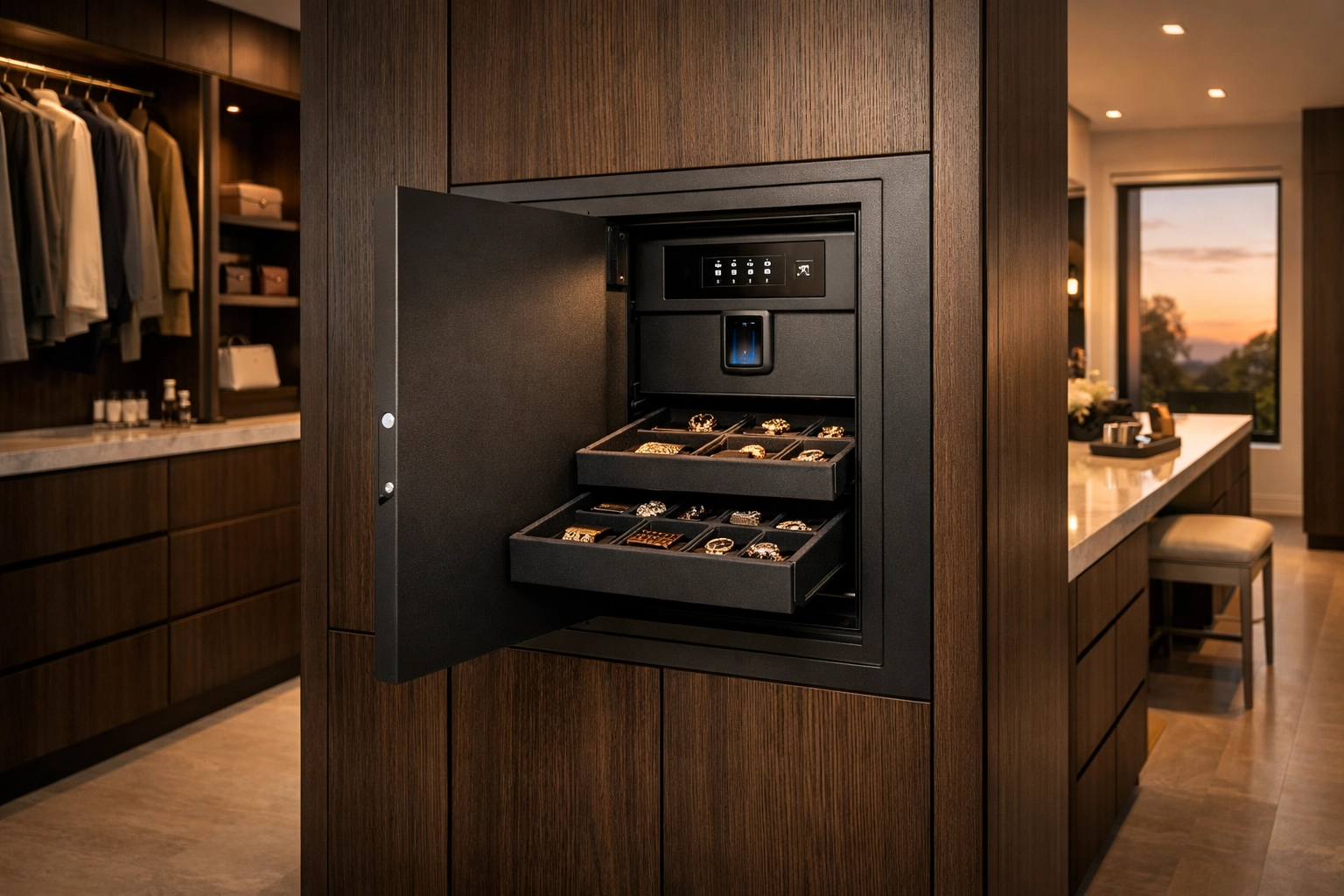
Visual: A modern, high-security home safe partially open, showing organized jewelry trays inside.
Current Trends in the Connecticut Jewelry Market
As of 2026, we are seeing a significant rise in the value of "alternative" luxury assets. While diamonds remain the staple, there is a surging market for vintage watches and ethically sourced colored gemstones. In Connecticut, specifically in areas like Greenwich and New Canaan, we have seen an increase in "watch portfolios" where clients treat timepieces as appreciating investments.
The insurance industry is adapting to this by offering more flexible "market value" clauses. Some high-value policies now offer a "150% buffer." This means if your item is scheduled for $10,000, but the market value at the time of loss has spiked to $14,000, the policy will pay the higher amount to ensure you can actually replace the piece. This is an essential feature for investors in the luxury space.
Frequently Asked Questions
Does my Umbrella Insurance cover my jewelry if it's stolen?
No. An umbrella policy provides excess liability coverage (if you are sued). It does not provide excess coverage for your personal belongings. To protect jewelry, you must address the underlying property policy limits or schedule the items.
Will filing a jewelry claim make my home insurance rates go up?
If your jewelry is scheduled on a "rider" attached to your home policy, a claim could potentially impact your "claims-free" discount. However, if you use a standalone jewelry policy, a claim usually does not affect your homeowners insurance premiums. This is a major reason many Private Clients prefer separate policies.
What is the difference between a "certified" appraisal and a "sales receipt"?
A sales receipt tells the insurance company what you paid, but it doesn't necessarily describe the quality of the stones in a way that allows for an accurate replacement. An insurance appraisal is a technical document that details the "4 Cs" of diamonds, the weight of the metal, and the current retail replacement value.
Are there exclusions I should be worried about?
Yes. Most policies: even high-value ones: exclude "wear and tear." For example, if the prongs on your ring wear down over twenty years and the stone falls out, the insurance company may argue that this was a maintenance issue, not an "accidental loss." Regular "prong checks" at a jeweler are essential. Other common exclusions include war, nuclear hazard, and intentional acts.
Do I need to insure my jewelry for its "resale value" or its "replacement value"?
You should always insure for Retail Replacement Value. If you try to sell a ring to a jeweler, they will offer you a "buy-back" price, which is much lower than what it would cost you to walk into a store and buy the exact same ring brand new today. Your insurance should cover the cost of buying it brand new.
Conclusion: Protecting Your Legacy
Jewelry is unique among assets because it is both a financial investment and a deeply personal treasure. Relying on a standard homeowners policy to protect these items is a risk that most Connecticut residents cannot afford to take. By understanding the difference between blanket limits and scheduled coverage, and by insisting on "Agreed Value" and "Mysterious Disappearance" protection, you can ensure that your collection is protected no matter where in the world you are.
At Insure Connecticut LLC, we specialize in the unique needs of Private Clients. We don't just sell policies; we provide a comprehensive review of your assets to ensure there are no "silent" exclusions waiting to surprise you during a claim.
Whether you have a single heirloom or an extensive collection, the time to review your coverage is before a loss occurs. We invite you to contact our West Hartford office for a confidential jewelry scheduling review.
Ready to ensure your collection is properly protected? Visit www.myinsurect.com to schedule your Private Client coverage review today.
Contact Information: Insure Connecticut, LLC 71 Raymond Road, West Hartford, CT 06107 Phone: 860-440-7324

Comments