.png)
Tree Services: High-Wire Risks – Insuring the Vertical Danger Zone
- W. Tom Polowy, MS

- Apr 18
- 6 min read
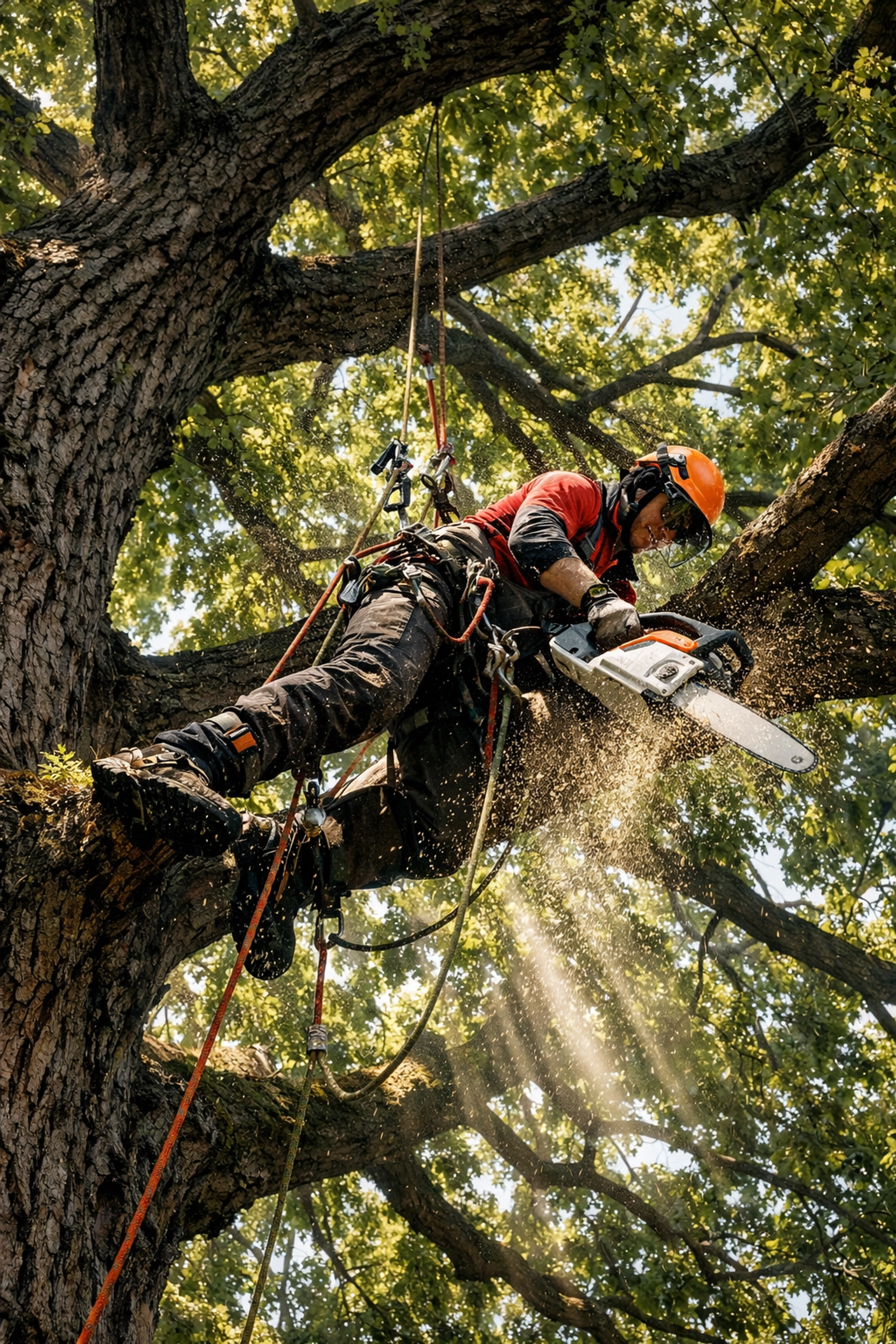
For most people, a day at the office involves a swivel chair and a coffee mug. For a tree service professional in Connecticut, the "office" is often 50 feet in the air, suspended by a harness, while operating a high-powered chainsaw. It is a world of vertical danger where gravity is the ultimate supervisor and the margins for error are non-existent.
Tree service work consistently ranks among the most dangerous occupations in America. It isn’t just about the height; it’s about the volatile combination of heavy machinery, unpredictable weather, and the immense weight of falling timber. Whether you are a business owner running a crew in West Hartford or a homeowner looking to clear a dead oak before the next Nor'easter, understanding the insurance landscape of this "vertical danger zone" is vital.
At Insure Connecticut LLC, we specialize in navigating these high-risk waters. We understand that a standard landscaping policy doesn't cut it when your team is climbing. As part of our Contractor Success Month, we are diving deep into the specific protections required to keep tree service businesses climbing safely and homeowners protected from catastrophic liability.
The Reality of the Vertical Danger Zone: Risks and Challenges
The tree service industry faces a unique set of challenges that distinguish it from general landscaping or ground-level maintenance. In the insurance world, the "vertical danger zone" refers to any work performed at height, and the financial stakes are as high as the canopy itself.
The $145,000 Misstep
To understand the necessity of robust insurance, you have to look at the potential for loss. A typical "minor" accident in this field, such as a worker falling 20 feet, can lead to a broken back. Between emergency surgery, months of physical therapy, and lost wages, a single claim can easily exceed $145,000. Without the right Workers' Compensation or General Liability coverage, a claim of this magnitude can instantly bankrupt a small business.
The "10-Foot Rule" and Insurance Gaps
One of the biggest misconceptions in the industry is that a standard landscaping policy covers tree removal. Most basic landscaping policies only cover work performed on the ground or up to a height of 8 to 10 feet. The moment a ladder is extended or a climber spikes into a trunk, those standard policies often become void.
If a contractor tells you they are "fully insured" but only carries a basic landscaping certificate, they are effectively uninsured the moment they leave the ground. For the business owner, this means a denied claim. For the homeowner, this means potential personal liability for worker injuries occurring on their property.
Property Damage and Third-Party Liability
It isn’t just about the workers. When a multi-ton limb is being rigged over a client's roof, the risk to property is immense. Even the most experienced arborists face equipment failure or unexpected "trunk jumps." If a tree falls the wrong way, it can crush a house, take out power lines, or cause severe injury to a bystander. This makes high-limit General Liability non-negotiable.
Best Practices for Insuring Your Tree Service Business
Navigating the complexities of high-risk insurance requires a strategic approach. Here is how you can ensure your business, or the contractor you hire, is properly protected.
1. Demand Specialized Coverage
You must explicitly inform your insurance provider if your work involves climbing, bucket trucks, or rigging. Your policy must reflect "High-Elevation Work." At Insure Connecticut LLC, we help you audit your current coverage to ensure there are no "height exclusions" that could leave you vulnerable.
2. Prioritize Workers’ Compensation
In Connecticut, Workers' Comp is a legal requirement for businesses with employees, but in the tree industry, it is your most important shield. Given the fatality rate of 17 per 100,000 workers in this field, you cannot afford to skip this. Even if you are a sole proprietor, carrying a policy ensures that you are covered if an accident occurs on the job, preventing a total loss of your livelihood.
3. Protect Your Gear with Inland Marine Insurance
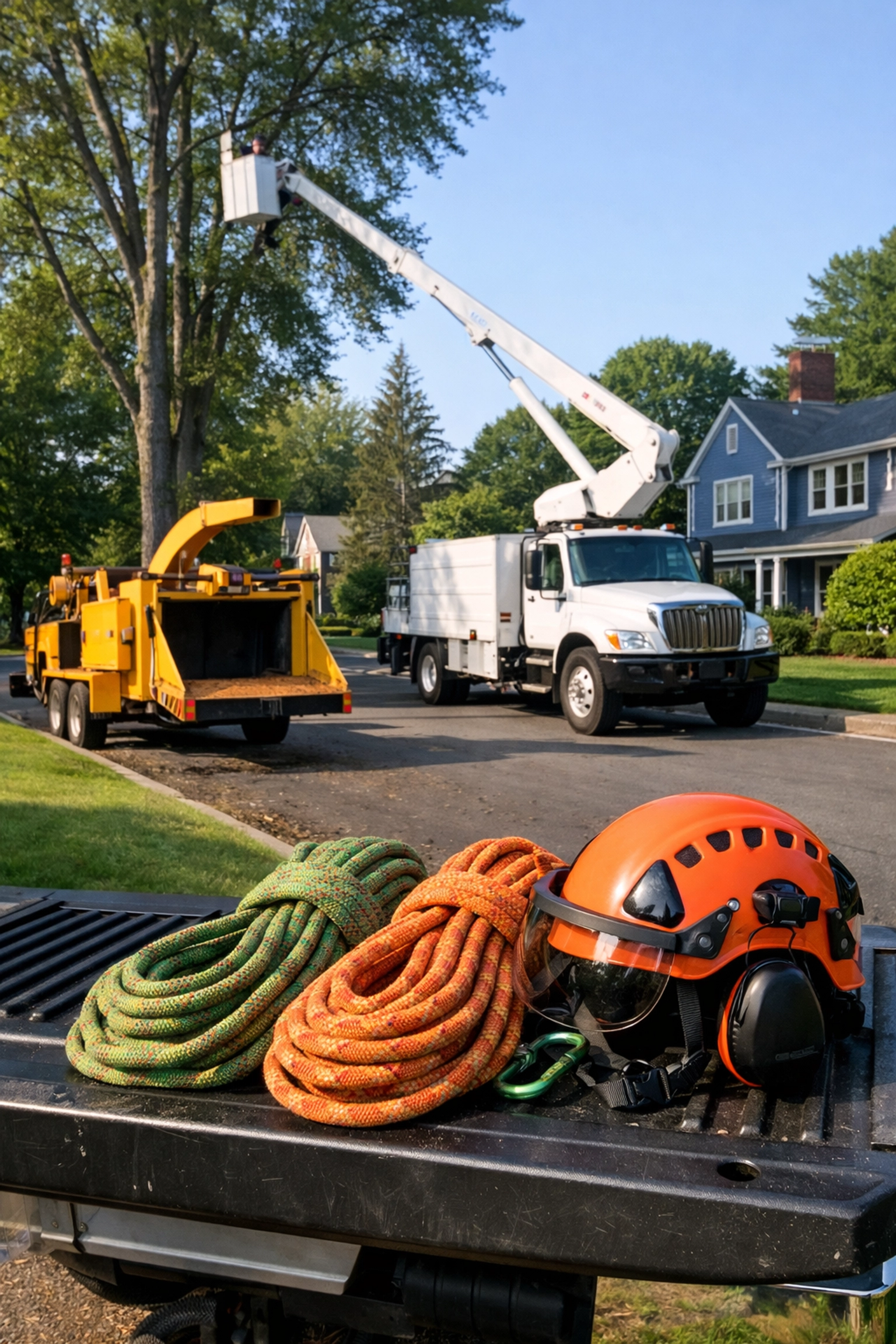
Your wood chippers, stump grinders, and high-end chainsaws represent a massive capital investment. Standard commercial property insurance often only covers equipment while it is at your shop. Inland Marine Insurance is essential because it protects your tools and specialized equipment while they are in transit or at a job site. If a chipper is stolen from a trailer or damaged in a collision, this coverage is what keeps your crew working.
4. Verify the COI Directly
If you are a property owner hiring a service, never accept a photocopy of a Certificate of Insurance (COI). Always request that the COI be sent directly from the insurance agency to you. This ensures the policy is active and hasn't been canceled for non-payment.
Current Trends and the Future of Tree Service Risks
The insurance market for tree services is shifting. As weather patterns in Connecticut become more erratic, with high-wind events and heavy ice storms occurring more frequently, the demand for tree removal is skyrocketing. However, this increased demand comes with tighter insurance scrutiny.
Increased Storm Frequency
Connecticut has seen a marked increase in "micro-bursts" and severe coastal storms. This leads to high-pressure "storm chasing" work, where contractors are moving quickly to clear hazards. Insurance companies are increasingly looking at safety protocols during these high-stress periods. Businesses that can demonstrate a commitment to safety, through certified arborist credentials and regular equipment inspections, will find better rates in a hardening market.
Technological Advancements
We are seeing a rise in the use of specialized equipment like "spider lifts" and drones for canopy inspections. While these tools increase safety by keeping humans on the ground more often, they also require specialized Equipment Coverage. As the industry moves toward more automation, the insurance needs are shifting from purely manual labor risks to high-value tech risks.
The Role of Insure Connecticut LLC
At Insure Connecticut LLC, we stay ahead of these trends. We don't just sell you a policy; we act as a partner in your business's longevity. We understand the local landscape of West Hartford and the surrounding areas, ensuring your coverage meets the specific legal and environmental challenges of our state.
Frequently Asked Questions
How do I know if I have the right amount of coverage for my tree business? A standard recommendation for tree services is at least $1 million per occurrence and $2 million aggregate for General Liability. However, depending on the size of the contracts you take (especially municipal or commercial work), you may need an Umbrella policy to extend those limits.
Does my homeowner’s insurance cover tree removal damage? Generally, if a tree falls on your house due to a storm, your dwelling insurance may cover the damage. However, if a contractor you hired causes the damage and they are uninsured, your insurance company may seek subrogation or deny the claim if you were negligent in hiring an unlicensed/uninsured professional.
How can I reduce my insurance premiums? Safety is the biggest factor. Maintaining a "clean" loss history, providing documented safety training for your crew, and requiring all climbers to use proper PPE can help you negotiate lower rates over time.
What is Inland Marine insurance, and why do I need it? Think of it as "mobile equipment insurance." It covers your tools and machinery (like chippers and saws) no matter where they are, whether in the shop, on the truck, or at the client’s house.
Can I bundle my business and personal insurance? Yes. Bundling your commercial lines with your personal auto or home insurance can often lead to significant discounts.
Conclusion: Don't Climb Without a Safety Net
Tree service work is a vital part of maintaining the beauty and safety of our Connecticut communities. However, the vertical nature of the job means the risks are literal and figurative. One fall, one dropped limb, or one equipment failure can end a career or a business.
Proper insurance isn't just a line item on your budget; it is your professional safety net. It allows you to take on the high-wire jobs with the confidence that your employees, your equipment, and your clients are protected.
At Insure Connecticut LLC, located at 71 Raymond Road in West Hartford, we are dedicated to helping local artisans and contractors thrive. Whether you need to review your current policy or you’re starting a new venture in the vertical danger zone, we have the expertise to get you covered.
Ready to secure your business? Give us a call at 860-440-7324 or visit us at www.myinsurect.com for a comprehensive insurance review. Let’s make sure the only thing falling this season is the timber( not your bank account.)

Comments