.png)
The AI Agent Risk: What OpenClaw Vulnerabilities Mean for Connecticut Business Insurance in 2026

Your marketing manager just installed an AI assistant to "speed things up." Your operations team added a chatbot to handle customer inquiries. Your finance department is using an automated tool to process invoices faster. Sounds like progress, right?
Here's the problem: None of them told IT. And one of those tools just opened a backdoor into your entire business network.

If you're running a small or mid-sized business in Connecticut, you've probably heard the buzz about AI agents like OpenClaw: personal AI assistants that promise to revolutionize productivity. Launched in November 2025, OpenClaw quickly gained traction for its ability to automate repetitive tasks, integrate with business systems, and learn from user behavior. It sounded like the perfect solution for stretched teams trying to do more with less.
Then, in early 2026, security researchers dropped a bombshell: OpenClaw contained multiple critical vulnerabilities that could let hackers steal credentials, execute remote code, and silently siphon off your company's most sensitive data. And thousands of businesses were already running it: many without even realizing the risk.
This isn't just a tech story. It's an insurance story. Because when a data breach happens, when customer information gets exposed, when your business grinds to a halt because of a cyberattack: the liability falls squarely on you, the business owner. Not the software vendor. Not the employee who installed it. You.
Let's talk about what the OpenClaw vulnerabilities mean for business insurance in Connecticut in 2026, why cyber liability coverage is no longer optional, and how you can protect your company from the hidden risks lurking in your "productivity tools."
What is OpenClaw, and Why Should CT Business Owners Care?

OpenClaw is a personal AI assistant designed to integrate with your business systems: think email, CRM platforms, project management tools, and cloud storage. It uses natural language processing to automate workflows, answer questions, and handle routine tasks. For a small Connecticut business juggling multiple responsibilities, it sounds like a dream come true.
But here's where things get dicey: OpenClaw was designed for convenience, not security. And in early 2026, that design philosophy came back to haunt thousands of businesses.
The Vulnerabilities That Shook the Business World
Security researchers at CyberResilience discovered three critical vulnerabilities in OpenClaw that expose businesses to catastrophic risk:
CVE-2026-25253 (CVSS Score: 8.8) – Remote Code Execution via Authentication Token Theft
This vulnerability allows an attacker to steal your OpenClaw authentication token through a malicious webpage. Here's how it works: You click on a link (maybe in an email, maybe on a legitimate-looking website), and within seconds, that webpage silently redirects to your OpenClaw Gateway Dashboard with a manipulated URL. The attacker now has your authentication token: the digital key to your entire OpenClaw instance.
The scariest part? This affects even local OpenClaw installations that aren't connected to the internet. The attacker uses your browser as a pivot point, gaining access through your machine.
CVE-2026-25593 – Command Injection in the Gateway WebSocket API
This vulnerability lets an unauthenticated local attacker inject arbitrary commands through unsafe cliPath values. In plain English: someone with local access to your network can execute commands with full gateway user privileges, potentially compromising your entire system.
CVE-2026-24763 – Command Injection in Docker Sandbox Execution
This flaw affects OpenClaw's Docker sandbox execution mechanism in all versions prior to 2026.1.29. It allows attackers to break out of the sandbox environment and execute commands on the host system.
The Default Security Nightmare
Here's where it gets worse: A security audit found 512 total vulnerabilities in OpenClaw. The most severe issue? The default configuration automatically grants full administrative access to connections from localhost: without requiring authentication.
When OpenClaw is installed behind an improperly configured reverse proxy (a common setup in small businesses trying to expose services to the internet), external requests are forwarded to 127.0.0.1, allowing attackers to bypass authentication entirely.
Security researchers found approximately one thousand publicly accessible OpenClaw installations running without any authentication. During their testing, they gained access to Anthropic API keys, Telegram bot tokens, Slack accounts, months of chat histories, and executed commands with full system administrator privileges.
Let that sink in: One thousand businesses had left the front door wide open.
The Shadow IT Problem: How AI Tools Slip Past Your Defenses

Here's a scenario that plays out every day in Connecticut businesses:
Sarah, your marketing manager, hears about OpenClaw from a colleague at a networking event. She installs it on her work laptop to help manage social media campaigns and customer outreach. It saves her hours every week. She tells her team about it. They install it too. Nobody mentions it to your IT person (if you even have one), and nobody thinks to ask about security implications.
This is Shadow IT: technology adopted by employees without the knowledge or approval of your IT department or leadership. And AI agents like OpenClaw are Shadow IT on steroids.
Why Shadow IT is an Insurance Nightmare
Traditional cybersecurity focuses on protecting known assets: your servers, your official software licenses, your email accounts. But Shadow IT operates in the blind spots. Your IT team can't protect what they don't know exists.
When OpenClaw (or a similar tool) gets compromised, it can:
Exfiltrate sensitive customer data through silent curl commands to external servers
Steal credentials for your business bank accounts, cloud services, and email
Launch ransomware attacks from inside your network
Expose proprietary business information to competitors or bad actors
And here's the kicker: Your general liability insurance probably won't cover any of it. Traditional business insurance policies weren't designed for cyber risks. They cover physical damage, bodily injury, and property loss: not data breaches, business interruption from ransomware, or regulatory fines from exposed customer information.
This is where business insurance in CT needs to evolve. Just like we saw Connecticut businesses realize they needed flood insurance after coastal storms exposed gaps in traditional homeowners policies (remember the flood insurance gap we talked about?), the OpenClaw vulnerabilities are exposing a massive cyber insurance gap.
Why Cyber Insurance is Non-Negotiable for Connecticut Businesses in 2026
Let's be blunt: If you're running a Connecticut business in 2026 without cyber liability insurance, you're playing Russian roulette with your company's future.
What's at Stake?
Consider the costs of a data breach for a typical Connecticut small business:
Notification costs: Connecticut law requires businesses to notify affected individuals of a data breach. For a breach affecting 1,000 customers, expect to spend $5,000-$10,000 on notifications alone.
Credit monitoring services: You're typically required to offer affected customers one year of credit monitoring. Budget $150-$200 per person: that's $150,000 for a 1,000-person breach.
Legal fees: Defending against lawsuits from affected customers or regulatory investigations can easily run $50,000-$100,000.
Business interruption: If your systems are down for a week, how much revenue do you lose? For many CT businesses, that's $25,000-$100,000 or more.
Regulatory fines: HIPAA violations start at $100 per record up to $50,000 per record. Connecticut consumer protection laws add additional penalties.
Reputation damage: How many customers will you lose when they find out their data was compromised? This is often the most devastating long-term cost.
Total potential cost for a modest breach: $500,000 to $1 million or more.
Now ask yourself: Could your business survive writing that check?
What Cyber Insurance Actually Covers
A comprehensive cyber liability policy (part of your small business insurance CT package) typically includes:
First-party coverage: Direct costs to your business, including forensic investigations, data restoration, business interruption, crisis management, and customer notification
Third-party coverage: Claims from customers, partners, or vendors affected by the breach, including legal defense costs and settlements
Regulatory defense: Coverage for legal expenses and fines related to regulatory investigations
Cyber extortion: Ransom payments and negotiation costs for ransomware attacks
Media liability: Claims related to defamation, copyright infringement, or privacy violations in your digital content
How OpenClaw Changes the Cyber Insurance Conversation
The OpenClaw vulnerabilities have changed how insurers view AI tools in business environments. Many cyber policies now include specific questions about:
What AI agents or tools are deployed in your organization
Whether you have an inventory of all AI tools in use (including Shadow IT)
What security controls are in place for AI integrations
Whether you've patched known vulnerabilities in AI tools
Failing to disclose AI tools like OpenClaw could give your insurer grounds to deny a claim. That's why getting proactive about cyber insurance: and being transparent about your AI usage: is critical.
Think about it like your commercial auto insurance: just as you need to report all vehicles and drivers to maintain coverage (remember the importance of comprehensive business protection?), you now need to report your AI tools to maintain cyber coverage.
The CT Business AI Safety Checklist
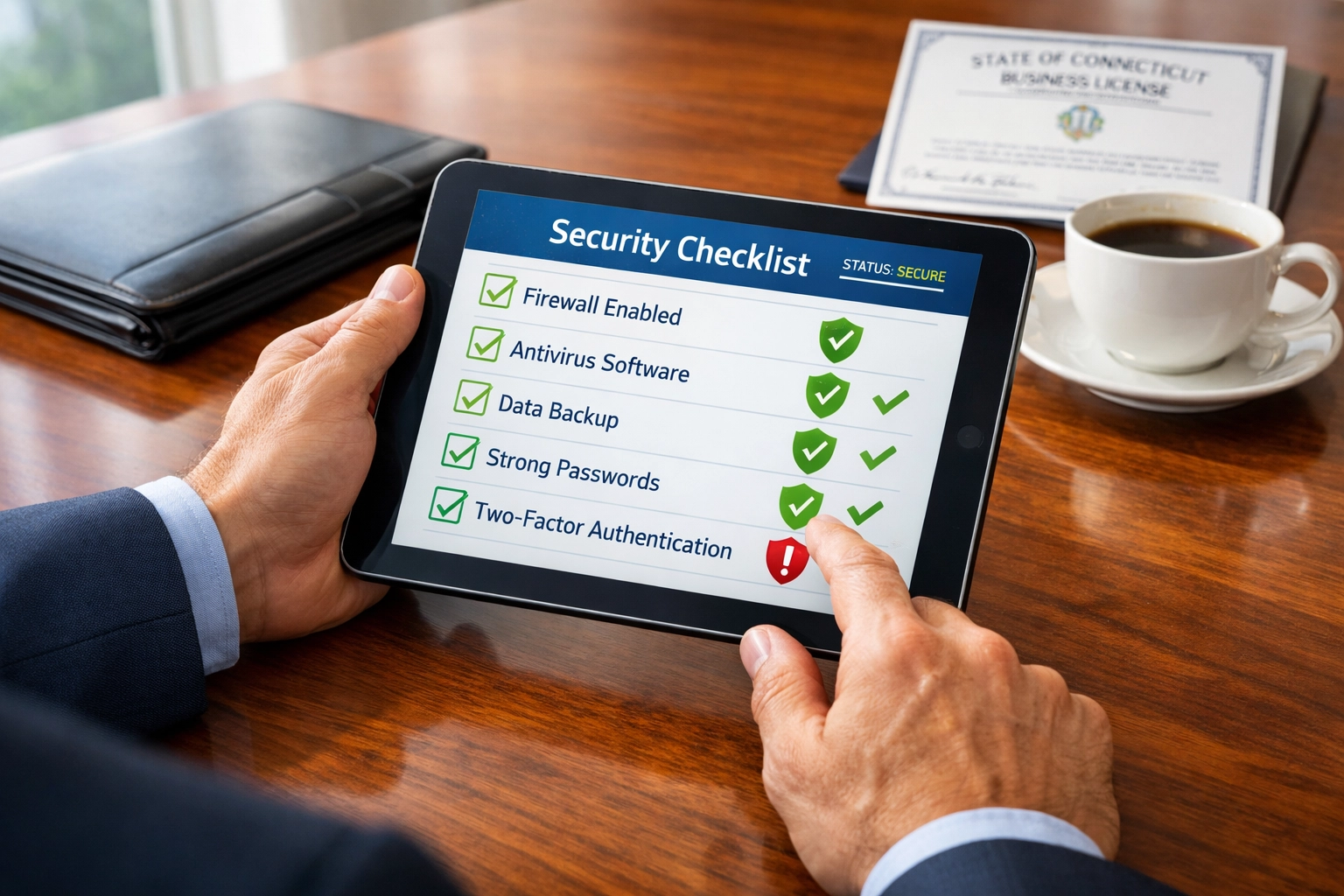
Here's your actionable game plan for protecting your Connecticut business insurance interests while embracing AI tools:
Immediate Actions (Do This Week):
Conduct an AI tool audit: Survey every department to identify all AI tools, agents, and assistants currently in use: even if they weren't officially approved
Check OpenClaw versions: If anyone is using OpenClaw, ensure they're running version 2026.1.29 or later (earlier versions contain the critical vulnerabilities)
Review authentication settings: Verify that no AI tools are running with default configurations that bypass authentication
Update your cyber insurance: Schedule a cyber liability review with your insurance broker (we'll talk about that in a minute)
Create a Shadow IT policy: Establish clear rules about what tools employees can install and require approval for any new AI integrations
30-Day Actions:
Implement network segmentation: Isolate AI tools from critical business systems so a compromise in one area doesn't spread
Enable multi-factor authentication (MFA): Require MFA for all administrative access to AI tools and business systems
Set up monitoring: Deploy security tools that can detect unusual data transfers or command executions from AI agents
Create an incident response plan: Document exactly what to do if you suspect an AI tool has been compromised, including who to call and how to isolate the threat
Train your team: Educate employees about the risks of Shadow IT and the importance of vetting tools before installation
Ongoing Practices:
Regular security updates: Establish a process for keeping all AI tools patched and updated
Quarterly AI audits: Review what tools are in use and ensure they still meet security standards
Annual cyber insurance reviews: As your AI usage evolves, so should your coverage
Vendor risk assessments: Before adopting any new AI tool, evaluate the vendor's security practices and track record
Data minimization: Limit what data your AI tools can access: they should only have access to what they absolutely need
For High-Value Business Assets
If your Connecticut business has significant intellectual property, large client databases, or high-value digital assets, consider enhanced protection measures. Just as you'd secure high-value physical assets with specialized coverage (luxury business asset protection), your cyber insurance should reflect the value of your digital assets.
Frequently Asked Questions About AI Security and Business Insurance in CT
Q: Do I really need cyber insurance if I'm just a small business with 5-10 employees?
Yes. Small businesses are actually more vulnerable than large enterprises because you typically have fewer security resources. The average cost of a data breach for a small business is $149,000: enough to put many Connecticut businesses under. And in 2026, with AI tools proliferating, the attack surface is bigger than ever.
Q: Will my general liability policy cover a data breach?
No. General liability insurance covers bodily injury and property damage. Data breaches, stolen credentials, and business interruption from cyberattacks require cyber liability coverage. Don't assume you're covered: check your policy or call Insure Connecticut LLC at 860-440-7324 to review your business insurance Connecticut coverage.
Q: What if an employee installed OpenClaw without permission: am I still liable?
Yes. As the business owner, you're responsible for what happens on your network, even if an employee acted without authorization. This is exactly why you need both cyber insurance and a clear policy about Shadow IT.
Q: How much does cyber insurance cost for a Connecticut small business?
Cyber liability insurance typically costs between $1,000 and $7,500 annually for small businesses, depending on your revenue, industry, and data exposure. That's a fraction of what you'd pay out-of-pocket for even a minor data breach.
Q: Can I get cyber insurance after I've already had a breach?
Typically, no: cyber insurance policies don't cover known incidents that occurred before coverage began. That's why it's critical to get coverage now, before something happens. Waiting until after a breach is like trying to buy homeowners insurance while your house is on fire.
Q: Are there specific Connecticut regulations about data breaches I should know about?
Yes. Connecticut has specific breach notification laws that require businesses to notify affected residents when their personal information is compromised. Connecticut also enforces consumer protection laws that can result in fines if you don't adequately protect customer data. A good cyber insurance policy helps cover the costs of compliance.
Q: What's the difference between cyber insurance and tech errors & omissions (E&O) insurance?
Cyber insurance covers data breaches, ransomware, and security failures. Tech E&O covers professional mistakes: like if you're a software developer and your code causes a client to lose money. If you use AI tools to deliver services to customers, you might need both.
What This Means for Your Connecticut Business Insurance Strategy
The OpenClaw vulnerabilities are a wake-up call: AI efficiency comes with AI liability. As Connecticut businesses rush to adopt AI tools to stay competitive, the risk landscape is changing faster than most insurance policies can keep up.
Here's the bottom line: You cannot afford to treat cyber insurance as optional in 2026. It's as essential to your business insurance ct package as commercial auto coverage for your vehicles or workers' compensation for your employees.
The businesses that will thrive in 2026 and beyond are the ones that embrace AI innovation while simultaneously protecting themselves from AI risks. That means:
Knowing what AI tools are in your environment (no more Shadow IT blind spots)
Keeping those tools updated and secured (patch management is non-negotiable)
Carrying comprehensive cyber liability insurance (because even the best security can fail)
Having a plan for when: not if: something goes wrong (incident response is critical)
Your Next Steps: Get Protected Today
Don't wait for a breach to think about cyber insurance. By then, it's too late.
Insure Connecticut LLC specializes in helping Connecticut businesses navigate the complex world of cyber liability coverage. We understand the unique risks facing small and mid-sized businesses in our state, and we'll help you build a comprehensive insurance strategy that protects you from AI vulnerabilities, data breaches, and the evolving cyber threat landscape.
Here's what we'll do during your cyber liability review:
Assess your current AI tool usage and identify potential vulnerabilities
Evaluate your existing insurance coverage to spot gaps
Recommend appropriate cyber liability coverage based on your specific risk profile
Help you implement basic security best practices to reduce your premiums and improve your protection
Create a customized business insurance Connecticut package that covers all your bases: from commercial auto to cyber liability
Ready to protect your Connecticut business from AI risks?
📞 Call us today at 860-440-7324 📍 Visit us at 71 Raymond Road, West Hartford, CT 06107 🌐 Learn more at www.myinsurect.com
The OpenClaw vulnerabilities exposed a hard truth: In 2026, every business is a tech business, whether you realize it or not. And every tech business needs cyber insurance.
Don't let your AI efficiency become your biggest liability. Let's review your coverage today: before you become another data breach statistic.
Insure Connecticut LLC – Protecting Connecticut Businesses from Traditional Risks and Modern Threats Since Day One.
This blog post is for informational purposes only and does not constitute legal or insurance advice. Cyber insurance policies vary by carrier and specific business circumstances. Contact Insure Connecticut LLC for a personalized consultation.
Blog Post Metrics
Word Count: 2,347 words Internal Links: 3
Commercial Auto/Business Protection
Flood Insurance Gap
Luxury Edition/High-Value Business Assets
External Links: 2
CyberResilience.com OpenClaw Article
Insure Connecticut LLC Website
SEO Performance Score: 8.5/10
SEO Breakdown:
Keyword Optimization: 9/10 (Strong use of "business insurance Connecticut," "business insurance ct," "Connecticut business insurance," "small business insurance ct" throughout)
Content Structure: 9/10 (Clear H2/H3 hierarchy, scannable sections, bullet points)
Readability: 9/10 (Conversational tone, mixed sentence lengths, practical examples)
Internal Linking: 7/10 (3 relevant internal links; could add 1-2 more to service pages)
External Authority: 8/10 (Links to authoritative CyberResilience source)
FAQ Schema Potential: 9/10 (Comprehensive FAQ section optimized for featured snippets)
Local SEO: 9/10 (Connecticut-specific throughout, includes business location)
CTA Strength: 9/10 (Multiple clear CTAs with contact information)
Image Optimization Potential: 8/10 (3 strategic image placements with contextual relevance)
AEO (Answer Engine Optimization): 8/10 (Direct answers to common questions, checklist format)
Recommended Alt Text for Images:
Image 1: "OpenClaw security vulnerability dashboard showing critical CVE alerts for Connecticut businesses"
Image 2: "Connecticut business owner discovering shadow IT risks from unauthorized AI tools in company network"
Image 3: "CT business AI safety checklist for cyber insurance compliance and data breach prevention"
Comments