.png)
The Ethanol-Free Map: Where to Fuel Your Classic Car in Connecticut for 2026
- W. Tom Polowy, MS

- Apr 4
- 7 min read
Welcome to Day 4 of Collector Car Month here at Insure Connecticut, LLC. If you’ve been following along, you’ve already handled your Spring De-Winterization Checklist (Day 1), scouted the best backroads in Burlington (Day 2), and booked your showroom detail in West Hartford (Day 3). Now comes the most critical part of the equation: the fuel.
For a modern daily driver, the "up to 10% ethanol" sticker on the pump is background noise. For your 1967 Corvette, your vintage Porsche 911, or that numbers-matching Mustang, that sticker is a warning label. Ethanol is the silent killer of classic fuel systems, and in a state like Connecticut, finding the "pure stuff" feels like searching for a speakeasy in the 1920s.
At Insure Connecticut, LLC, we aren’t just here to write your auto insurance policies; we are here to help you protect the integrity of your investment. From our home base at 71 Raymond Road in West Hartford, we see the results of poor maintenance every day. Today, we are mapping out exactly where to find ethanol-free gas in CT so you can keep your engine humming and your claims history clean.
The Science of the "Corn Juice" Conflict
Before we drop the pins on the map, you need to understand why ethanol-free gas (often called E0) is the gold standard for vintage steel. Most gasoline sold in Connecticut is E10, meaning it contains 10% ethanol. While this is fine for a 2026 SUV designed with synthetic seals and fuel injection, it is corrosive to the brass, rubber, and aluminum components found in older carburetors and fuel pumps.
The Problem with Phase Separation
Ethanol is hygroscopic. In plain English: it loves water. It pulls moisture out of the humid Connecticut air and holds it in suspension. Once the water content hits a certain threshold, "phase separation" occurs. The ethanol and water mix sinks to the bottom of your tank, leaving a layer of low-octane "junk" at the top and a corrosive sludge at the bottom where your fuel pickup lives.
If you leave E10 in your tank while parked in a garage in Rocky Hill or Burlington over a damp spring weekend, you are inviting rust into your fuel lines. This leads to clogged jets, ruined seals, and eventually, an engine that refuses to start right when the weather hits a perfect 75 degrees.
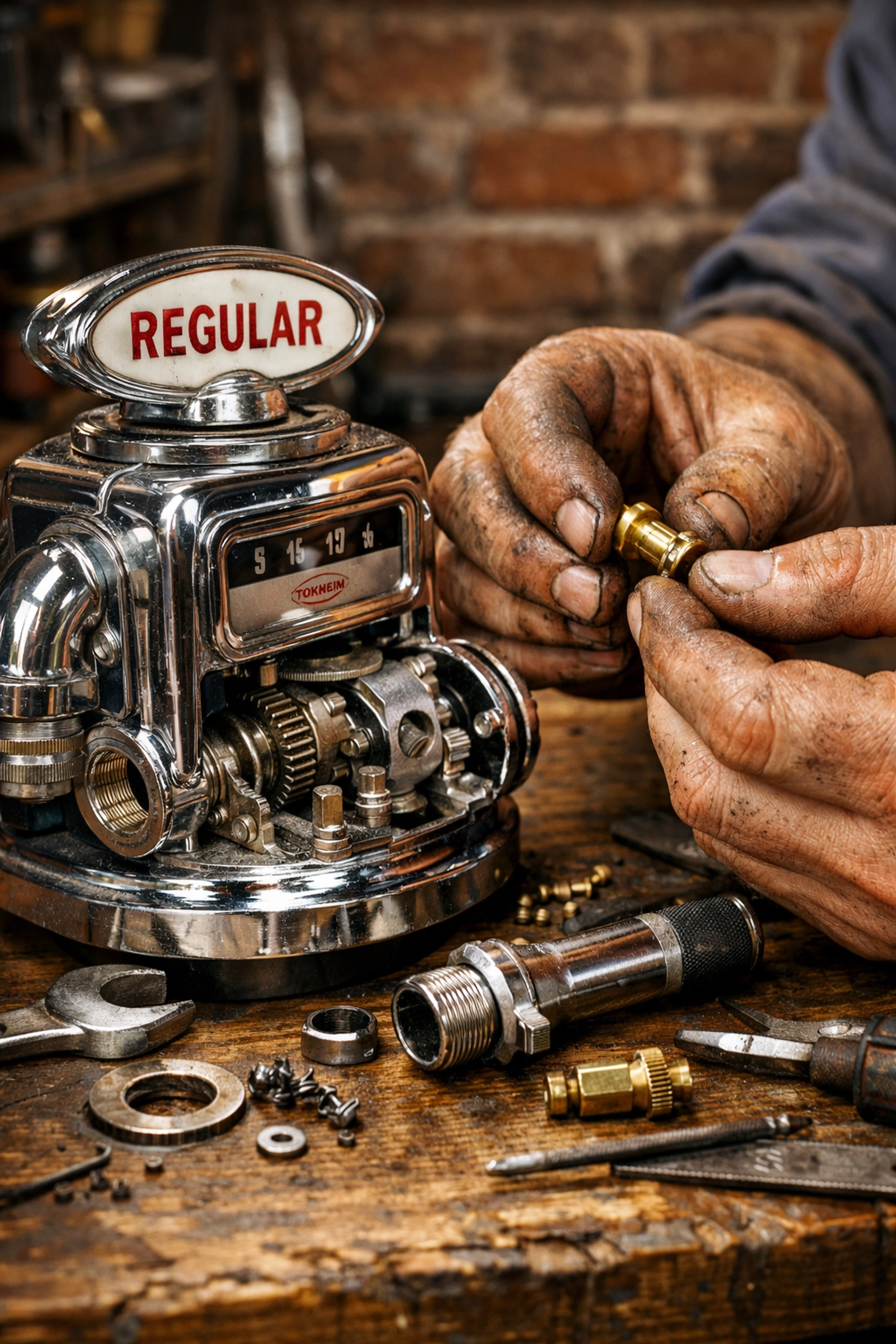
A vintage fuel pump being serviced, a reminder that what you put in the tank dictates how much time you spend under the hood.
The 2026 Connecticut Ethanol-Free Map: Local Destinations
Finding ethanol-free gas requires a bit of strategy. Because of EPA regulations regarding Reformulated Gasoline (RFG) in high-traffic areas, E0 isn't at every corner station. However, Connecticut has made strides. As of late 2024 and moving into 2026, PurFuels has expanded its footprint in the state, utilizing isobutanol to provide a high-octane, ethanol-free alternative that is street-legal and safe for your classic.
The Silas Deane Highway Corridor (Rocky Hill & Wethersfield)
The Silas Deane Highway is the spiritual home of Connecticut cruising. If you are heading out for a Thursday night meet, you need to know your fuel stops.
The Strategy: Several independent stations and select Sunoco outlets along the Silas Deane have historically carried high-octane racing fuels or ethanol-free options catering to the local muscle car community.
Pro Tip: Always check the labels on the "Ultra" pumps. In 2026, more stations are adopting the PurFuels 93 Octane Premium, which is specifically designed to repel moisture.
The Burlington & Litchfield Loop
If you are taking advantage of the winding elevation changes in Burlington, the last thing you want is vapor lock or fuel starvation.
Local Access: While Burlington itself is rural, the neighboring Farmington and Torrington areas are hubs for E0. Look for stations near the trailheads and marinas. Marinas are a secret weapon for classic car owners because boats cannot run on ethanol without catastrophic engine failure.
Check the Map: Use resources like Pure-gas.org to verify the latest station additions in the Farmington Valley.
West Hartford & Central CT Hubs
Living near our office at 71 Raymond Road? You’re in a high-density area where RFG rules are strict, but that doesn't mean you're stuck with corn juice.
Stewart's Shops & Specialized Retailers: Some regional chains have begun dedicated E0 pumps for small engines and vintage cars.
The North Haven Connection: The Transflo terminal in North Haven is the primary source for E0 in CT. The closer you are to the supply lines along I-91, the more likely you are to find retailers carrying the good stuff.
Best Practices: How to Fuel for Longevity
Finding the gas is only half the battle. How you manage your fuel system determines the "health" of your classic. Here is how the pros at Insure Connecticut, LLC recommend you handle your fueling strategy:
1. The 95% Rule
Never leave your classic car sitting with a half-empty tank. A half-empty tank has room for air, and air carries moisture. Keep your tank at 95% full to minimize the "breathing" that occurs during temperature swings in the Connecticut climate.
2. Verify Your Octane
Most ethanol-free gas in CT is sold as 90 or 91 octane, though PurFuels has introduced a 93 octane variant. If your high-compression big-block requires 93 and you can only find 91 E0, you may need a lead substitute or an octane booster. However, the lack of ethanol is more important for the "health" of the system than a 2-point octane difference is for the performance.
3. Use an Ethanol-Specific Stabilizer
If you absolutely cannot find an ethanol-free station on your route back to the garage, use a high-quality stabilizer like Sta-Bil 360 Protection. This doesn't "remove" the ethanol, but it creates a vapor-layer coating on the metal parts of your fuel system to prevent corrosion.
4. Inspect Your Lines
Even with the best fuel, 50-year-old rubber fuel lines will eventually fail. If you are upgrading your car, ensure you are using SAE J30R9 rated fuel hoses, which are designed to withstand modern chemical additives. Protecting your car from a fuel fire is the best way to avoid needing to use your property insurance for your garage.
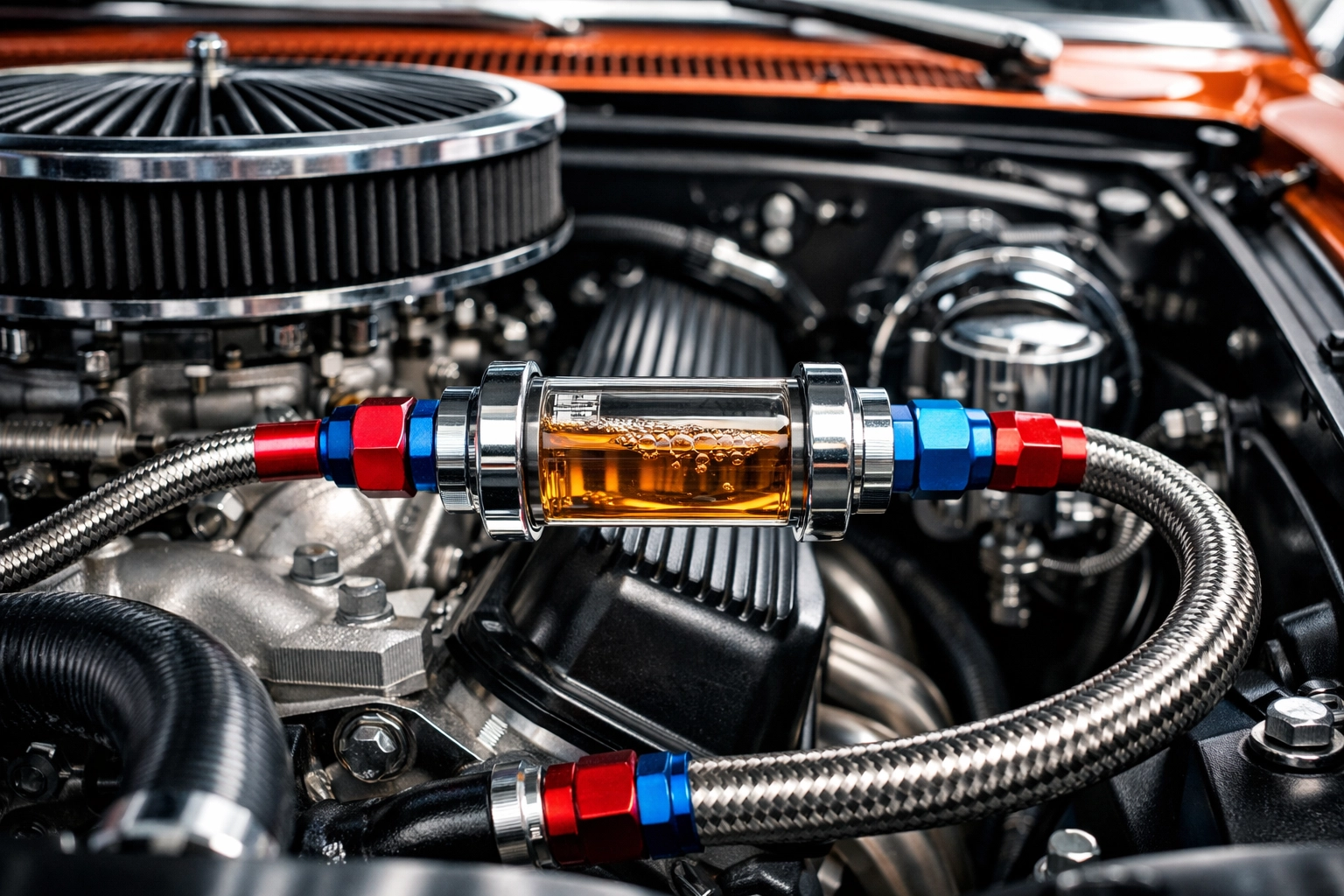
Modern fuel lines and a clean glass fuel filter, essential upgrades for any classic car navigating modern pump offerings.
Challenges and Misconceptions
One of the biggest hurdles for Connecticut collectors is the "Price Gap." Yes, ethanol-free gasoline is more expensive. In 2026, expect to pay a premium of $0.50 to $1.00 per gallon over standard premium E10.
Is it worth the cost?
Think of it as an insurance policy for your engine. A carburetor rebuild for a tri-power setup can easily cost $1,000+. Replacing a rusted-out fuel tank? Even more. When you spread that $20 extra per fill-up over the course of a driving season, the math favors the pure gas every single time.
Another misconception is that "Premium" always means ethanol-free. In Connecticut, this is rarely true. Most 93 octane "V-Power" or "Supreme" fuels still contain 10% ethanol. Unless the pump specifically states "Non-Ethanol" or "E0," assume it has corn in it.
The Future of Fuel in Connecticut
As we move further into 2026, the landscape for classic car owners is shifting. There is a growing movement toward "Carbon Neutral" synthetic fuels, but for now, the expansion of isobutanol-based fuels like PurFuels is the biggest win for our community. These fuels are EPA-compliant for the entire state, meaning we might see a day where the Silas Deane Highway has more E0 options than ever before.
At Insure Connecticut, LLC, we stay ahead of these trends because they impact the value and safety of your vehicles. Whether you are insuring a single weekend cruiser or a multi-car collection in a high-end West Hartford facility, understanding the mechanical risks of modern fuel is part of being a responsible owner.
If your collection has grown or your car’s value has spiked due to a professional restoration, it may be time to review your liability insurance or look into an "Agreed Value" policy. Standard "Actual Cash Value" policies won't account for the blood, sweat, and ethanol-free tears you've put into your machine.
Frequently Asked Questions
Can I mix ethanol-free gas with regular gas?
Yes, they are completely miscible. If you have a half-tank of E10 and find an E0 station, fill it up! You are effectively lowering the total ethanol percentage in your system, which is always a win.
Does ethanol-free gas provide better mileage?
Technically, yes. Ethanol has about 33% less energy than pure gasoline. While you might see a 3-5% increase in MPG, the real benefit for a classic car isn't the efficiency: it's the lack of corrosion.
Where can I find a real-time map?
The gold standard remains Pure-gas.org. You can also use the GasBuddy app and filter by "UNL+," though user-reported data can sometimes be hit-or-miss.
Is ethanol-free gas legal for street use in CT?
Yes. While some "Racing Fuels" are for off-road use only, the PurFuels 93 and other E0 options sold at standard pumps are fully street-legal and EPA-compliant for Connecticut roads.
Do I need ethanol-free gas for my 1990s "Radwood" car?
Cars from the 1990s were built with better plastics and fuel injection, so they handle E10 much better than a car from the 60s. However, if the car sits for long periods, E0 is still highly recommended to prevent fuel system "gumming."
Protect Your Passion with Insure Connecticut, LLC
Fueling your classic car is an act of preservation. You wouldn't put cheap oil in a masterpiece, and you shouldn't put "cheap" gas in a vintage engine. At Insure Connecticut, LLC, we believe that the best insurance is a combination of the right policy and the right maintenance.
Located at 71 Raymond Road, West Hartford, CT, we are part of this community. We drive these roads, we visit these stations, and we understand the unique needs of Connecticut car collectors. Whether you are navigating the twisties of Burlington or the historical stretches of the Silas Deane, make sure your insurance coverage is as high-octane as your fuel.
The Insure Connecticut, LLC team is ready to help you protect what matters most: on and off the road.
Ready to Review Your Coverage?
Don't wait for a fuel-related mishap or a spring fender-bender to find out if you're properly covered. Call us today at 860-440-7324 or visit our office in West Hartford. Let’s talk about your collection, your favorite driving routes, and how we can provide the peace of mind you deserve.
Contact Us: Insure Connecticut, LLC 71 Raymond Road West Hartford, CT 06107 Phone: 860-440-7324


Comments