.png)
What Do West Hartford Business Owners Need to Know About Commercial Auto Insurance?

If you own a business in West Hartford, whether it’s a boutique in Blue Back Square or a landscaping company serving residents near the Hartford Golf Club, you likely rely on vehicles to get the job done. But there is a persistent and dangerous myth circulating among small business owners in Connecticut: the idea that a personal auto insurance policy is "good enough" for business use.
The reality is that personal auto policies are designed for commuting and running errands, not for the complex risks associated with commercial operations. If you are using your personal SUV to deliver goods to customers or your plumbing van is involved in an accident on Trout Brook Drive, a standard personal policy may deny the claim entirely. This leaves you, the business owner, personally responsible for medical bills, property damage, and legal fees, a situation that can easily bankrupt a growing company.
In this guide to West Hartford commercial auto coverage, we are stripping away the jargon. We are going to look at the essential components of business insurance in Connecticut, why your current coverage might have a massive hole in it, and how to choose the right carrier from industry leaders like The Hartford, Progressive, GEICO, Kemper, Plymouth Rock, National General, and Bristol West.
Why Your Personal Policy Isn’t a Safety Net for Your Business
One of the most frequent questions we hear at Insure Connecticut LLC is: "I’m the only one driving my truck for work; why do I need a separate commercial policy?"
The answer lies in the contract. Insurance is a legal agreement based on risk assessment. When you buy a personal policy, the carrier calculates your premium based on the likelihood of an accident during grocery runs or school drop-offs. Commercial use involves significantly higher risks: heavier vehicle weights, more time on the road, and the transport of expensive equipment or hazardous materials.
If you fail to disclose that a vehicle is being used primarily for business, you are essentially operating without coverage. This is a primary concern for small business insurance in CT. If an accident occurs while you are performing a business task, the insurance company will investigate the "usage" at the time of the loss. If they find it was business-related and you don't have a commercial endorsement or policy, they can void the claim.
The Real Risks of "Business Use"
Liability Limits: Personal policies often have lower liability limits that won't satisfy state requirements for certain commercial vehicles.
Excluded Activities: Most personal policies explicitly exclude delivery services (like food delivery or courier work).
Ownership Issues: If the vehicle is owned by a Corporation or LLC, it must be on a commercial policy.
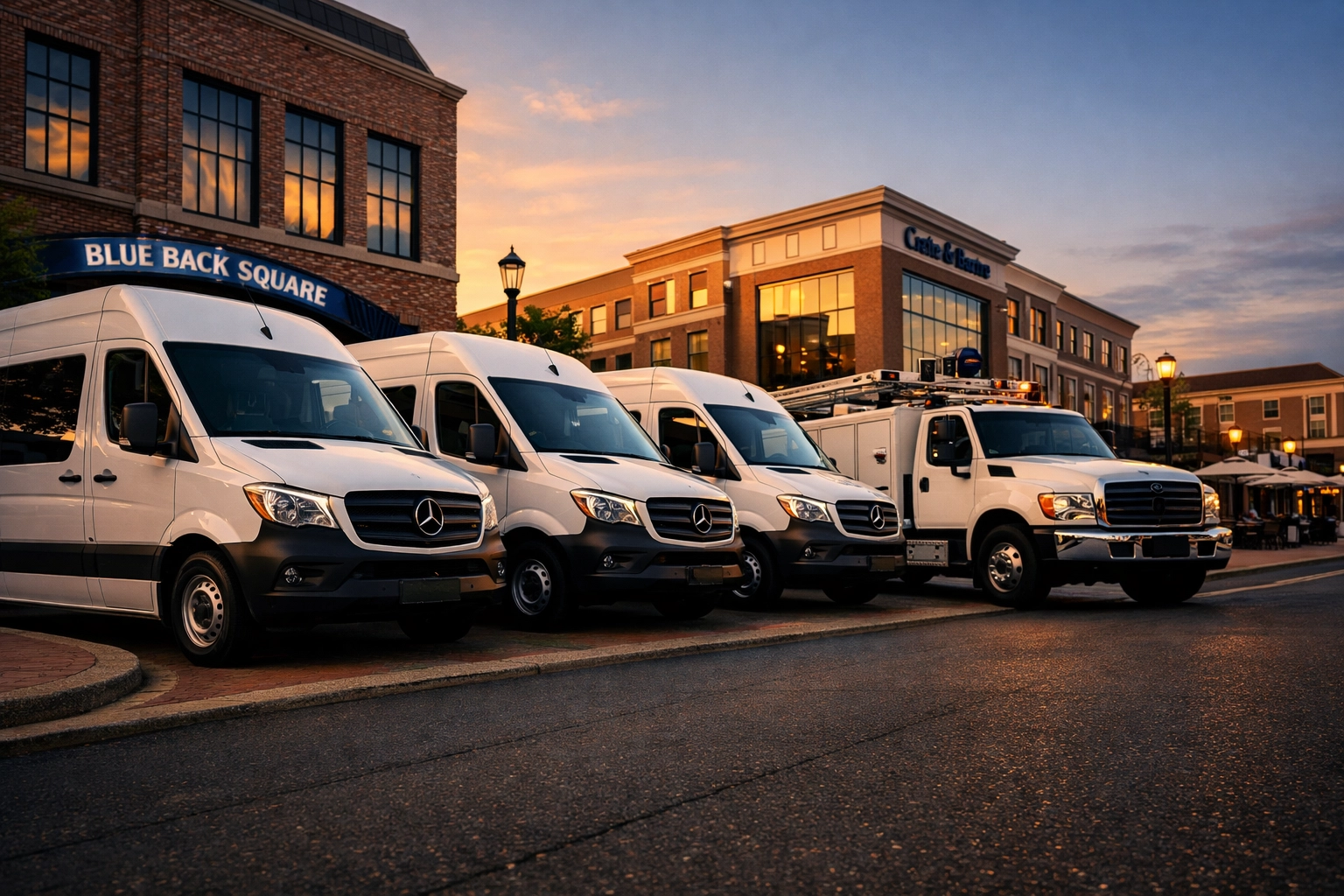
Alt-text: A fleet of commercial vans parked in a West Hartford business district, highlighting the need for specialized connecticut business insurance.
Breaking Down the "Big 5" Concerns: Cost, Problems, and Carriers
To give you a clear view of your options, we need to address the "Big 5" topics that impact every business owner’s bottom line in West Hartford.
1. The Cost of Commercial Auto Insurance in CT
The question isn't just "how much?" but "what determines the price?" In West Hartford, insurance rates are influenced by our local geography and the high density of traffic. On average, a commercial policy in Connecticut can range from $750 to $2,500 per vehicle per year, but these numbers vary wildly based on:
Vehicle Type: A heavy-duty box truck costs more to insure than a passenger sedan.
Driving Records: A single DUI or multiple speeding tickets on a driver’s record will spike premiums across the entire fleet.
Radius of Operation: Do you stay within the 06107 and 06110 zip codes, or do your drivers travel across state lines into New York or Massachusetts?
Coverage Limits: Opting for the state minimum might save money today, but it’s a massive risk for any business with assets to protect.
2. Common Problems and Denied Claims
Claims are most often denied when the policy doesn't match the reality of the business.
The "Hired and Non-Owned" Trap: If your employee uses their own car to pick up supplies and hits a pedestrian, your business can be sued. If you don't have "Hired and Non-Owned Auto" coverage, you are unprotected.
Customization Exclusions: If you have $20,000 worth of shelving and tools bolted into your van but didn't list them under inland marine insurance, the carrier may only pay for the value of the base vehicle.
3. Comparing the Top Carriers in West Hartford
We are appointed with a range of top-tier carriers, and each has a specific "appetite" for different types of risk in West Hartford and across Connecticut:
The Hartford: A strong fit for many established businesses that want broad commercial insurance capabilities and carrier experience with business auto risks.
Progressive: Often the leader for contractors and trucking due to their flexible filings and competitive rates for new businesses.
GEICO: Excellent for small fleets and businesses that require fast service and digital policy management.
Plymouth Rock: A regional favorite that understands the specific risks of New England winters and Connecticut's legal landscape.
National General & Bristol West: Often provide solutions for businesses with drivers who may have less-than-perfect records or harder-to-place auto risks.
Kemper: Can be a strong fit for select industries, including certain retail and professional service operations that need more tailored underwriting.
4. Reviews and Reputation
When choosing a carrier, don't just look at the price. Look at their "Claims Satisfaction" rating. A cheap policy is useless if the carrier takes three months to process a claim while your only delivery vehicle sits in a shop on New Park Avenue. Carriers like Progressive and Plymouth Rock have dedicated commercial claims teams that understand time is money for a small business.
5. Best-of Lists: Who is the Best for You?
Best for New Contractors: Progressive.
Best for Large Fleets: Travelers or GEICO.
Best for Specialized Equipment: National General.
Essential Coverage Components Every Policy Needs
To build a robust business insurance Connecticut plan, you need to understand the individual "bricks" that make up your policy.
Bodily Injury Liability
This is the core of your policy. If you or an employee is at fault in an accident that injures another person, this pays for their medical bills, lost wages, and your legal defense. In West Hartford, where the cost of living and medical care is high, we rarely recommend the state minimum. A single major accident can easily result in a $500,000+ judgment.
Property Damage Liability
This pays for the damage your vehicle causes to someone else's property, whether it’s another car, a storefront on LaSalle Road, or a town-owned utility pole. Learn more about general liability insurance in Connecticut to see how this fits into your overall protection.
Collision and Comprehensive
Collision covers your vehicle if it’s damaged in an accident with another car or object.
Comprehensive (often called "Other Than Collision") covers damage from theft, vandalism, fire, or "acts of God" like a falling tree limb during a New England nor'easter.
Uninsured/Underinsured Motorist (UM/UIM)
Connecticut law requires this, and for good reason. Many drivers on our roads are underinsured. If a driver with no insurance hits your commercial van, your UM/UIM coverage steps in to pay for your injuries and damages.
Medical Payments (MedPay) or PIP
In Connecticut, disability income insurance and MedPay provide a first line of defense for medical bills for you and your passengers, regardless of who was at fault.

Alt-text: Insure Connecticut LLC Logo representing local expertise in West Hartford business insurance.
The 10-Step Checklist for Evaluating Your Commercial Auto Needs
Before you call for a quote, go through this checklist to ensure you are getting an accurate assessment.
Ownership Check: Who is on the title? If it’s the business name, it must be a commercial policy.
Driver List: Gather the DL numbers for every person who might drive the vehicle.
VIN Numbers: Have the specific Vehicle Identification Numbers ready.
Radius of Travel: Determine exactly how far your vehicles go on a regular basis.
Cargo Assessment: What are you carrying? Hazardous materials require specialized filings.
Tool/Equipment Inventory: Are there expensive tools attached to the vehicle?
Client Requirements: Do your contracts (e.g., with the Town of West Hartford) require specific liability limits?
Hired/Non-Owned Needs: Do employees ever use their own cars for work?
Deductible Comfort: How much can you afford to pay out of pocket ($500, $1,000, $2,500) to lower your premium?
Previous Coverage: Have your current "Declarations Page" ready to compare apples to apples.
For a deeper look at how to manage your business assets, check out our Educational Lab.
Understanding Connecticut State Requirements
Every state has its own rules for connecticut business insurance. In CT, the minimum liability requirements are often insufficient for a business. For instance, the state minimum might be 25/50/25 ($25,000 per person for bodily injury, $50,000 per accident, and $25,000 for property damage).
Think about the cars driving around West Hartford, BMWs, Teslas, and high-end SUVs. A $25,000 property damage limit won't even cover the bumper of a modern luxury car. If your driver totals a $70,000 vehicle, your business is on the hook for the remaining $45,000. This is why we advocate for higher limits; the cost difference is often surprisingly small compared to the protection it provides.
Additionally, certain types of businesses in CT, like trucking and logistics, must adhere to federal FMCSA regulations if they cross state lines.
Why West Hartford Businesses Trust Insure Connecticut LLC
We aren't just an agency; we are your neighbors. Located at 71 Raymond Road, right in the heart of West Hartford, we understand the local market. We know the traffic patterns on I-84, the risks of parking in crowded town centers, and the specific needs of local industries from coffee shops to tattoo parlors.
By being appointed with carriers like The Hartford, Progressive, GEICO, Kemper, Plymouth Rock, National General, and Bristol West, we can shop the market for you. Instead of you spending hours on different websites, we run the comparisons to find the best blend of price and protection.
FAQ: Essential Questions West Hartford Business Owners Ask
Is my trailer covered under my commercial auto policy?
Usually, the liability from your vehicle extends to the trailer while it is attached. However, the trailer itself (for theft or physical damage) needs to be specifically added to the policy. If you have expensive equipment inside the trailer, you may need an inland marine policy.
Can I exclude certain drivers to save money?
Some carriers allow you to "exclude" a high-risk driver (like a family member with a poor record) so they don't impact your business rates. However, if that person drives the vehicle even once and has an accident, there is zero coverage.
What happens if I use my work truck for personal errands?
Most commercial policies allow for "personal use," but it’s important to verify this with your agent. If you are using a heavy-duty truck for a cross-country personal vacation, there may be limitations.
Does commercial auto cover the items inside the van?
Generally, no. Commercial auto covers the vehicle. The items inside: tools, inventory, or customer property: are typically covered under a Business Owners Policy (BOP) or Inland Marine coverage. This is a common point of confusion that we address in our General Liability overview.
Why did my rate go up even though I didn't have an accident?
Insurance rates in Connecticut are influenced by "rate filings" where carriers adjust prices based on the total number of claims in the state. Factors like increased litigation costs and the rising price of vehicle repairs (due to advanced sensors and tech) impact everyone’s premiums. You can find discussions on this on the r/Insurance subreddit.
Do I need Workers' Comp if my driver is injured in an auto accident?
Yes. While the auto policy covers liability to others, injuries to your employees while they are working are typically covered under Workers' Compensation insurance in Connecticut.
Future Trends: Telematics and the 2026 Outlook
As we move through 2026, the use of telematics: devices or apps that track driving behavior: is becoming standard. Carriers like Progressive and Plymouth Rock offer significant discounts for businesses willing to prove their drivers are safe. This "usage-based insurance" is a game-changer for West Hartford companies looking to lower costs.
Furthermore, with the rise of AI-driven logistics, the nature of risk is shifting. We recently explored the AI agent risk and vulnerabilities in our blog, which is becoming increasingly relevant as more fleet management tools incorporate automated systems.
Conclusion: Taking the Next Step
Commercial auto insurance is not a "set it and forget it" product. As your business grows, your fleet changes, and your service area expands, your coverage needs to evolve with you. Operating with the wrong policy is a gamble where the stakes are your company’s future.
If you are unsure whether your current policy actually protects your business, or if you are tired of seeing your premiums rise without explanation, let’s have a straightforward conversation. At Insure Connecticut LLC, we prioritize education over sales.
Your Action Plan:
Review your current policy's "Usage" section.
Check your liability limits against the value of your business assets.
Request a Quote Form for a comprehensive review of your commercial lines.
Don't wait for a claim to find out you're underinsured. Visit us at 71 Raymond Road, West Hartford, or call us at 860-440-7324 to ensure your business is moving in the right direction.
For more educational content, watch this helpful breakdown of How Commercial Auto Insurance Works on YouTube.
Comments