.png)
The Private Client’s Guide to Fine Art Transit and Secure Storage at Every Step
- W. Tom Polowy, MS

- Apr 21
- 7 min read
For collectors in the Connecticut and New York corridor, art is more than just an asset class, it is a legacy. Whether you are moving a single piece from a gallery in Chelsea to your home in Greenwich or relocating an entire collection to a seasonal residence, the logistics of transit and storage represent the moments of highest risk for your investment.
Standard homeowners insurance is often insufficient for the unique needs of fine art, especially when that art is on the move. In this guide, we will break down the critical components of fine art logistics, the specific insurance protections required, and the steps you must take to ensure your collection remains pristine at every step of its journey.
The Foundation of Protection: The Fine Art Floater
One of the most common questions we hear is: "Doesn't my standard personal lines insurance cover my paintings?"
The short answer is: rarely to the extent you need. Standard policies typically have "sub-limits" for valuables and may only cover specific "named perils" like fire or theft. Furthermore, they often exclude coverage once the item leaves the premises.
A Fine Art Floater (or a scheduled valuable items plus policy) provides "all-risk" coverage. This means the item is covered unless the cause of loss is specifically excluded. Crucially, a floater follows the art wherever it goes, into a van, onto a plane, or into a temporary storage facility.
Why "Agreed Value" Matters
When scheduling art on a floater, you want an Agreed Value policy. Unlike "Actual Cash Value," which factors in depreciation, or "Market Value," which can fluctuate wildly, Agreed Value ensures that if a total loss occurs during transit, you receive the exact amount listed on your policy schedule. This is essential for maintaining the financial integrity of your collection.
Transit Exclusions: What You Don’t Know Can Hurt You
Insurance is about the transfer of risk, but no policy covers everything. When art is in transit, several common exclusions can lead to denied claims if you aren't careful.
Inherent Vice: This refers to a quality within the object that causes it to destroy itself (e.g., unstable chemicals in a contemporary sculpture).
Gradual Deterioration: Damage caused by time or wear and tear, rather than a specific accident during transit.
Inadequate Packing: This is the most significant "avoidable" exclusion. If you or an unqualified mover packs a $100,000 canvas in a standard cardboard box and it arrives punctured, the carrier may deny the claim due to "insufficient packing."
Mechanical Breakdown: For kinetic art or electronic installations, the failure of internal components during a move is often excluded.
To mitigate these risks, you must pair a robust insurance policy with professional physical handling.
Professional Shippers vs. General Moving Companies
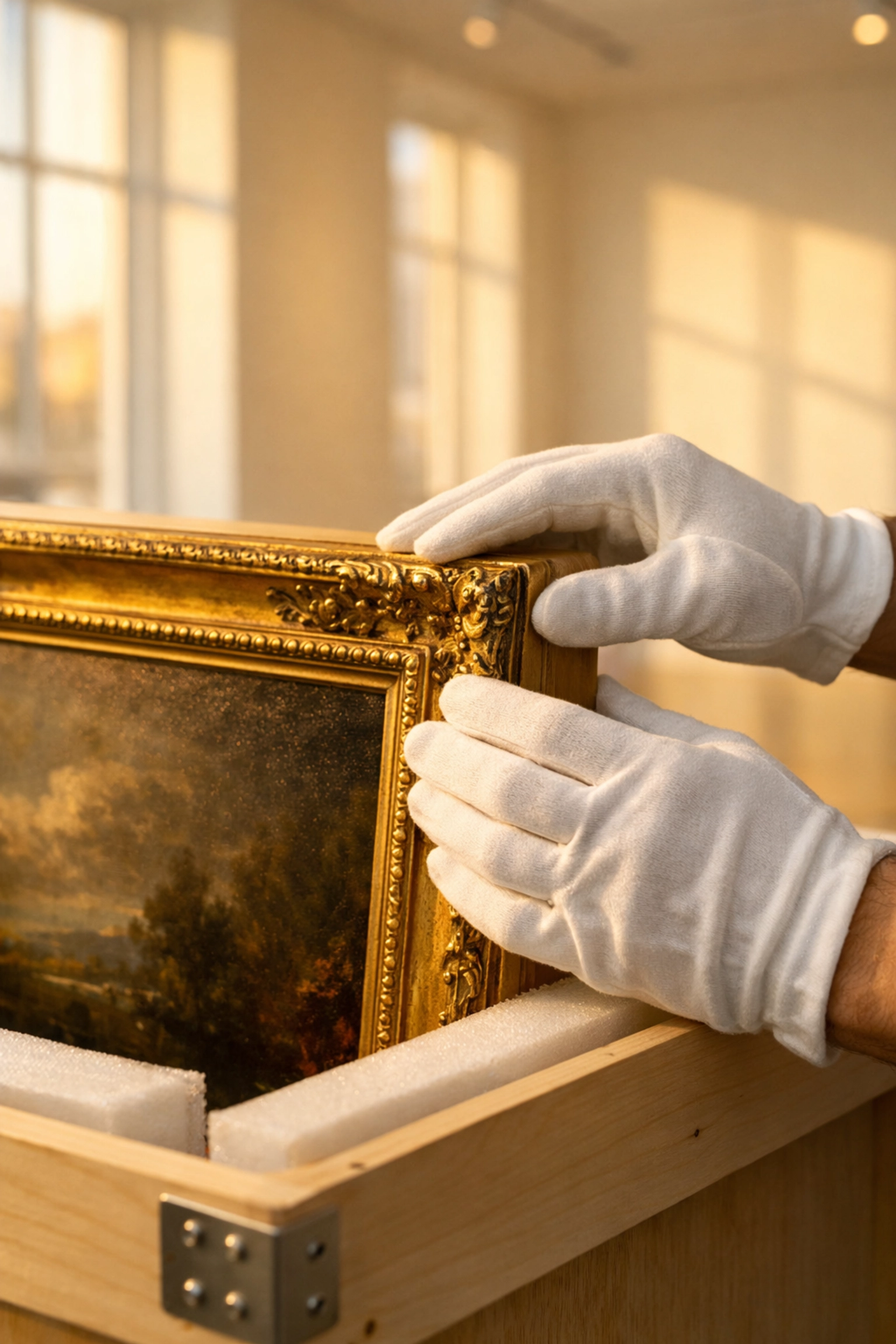
One of the "Big 5" topics in art logistics is the comparison between specialized art handlers and general household movers. While a standard moving company might be excellent at transporting your furniture, they are rarely equipped for fine art.
Feature | General Moving Company | Professional Art Handler |
Training | General labor and lifting | Specialized conservation-minded handling |
Equipment | Standard blankets and tape | Custom crating, glassine, Tyvek |
Vehicle Type | Standard box truck | Climate-controlled, air-ride suspension vans |
Security | Standard locks | Coded neutral labeling, GPS tracking, dual-drivers |
Documentation | Bill of Lading | Detailed Condition Reports at every handoff |
If you are moving high-value items, the cost of a professional art shipper is a fraction of the potential loss in value from a single scratch. You can find community discussions on the nuances of choosing handlers on Reddit's Art Collecting community.
The Science of Packing and Crating
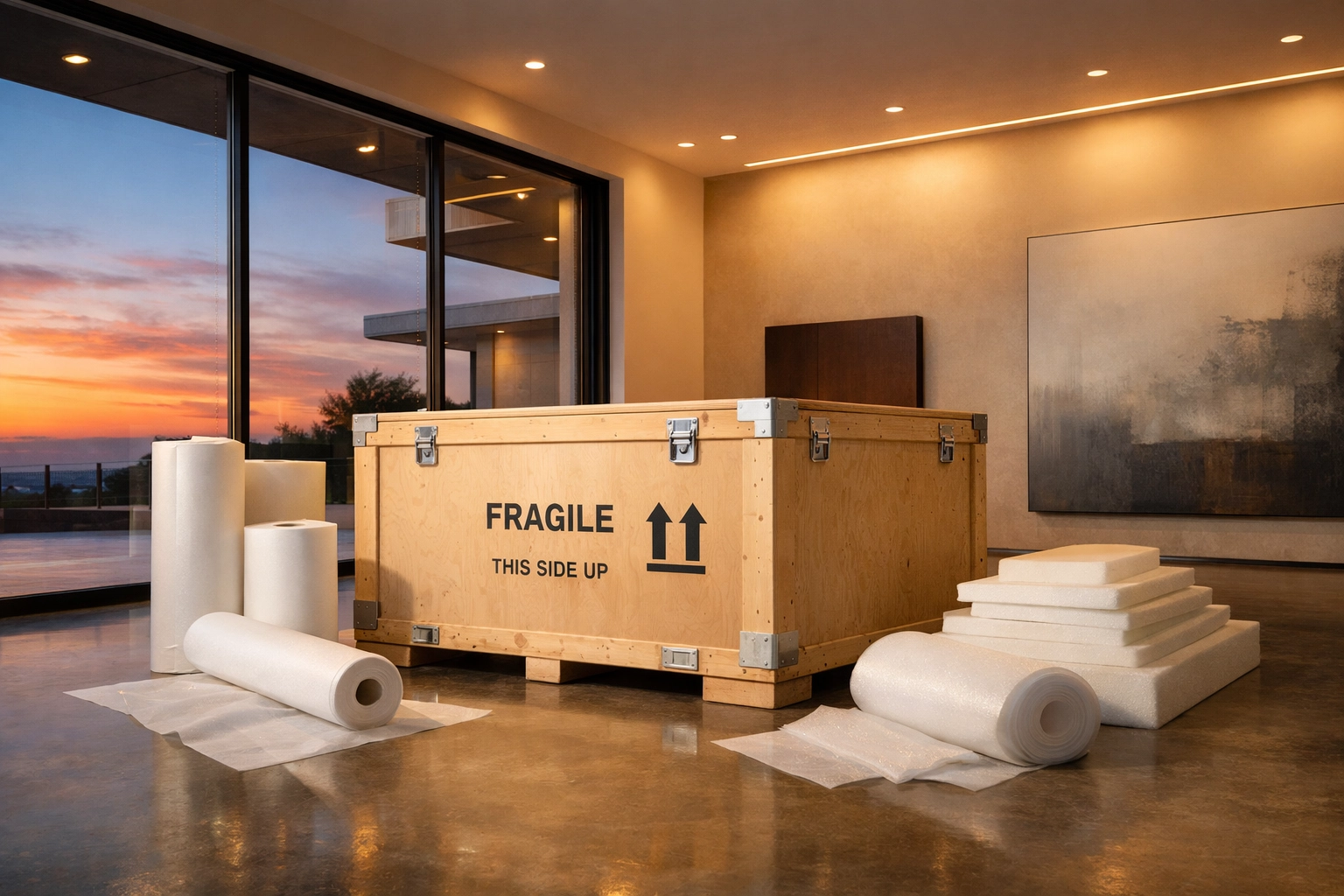
Packing is your first line of defense. High-realism art handling requires materials that are chemically inert and physically supportive.
Inner Wrapping
Glassine: A pH-neutral, acid-free paper that resists grease and water. It is the gold standard for protecting the surface of oil paintings.
Tyvek: A breathable, waterproof material often used for "soft packing" sculptures or frames that don't have sensitive paint surfaces.
Dartek: A nylon film often used for oil paintings that are still "tacky" or sensitive to temperature.
Crating
For high-value transit, "soft packing" isn't enough. You need custom-built wooden crates. These crates are often lined with Ethafoam to absorb shocks and vibrations from the road. For international travel, these crates must meet ISPM 15 heat-treatment standards to prevent the spread of timber pests.
Climate-Controlled Storage: Beyond the Thermostat
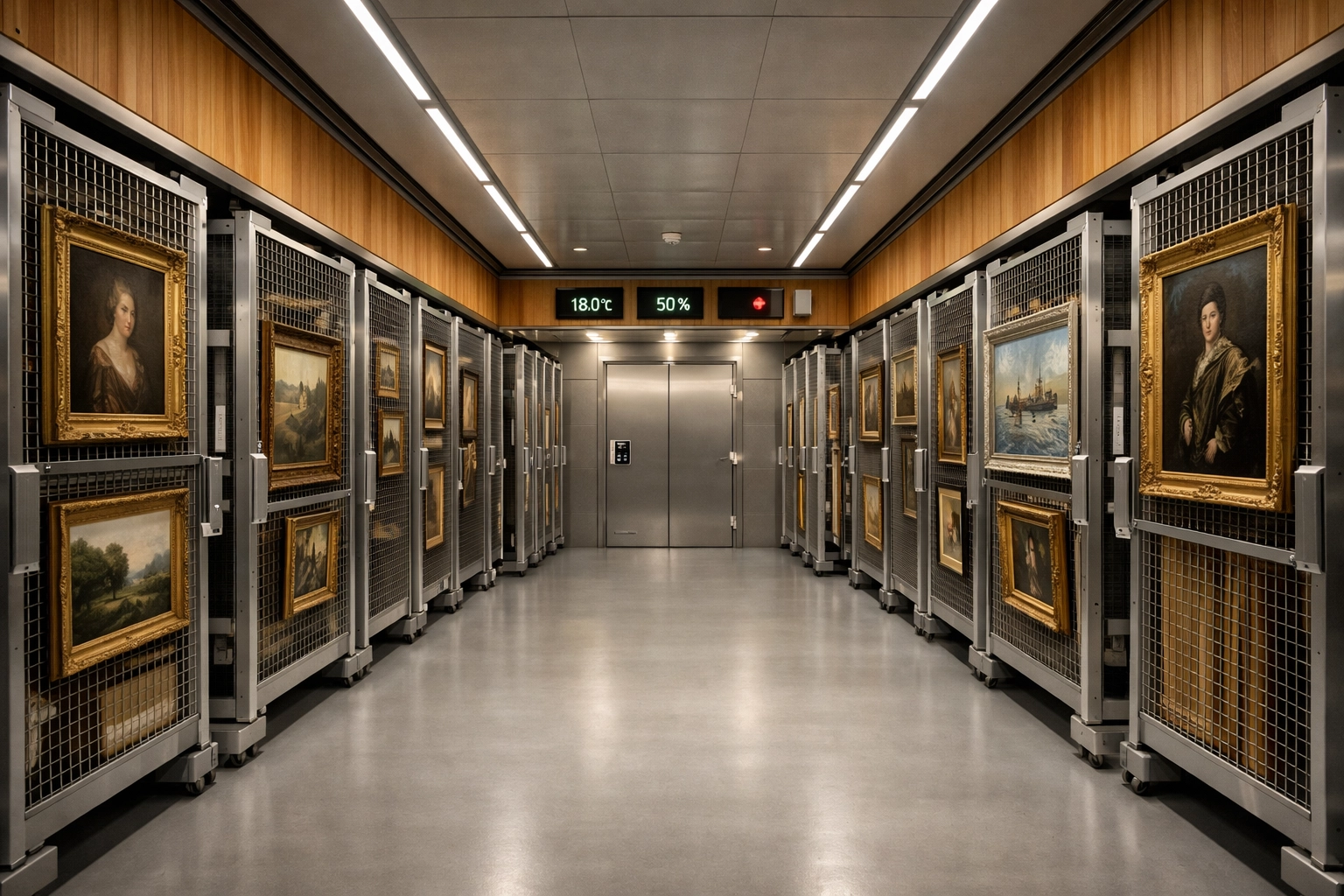
If your collection is heading into storage, perhaps during a home renovation or while transitioning between estates, the facility you choose is paramount. Many "climate-controlled" units in Connecticut only manage temperature (preventing freezing or overheating). Fine art requires Climate and Humidity Control.
The Golden Ratio: 70/50
Museum standards generally dictate a temperature of 70°F (±2°) and a Relative Humidity (RH) of 50% (±5%).
High Humidity: Leads to mold growth, foxing on paper, and the expansion of wood panels.
Low Humidity: Causes wood to shrink and crack, and paint layers to become brittle and flake.
When reviewing a storage facility, ask for their "hygrothermograph" logs. A reputable facility will be able to prove they maintain consistent levels year-round.
Security Protocols: The "Vault" Standard
Physical security is about more than just a gate and a camera. For Private Clients, we look for the following "Redundant Security" features:
24/7 Monitored UL-Certified Alarms: Directly linked to local police and fire departments.
Biometric Access: Fingerprint or facial recognition for entry into high-value vaults.
Dual-Factor Authentication: Requiring both a digital code and a physical key or secondary authorization.
Water Detection Systems: Sensors on the floor to alert staff of leaks or rising water before damage occurs.
Condition Reports: Your Paper Trail of Value
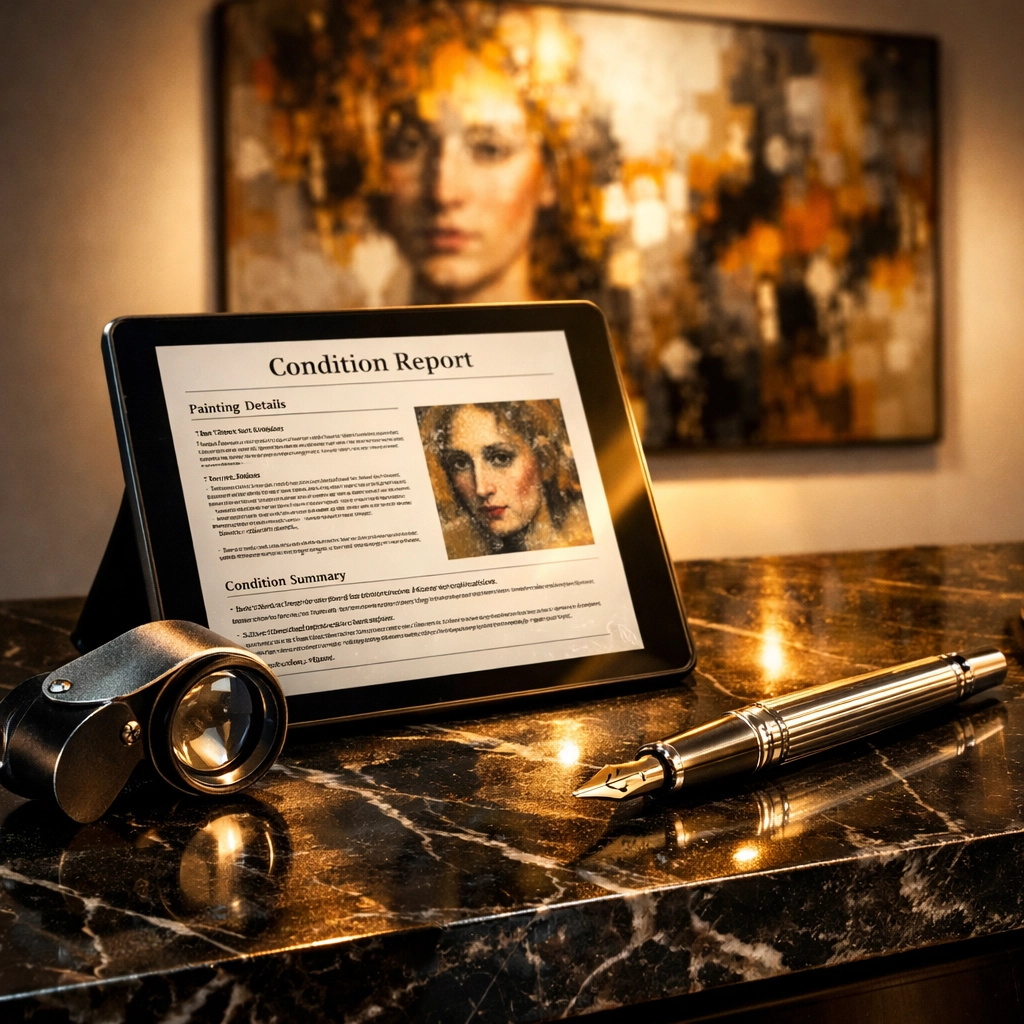
A condition report is a document that describes the physical state of an artwork at a specific moment in time. In the world of fine art transit, these are your "insurance" against "it was like that when we found it" arguments.
You should have a condition report performed at three specific stages:
At Handoff: Before the shipper touches the piece.
At the Depot/Warehouse: If the piece is being stored mid-transit.
Upon Delivery: Before the shippers leave your home.
If you notice a new crack or a scuff, it must be noted on the report immediately. Without a "before" and "after" report, proving that damage happened during transit becomes a legal nightmare. For a visual guide on how professionals perform these checks, see this YouTube demonstration on art condition reporting.
Claims Handling: What to Do When the Unthinkable Happens
Even with the best planning, accidents occur. How you handle the first 24 hours after discovering damage will determine the success of your insurance claim.
Don't Move the Piece: Leave it exactly as it was found. Moving it can cause further damage and complicate the investigation.
Document Everything: Take high-resolution photos and videos of the damage and the surrounding packaging.
Keep the Packaging: Do not throw away the crate or the wrapping. The insurance adjuster will need to see if the packing was sufficient.
Notify Your Broker: Contact Insure Connecticut LLC immediately. We will help you navigate the process between the handler’s bailee insurance and your own personal floater.
Total Loss vs. Diminution in Value
If a piece is damaged but repairable, the insurance company will pay for the restoration. However, even a perfectly restored painting may lose market value because it has been "repaired." This is called Diminution in Value. A high-quality fine art policy will cover this loss in value, whereas a standard policy likely will not.
Checklist: Before You Loan to a Museum
Loaning your art to a museum or gallery is a prestigious way to share your collection, but it introduces "Third Party Risk." Before you let a piece leave your home, ensure you have checked the following:
Certificate of Insurance (COI): Does the museum have "Wall-to-Wall" coverage?
Facility Report: Have you reviewed the museum’s American Alliance of Museums (AAM) Standard Facility Report?
Loan Agreement: Does it specify who is responsible for transit costs and insurance deductibles?
Transit Method: Are they using a reputable fine art courier or just a standard delivery service?
Condition Reporting: Who is performing the incoming and outgoing reports?
Trends in Art Logistics: The Connecticut Perspective
In recent years, we have seen a shift in how collectors in the Northeast manage their assets. With increasing weather volatility, many of our clients are moving their primary collections into specialized art warehouses in "low-risk" zones, only bringing specific pieces home for display.
Furthermore, "Digital Provenance" is becoming standard. Many collectors now use blockchain-based systems to track the location and condition history of their pieces. This creates an immutable record that can simplify the underwriting process for umbrella insurance and high-limit floaters.
Frequently Asked Questions (FAQ)
1. How much does fine art insurance cost for transit?
Typically, fine art insurance is priced based on a percentage of the total value (often between $0.10 and $0.20 per $100 of value). However, if you have a standing "floater" policy with Insure Connecticut, transit is often already included in your annual premium.
2. Can I ship my art myself to save money?
You can, but it is highly discouraged for high-value items. If you pack and transport the item yourself, you assume all the risk. Most insurance companies will deny a claim if the damage resulted from "amateur handling" or "improper packing" by the owner.
3. What is "Nail-to-Nail" coverage?
This is the industry term for coverage that begins the moment the art is taken off the wall (the first "nail") and continues through transit and storage until it is hung on the wall at its final destination (the second "nail"). Always ensure your policy or the shipper’s policy is "Nail-to-Nail."
4. Does the shipper’s insurance cover the full value of my art?
Often, no. Many shipping companies have "Limited Liability" that pays out by the pound (e.g., $0.60 per pound), which is useless for a $50,000 painting. Always verify that they have specific Fine Art Transit Coverage or rely on your own floater.
5. Why was my claim for a cracked frame denied?
Many policies treat frames as "accoutrements" rather than the artwork itself. Unless the frame is specifically scheduled or considered an integral part of the piece (like a hand-carved period frame), it may have a different deductible or limited coverage.
6. What should I do if my art is going into storage during a move?
Ensure the facility is a dedicated art storage warehouse, not a general self-storage unit. Verify their climate control logs and ensure your dwelling fire insurance or floater is updated to reflect the storage location.
Conclusion: Protect Your Passion
Your art collection represents your taste, your history, and a significant portion of your net worth. Treating the logistics of its movement with the same rigor you used in its acquisition is the only way to ensure its longevity.
At Insure Connecticut LLC, we specialize in the unique risks faced by Private Clients. We don't just sell policies; we help you build a risk management strategy that includes choosing the right shippers, vetting storage facilities, and ensuring your coverage is "Nail-to-Nail."
Don't wait until a crate arrives damaged to find out if you’re covered.
Contact Wojciech Polowy and the team at Insure Connecticut LLC today for a comprehensive review of your collection’s insurance. Whether you’re moving one piece or one hundred, we’ll make sure your legacy is protected at every step.
Call us at 860-440-7324 or visit www.myinsurect.com to schedule your private collections review.

Comments