.png)
The Problem with Standard Coastal Homeowners Policies: Avoiding Claim Denials and Wind Deductible Traps
- W. Tom Polowy, MS

- Apr 5
- 6 min read
Owning a home on the coast, whether it’s a shingle-style estate in Chatham, a modern glass sanctuary in Westport, or a historic lighthouse-view property in Rhode Island, is a pinnacle of achievement. But the very proximity to the ocean that makes these properties valuable also makes them a target for complex insurance "traps."
Most homeowners believe that as long as they pay their premiums and have a "standard" policy, they are protected. Unfortunately, for high-value coastal properties, a standard policy is often little more than a false sense of security. When a major storm hits, many owners discover the hard way that their coverage is riddled with exclusions and massive out-of-pocket expenses known as "wind deductible traps."
At Insure Connecticut, LLC, we believe in radical transparency. In this third installment of our Elite Asset Protection series, we are addressing the "Big 5" problems and fears coastal homeowners face: claim denials, inadequate limits, and the fine print that can cost you hundreds of thousands of dollars.
The "Wind Deductible Trap": Why Your Out-of-Pocket Costs Are Higher Than You Think
The most common shock for coastal homeowners after a storm isn't the damage itself, it’s the realization that their deductible isn't a flat $1,000 or $2,500.
The Math of Percentage Deductibles
Standard homeowners insurance usually has a fixed dollar amount for a deductible. However, in coastal areas like Massachusetts and Connecticut, insurance carriers almost universally apply percentage-based deductibles for wind, hail, or named storms. These typically range from 1% to 5% of the dwelling coverage limit (Coverage A), not the amount of the claim.
Consider this scenario for a $3,000,000 waterfront home:
Standard Policy: 5% Wind Deductible.
The Math: 5% of $3,000,000 = $150,000.
The Reality: If a storm causes $200,000 in roof and window damage, the insurance company only pays $50,000. You are responsible for the first $150,000.
For many, this makes the insurance policy feel like a "catastrophe-only" plan, leaving the homeowner to self-insure for mid-sized losses that would be fully covered on an inland property.

Suggested Image: A professional HDR photograph of a coastal luxury home at twilight, showing the proximity to the water with soft, realistic lighting.
Why Coastal Claims Get Denied: The "Proximate Cause" Battle
One of the greatest fears for a coastal homeowner is a total claim denial. This usually happens because of a dispute over what actually caused the damage: Was it the wind (covered) or was it the water (excluded)?
The Wind vs. Water Dilemma
Standard homeowners policies explicitly exclude flood damage. In a hurricane or Nor’easter, wind and water often strike simultaneously. If a storm surge pushes three feet of water into your living room, but the wind also blew out the windows, the insurance company will hire forensic engineers to determine which came first.
If they conclude the water damage occurred before or independent of the wind damage, your homeowners insurance policy will likely deny the water-related portion of the claim entirely. Without a specific flood policy, you are left with zero recourse for the most expensive part of the restoration.
The Maintenance and "Wear and Tear" Exclusion
Coastal environments are harsh. Salt air, constant moisture, and high winds cause properties to age faster than inland homes. Standard carriers often use "lack of maintenance" or "wear and tear" as a reason to deny claims. For example, if a storm causes a leak, but the adjuster finds salt-corroded flashing or aging sealant, they may claim the damage was inevitable and therefore not a "sudden and accidental" loss.
The Inadequacy of NFIP for High-Value Estates
If you live in a high-risk flood zone, your mortgage lender likely requires flood insurance. Most homeowners turn to the National Flood Insurance Program (NFIP). For a standard suburban home, the NFIP is fine. For an elite coastal asset, it is dangerously insufficient.
The Problem with NFIP:
Coverage Caps: The NFIP limits dwelling coverage to $250,000.
Actual Cash Value: In many cases, the NFIP pays out based on "Actual Cash Value" (depreciated value) for contents, rather than what it actually costs to replace them.
No Loss of Use: The NFIP does not cover "Additional Living Expenses." If your home is uninhabitable for six months while being rebuilt, you are paying for a rental out of pocket.
For a luxury waterfront property, $250,000 might not even cover the cost of replacing custom cabinetry and high-end flooring in a flooded basement or first floor. This is why we emphasize the importance of Private Flood Insurance for our Private Clients. Private flood policies offer much higher limits (often up to the full value of the home) and include essential coverages that the government program lacks.
Replacement Cost vs. The "Functional" Trap
High-value coastal homes often feature custom architecture, imported materials, and historic craftsmanship. A standard homeowners policy usually includes "Replacement Cost" coverage, but it often comes with a "cap", usually 125% or 150% of the insured value.
In a post-storm environment, construction costs skyrocket due to "demand surge." Materials become scarce, and specialized contractors are in high demand. If your $5M home costs $8M to rebuild due to these spikes, a standard policy will leave you with a $3M shortfall.
Elite policies, like those we design for our clients, offer Guaranteed Replacement Cost. This ensures the home is rebuilt to its original specifications, regardless of the final cost, providing true peace of mind for unique architectural assets.
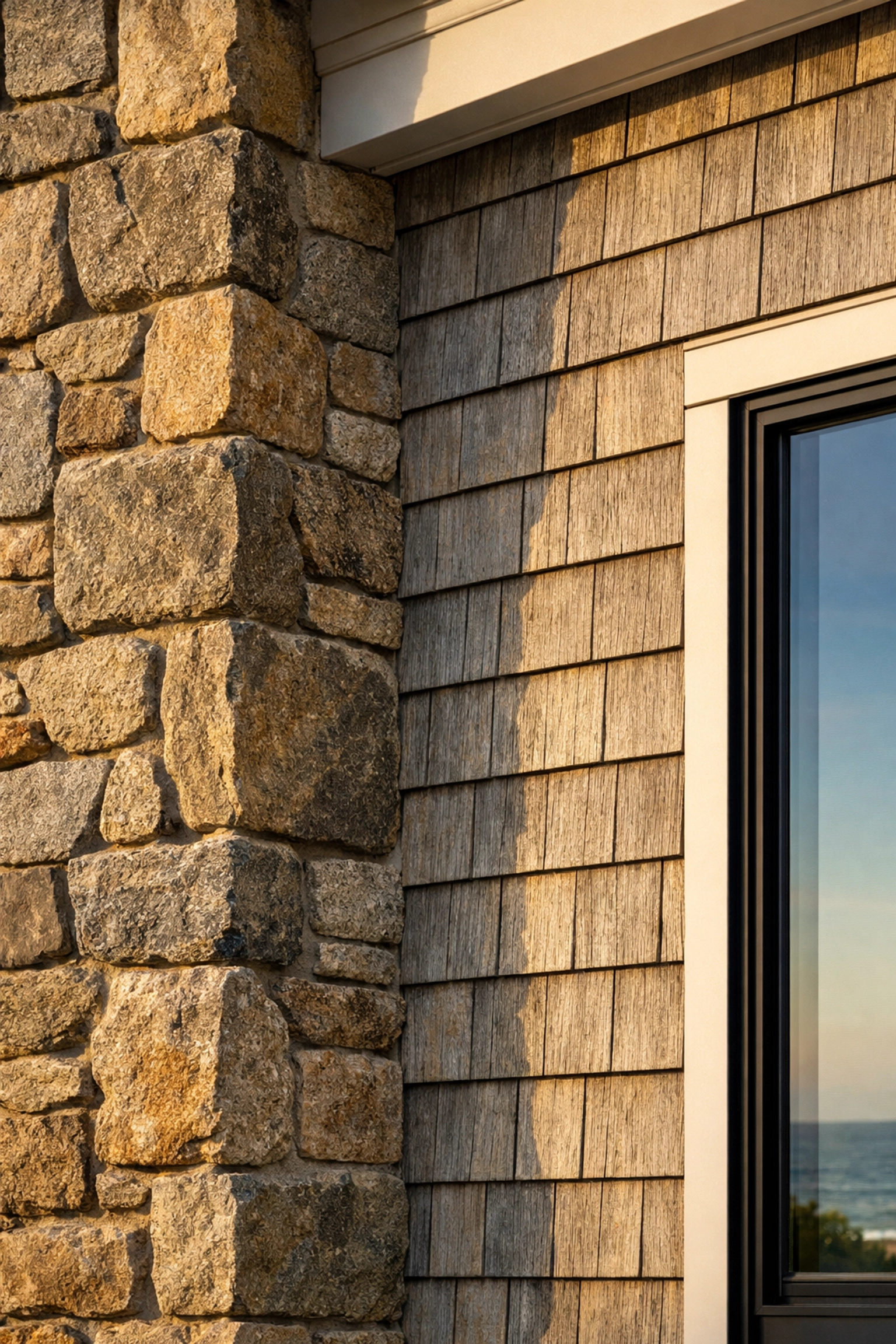
Suggested Image: Close-up of high-end architectural details like weathered cedar shingles and fieldstone masonry, signifying luxury and durability.
Best Practices: How to Audit Your Coastal Protection
If you currently have a standard policy on a coastal home, you should perform an immediate "stress test" of your coverage. Here is what to look for:
Check the "Wind/Hail" Deductible: Is it a flat dollar amount or a percentage? If it's a percentage, calculate exactly what that means in dollars based on your current Coverage A limit.
Verify "Law and Ordinance" Coverage: Coastal building codes are constantly changing. If your home is damaged, you will be required to rebuild it to current, more expensive codes. Standard policies often provide only 10% of the dwelling limit for this; high-value homes typically need 50% or "Unlimited."
Review the Flood Gap: If your home is worth more than $250,000, do you have an "Excess Flood" or "Private Flood" policy in place?
Confirm "Loss of Use" Limits: Does your policy provide enough coverage to maintain your standard of living in a comparable rental property for 12–24 months?
Current Trends: The Hardening Coastal Market in MA and CT
The insurance market for coastal properties in the Northeast is currently "hardening." This means insurance companies are becoming more selective, increasing rates, and in some cases, non-renewing policies altogether in high-risk zones.
We are seeing a shift where standard carriers (the names you see in TV commercials) are pulling back from the shoreline. This is forcing many homeowners into "State FAIR Plans," which offer very basic coverage and high premiums. However, for high-net-worth individuals, the "Surplus Lines" market and specialized Private Client carriers remain a viable, and superior, option. These carriers understand the unique risks of the coast and offer bespoke policies that standard carriers simply cannot match.
FAQ: Common Questions from Coastal Homeowners
1. Does my standard policy cover "Wind-Driven Rain"?
Usually, yes, but only if the wind first creates an opening in the structure (like breaking a window or tearing off a roof shingle). If water seeps in through a sliding door or porous masonry without a structural "opening," many standard policies will deny the claim.
2. Why is my wind deductible so much higher than my "All Other Perils" deductible?
Insurance companies use wind deductibles to manage their "catastrophic exposure." By shifting the first 2% to 5% of the risk to you, they can offer the policy at a lower premium than if they took on 100% of the risk from the first dollar.
3. Can I buy a policy that has a flat dollar wind deductible?
In some cases, yes. Some Private Client carriers allow you to "buy down" the deductible to a flat amount (e.g., $5,000 or $10,000) in exchange for a higher annual premium. For many homeowners, the certainty of a flat deductible is worth the extra cost.
4. Is mold covered after a hurricane?
In most standard policies, mold coverage is severely limited: often capped at $5,000 or $10,000. In a coastal climate, mold remediation can easily exceed $50,000. Elite policies often offer much higher limits for mold resulting from a covered loss.
5. What is the difference between NFIP and Private Flood?
The NFIP is a government-backed program with strict limits ($250k). Private Flood is provided by private insurers and offers higher limits, better coverage for basements, and "Loss of Use" protection.
Conclusion: Don't Wait for the Storm to Find the Gaps
The time to discover a "wind deductible trap" or a "flood exclusion" is not while you are standing in a foot of water in your living room. The complexity of coastal insurance requires more than a standard policy; it requires a strategic risk management plan.
At Insure Connecticut, LLC, we specialize in navigating the nuances of high-value coastal properties. We help you move away from "standard" coverage and into a policy that actually protects the life you’ve built.
Your Next Step: Review your current policy "Declarations Page." If you see a percentage next to the word "Wind" or "Hurricane," or if you are relying solely on an NFIP flood policy, it’s time for a professional audit.
Contact our team at 860-440-7324 or visit us at our West Hartford office for a transparent, educational review of your coastal assets.
Insure Connecticut, LLC 71 Raymond Road West Hartford, CT 06107 www.myinsurect.com

Comments