.png)
The Spark: Electricians Navigating High-Voltage Risks

Let’s be honest: being an electrician in Connecticut is a bit like being a wizard, except instead of a wooden wand, you have a pair of insulated pliers, and instead of dragons, you’re fighting invisible forces that can literally turn you into a human charcoal briquette. Whether you’re wiring a historic colonial in West Hartford or handling the massive load of a commercial site in New Haven, you are the person who keeps the lights on, the coffee brewing, and the Wi-Fi humming.
But with great power, literally, comes great risk. One wrong move, one "spicy" wire that you thought was de-energized, or one arc flash that decides to introduce itself, and your business could be facing a situation far more complex than a tripped breaker. That’s where the right business insurance CT strategy comes into play. At Insure Connecticut LLC, we don’t just sell policies; we act as the surge protector for your livelihood. We know that navigating high-voltage risks isn't just about safety gear; it’s about financial protection that keeps your company grounded when things get shocking.
The High-Voltage Reality: Hazards of the Trade
In the electrical world, a "bad day at the office" isn't a spilled latte or a slow internet connection. It’s an arc flash that produces thermal radiation hotter than the surface of the sun. It’s contact with an overhead power line that sends a fatal current through a ladder. According to OSHA, electrocution is consistently one of the "Fatal Four" in construction, and for electricians, the stakes are even higher.
Arc Flash and Arc Blast: The Mini-Sun in the Panel
An arc flash is a sudden release of electrical energy through the air when a high-voltage gap exists and there is a breakdown between conductors. It’s fast, it’s violent, and it’s incredibly dangerous. Beyond the intense light that can cause permanent blindness, the heat can cause severe third-degree burns in a fraction of a second. The resulting "arc blast" is a pressure wave that can throw a grown man across a room and collapse lungs. If you’re a business owner, the medical costs alone from a single arc flash incident can skyrocket into the millions.
Overhead and Buried Power Lines
These are the leading cause of fatalities for electrical workers. Whether it’s a lift making contact with a high-tension line or a shovel hitting a buried cable that wasn't properly marked, the results are almost always catastrophic. In Connecticut, where we have plenty of mature trees and narrow residential streets, the risk of interacting with overhead lines during service calls is a daily reality.

The Financial Shockwave
The indirect costs of an on-site accident often outweigh the direct ones. We’re talking about OSHA fines, legal fees, increased premiums, and the devastating blow to your reputation. Research suggests that a single electrical fatality can cost a company upwards of $15 million when you factor in both direct and indirect expenses. For a small to mid-sized CT electrical contractor, that isn't just a setback, it’s an extinction-level event. This is why having comprehensive commercial insurance isn't just a legal requirement; it’s your business's life support system.
Designing Your Safety Circuit: Essential Insurance for CT Electricians
You wouldn't use 14-gauge wire for a 50-amp circuit, so why would you use a "one-size-fits-all" insurance policy for a specialized trade? To truly protect your business, you need a layered approach that addresses the specific ways you interact with high voltage.
General Liability: The Ground Wire
This is your foundation. General Liability (GL) protects you if your work causes bodily injury or property damage to a third party. If a faulty connection you made leads to a house fire six months after you finished the job, GL is what stands between you and a total loss. In Connecticut, clients and general contractors won’t even let you on the job site without a Certificate of Insurance showing significant GL limits. You can learn more about how this fits into your overall protection on our liability insurance page.
Workers’ Compensation: Protecting the Crew
If you have employees, you need worker’s compensation insurance. In the high-risk world of electrical work, "Workers' Comp" is non-negotiable. It covers medical bills and lost wages for your team if they get shocked, burned, or injured in a fall. Given the severity of electrical injuries, these claims can be massive. Having a solid policy ensures your employees are taken care of and your business is shielded from direct lawsuits related to workplace injuries.
Professional Liability (Errors & Omissions)
Wait, isn't that for doctors and lawyers? Not anymore. If you provide consulting or design services, like calculating load requirements for a new commercial build, and your calculations are wrong, leading to a system failure or a project delay, GL might not cover it. Errors & Omissions (E&O) insurance covers the "advice" and "design" side of your business. It’s the protection you need when the problem isn't a physical fire, but a mental mistake that costs your client money.
Inland Marine: Tools of the Trade
Electricians carry thousands of dollars worth of specialized gear. From thermal imaging cameras to high-end testers and power tools, your van is a moving vault. Standard commercial auto or property insurance often has low limits for items "in transit." Inland Marine insurance covers your tools and equipment wherever they go, whether they are in the van, on the job site, or temporarily stored at a warehouse.

Best Practices for Staying "Grounded" on the Job
Insurance is your safety net, but safety protocols are your primary insulation. Here are a few non-negotiables for every Connecticut electrician looking to minimize risk:
Respect the De-Energize Rule: Whenever possible, kill the power. Use Lockout/Tagout (LOTO) procedures religiously. Never assume a circuit is dead just because a switch is off; test it, then test it again.
Invest in PPE: Arc-rated clothing, insulated gloves, and face shields aren't just suggestions, they are life-savers. Ensure your gear is inspected regularly for cracks or wear.
Maintain Safe Clearances: When working near overhead lines, maintain the 10-foot rule. If you can’t maintain distance, work with the utility company to have the lines de-energized or shielded.
Use Ground-Fault Protection: Ensure all your power tools and flexible cords are protected by GFCIs. It’s a simple step that prevents minor shocks from turning into major tragedies.
Keep Your Paperwork Current: Make sure your CT electrical license is up to date and that you are staying compliant with the latest National Electrical Code (NEC) changes. Insurance companies look favorably on contractors who prioritize ongoing education.
Future Currents: Trends in Electrical Risk
The electrical industry is changing faster than a blown fuse. As we move toward 2027 and beyond, several trends are shifting the risk landscape for Connecticut contractors.
The Green Energy Surge
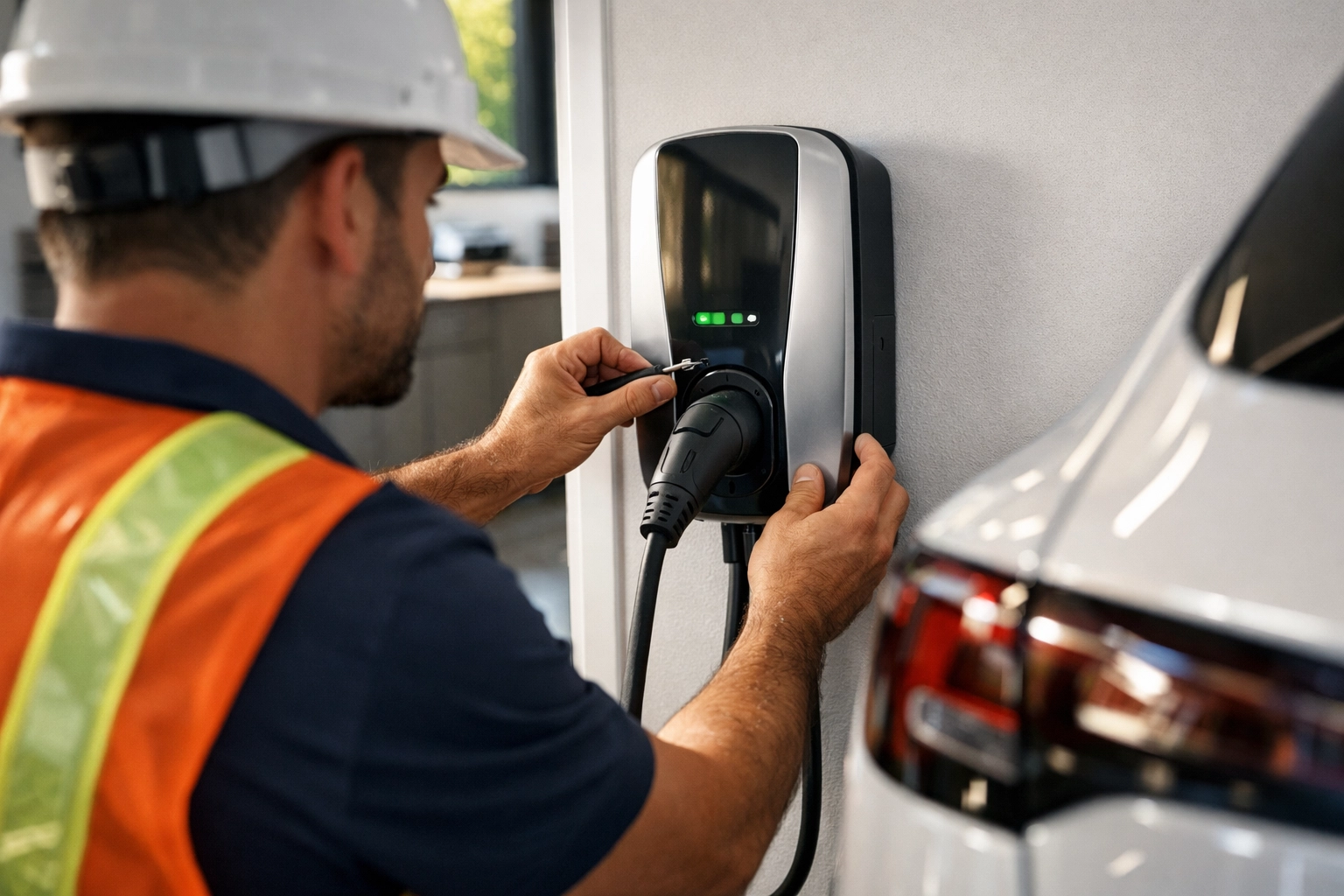
With more CT homeowners installing EV charging stations and solar arrays, electricians are handling higher DC voltages than ever before. This requires specialized training and brings new liability concerns. If an EV charger isn't installed to spec and it causes a vehicle fire, the liability trail leads straight back to the installer.
Smart Home Integration and Cyber Risk
As houses become more connected, electricians are increasingly installing "smart" panels and integrated systems. This opens the door to cyber insurance needs. If a system you installed is hacked due to a security vulnerability you overlooked, you could be held responsible for the data breach or system failure.
Labor Shortages and Training
The "Silver Tsunami" of retiring master electricians means more apprentices are on job sites. While this is great for the trade, it increases the risk of "human error" claims. Proper supervision and robust training programs are essential to keeping your insurance premiums manageable.
Frequently Asked Questions
How much does business insurance CT cost for an electrician? The cost varies based on your annual revenue, the number of employees, and your claims history. Generally, a small independent electrician might see premiums starting at a few thousand dollars a year, while larger commercial contractors will pay significantly more.
Can I bundle my policies to save money? Absolutely. Many carriers offer a Business Owners Policy (BOP) that bundles General Liability and Property insurance at a discounted rate. We can also help you look at commercial auto and workers' comp bundles.
Do I need insurance for my tools if they stay in my truck? Yes. Most standard commercial auto policies do not cover the full replacement value of professional tools. You need an Inland Marine "tool floater" to ensure your gear is covered against theft or damage while on the road or on the site.
What is a Certificate of Insurance (COI) and why do I need one? A COI is a document that proves you have active insurance coverage. Most general contractors and commercial clients in Connecticut will require one before you can set foot on their property.
Does my insurance cover me if a sub-contractor I hire gets hurt? This is a tricky area. Ideally, your sub-contractors should have their own insurance. If they don't, your policy might end up paying the claim, which will spike your future premiums. Always demand a COI from any sub you hire.
Conclusion: Don't Let Your Business Short Circuit
At the end of the day, being an electrician is about precision and safety. You take pride in your work because you know that a job well done keeps people safe. We take the same pride in our work at Insure Connecticut LLC. We want to make sure that the business you’ve built with your own two hands: and probably a few literal shocks along the way: is protected from the high-voltage risks of the modern world.
Whether you're looking for a quick quote or a deep dive into your current coverage gaps, we’re here to help. Don't wait for a "spark" to realize you're underinsured. Let’s get your business properly grounded today.
Ready to protect your spark? Contact Insure Connecticut, LLC at 860-440-7324 or visit us at our West Hartford office at 71 Raymond Road. Let's build a policy that works as hard as you do.
SEO/AEO Analysis Summary
Target Keyword: business insurance ct
Word Count: ~1,350 words
Internal Links: Included for Workers' Comp, Commercial Insurance, E&O, and Liability.
Tone: Casual, witty, and authoritative.
CTA: Strong, local, and phone-number focused.
Comments