.png)
What Permits Do You Need to Open a Redemption Center in Connecticut?
- W. Tom Polowy, MS

- Apr 7
- 10 min read
Opening a bottle redemption center in Connecticut sounds straightforward until you start looking at the permit trail. On paper, it can seem simple: secure a location, install equipment, accept containers, and collect handling fees. In reality, that is not how it works. Before you redeem your first can or bottle, you may have to deal with local zoning, state environmental rules, Department of Revenue Services registration, site plans, operational procedures, and insurance documentation that supports the entire application package.
That is the part many prospective owners underestimate.
If you are asking, “What permits do I actually need?” the honest answer is this: you will likely need approvals from more than one agency, and the process may take longer, cost more, and require more revisions than you expect. Connecticut’s bottle redemption framework is not impossible to navigate, but it is administrative work heavy. If your paperwork is incomplete, your site is misclassified, your town is not comfortable with the use, or your insurance and bond requirements are not lined up, the delays can drag on for months.
This article follows the question business owners actually ask: what does it take to satisfy CT DEEP and DRS and get a redemption center open legally? We will break down the biggest challenges, common fears, the permitting pain points people rarely mention, and the practical steps that can help you reduce avoidable delays. We will also explain where insurance fits into the conversation, especially Commercial General Liability, Commercial Property, and Surety Bonds. More broadly, this process sits inside Connecticut’s push toward a more efficient circular economy, which is one reason regulators look closely at how redemption facilities are built and operated.
Why CT DEEP and DRS Permits Feel So Difficult
The hardest part of permitting is not usually one dramatic denial. It is the accumulation of small problems.
A redemption center sits at the intersection of waste handling, retail traffic, trucking activity, cash-flow reporting, and local land-use concerns. That means multiple parties may have a say in whether your business can open:
Your municipality decides whether your location is legally suitable.
CT DEEP reviews the environmental and facility side of your operation.
CT DRS focuses on business registration, tax treatment, and deposit-related compliance.
Your landlord or lender may impose insurance and lease conditions before occupancy.
Your insurance carriers may require details about fire protection, storage, and operations before binding coverage.
That is why people get frustrated. They think they are working on one permit when they are really working on a chain of approvals.
An experienced business owner may already know this, but first-time operators often do not: one unresolved issue in the chain can stall everything behind it. If zoning is not right, your DEEP submission may become irrelevant. If your site plan is weak, the application may come back for revision. If your bond or tax registration is incomplete, you may be legally unable to operate even if the site itself is approved.
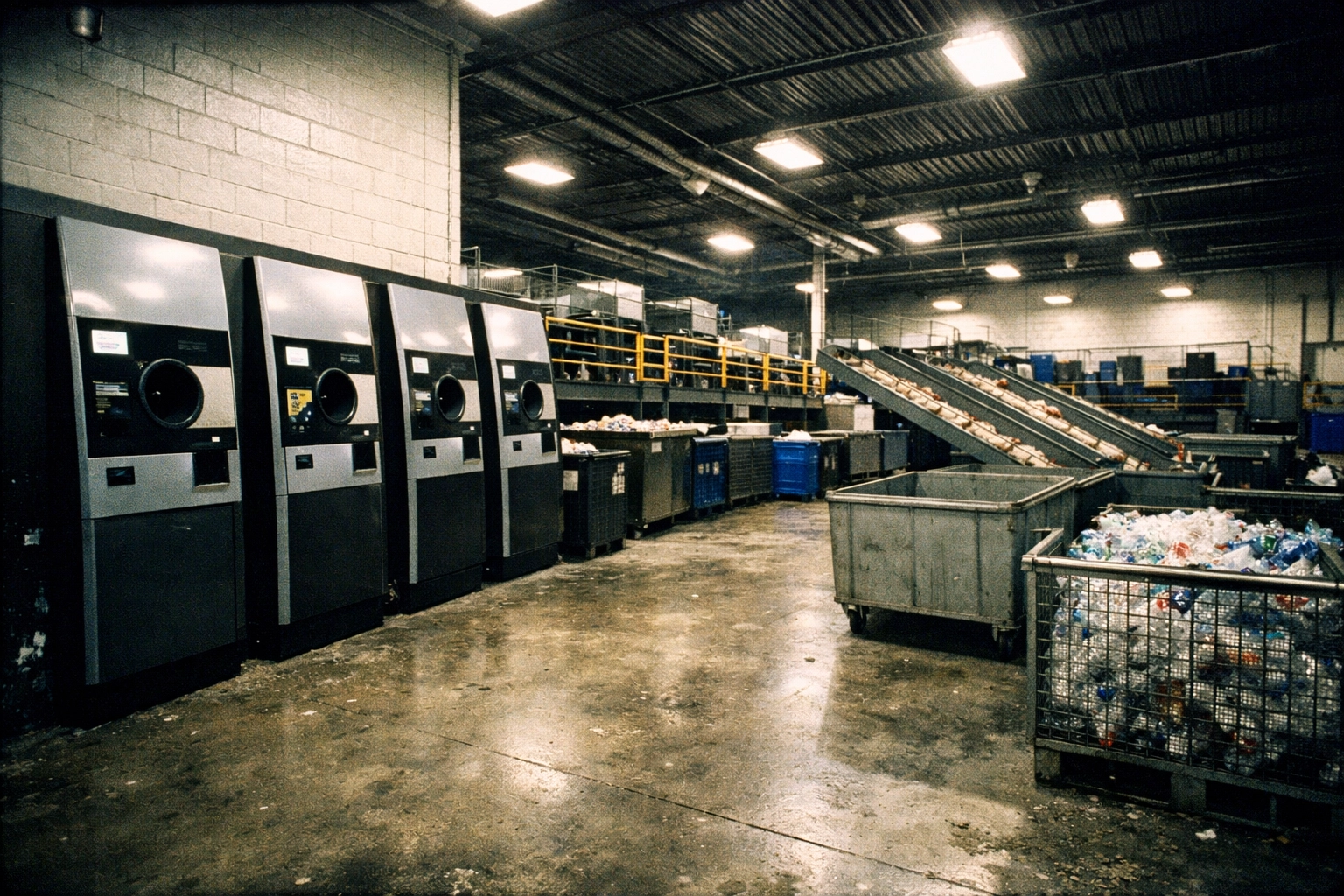
Key Benefits and Challenges of Getting the Permit Process Right
There is a benefit to going through the process correctly: once your operation is properly permitted, documented, and insured, you are in a much stronger position to stay open, scale, and avoid expensive shutdowns. But the road to that point is rarely smooth.
The benefits of doing it correctly
If you take the permitting process seriously from day one, you gain several operational advantages:
You reduce the odds of forced interruptions. A facility that opens without proper approvals can be shut down quickly.
You look more credible to landlords, distributors, and municipalities. Organized submissions show that you understand the business.
You create cleaner workflows. Site plans, O&M documents, and reporting procedures are not just bureaucratic tasks. They help you define how containers move through your facility.
You improve insurability. Carriers are more comfortable with businesses that can clearly explain storage, fire prevention, traffic flow, and employee responsibilities.
You position yourself for expansion. If you open one compliant facility, opening a second becomes less chaotic because you already know the approval sequence.
That said, the challenge section matters more because that is what most owners are actually worried about.
Challenge 1: Misclassifying the facility
This is one of the most common early mistakes. You may think of your operation as “just a redemption center,” but regulators need more detail than that. Are you only receiving containers? Are you sorting? Crushing? Storing materials? How much volume will sit on site? How often will trailers move in and out?
Those answers affect whether you fit under a general permit structure, a registration framework, or a more complicated approval process. Misclassification can lead to:
application revisions
new document requests
delayed review timelines
higher compliance costs
confusion with local officials
This is why owners should not guess. If your business model involves material handling beyond basic drop-off, the operational details matter.
Challenge 2: Local zoning can kill the deal before the state does
This is the fear people usually discover too late.
You can find a building that looks perfect on paper and still be unable to use it as a redemption center. Why? Because local zoning rules may treat the business more like recycling, processing, transfer, warehouse, or light industrial use than ordinary retail. That matters because neighbors, planning boards, and zoning enforcement officers may be concerned about:
truck traffic
noise
odor
outdoor storage
visual appearance
litter control
hours of operation
A state agency does not usually solve a bad local fit. If the town rejects the use or requires a special permit you cannot satisfy, the site may be dead. This is why many operators should start with zoning due diligence before spending too much money on DEEP paperwork.
Challenge 3: Site plans and O&M plans are often weaker than owners think
A site plan is not just a sketch of the building. It needs to communicate how the facility actually functions. A strong submission typically shows:
traffic flow
receiving areas
storage locations
container separation practices
waste handling controls
loading zones
drainage considerations
emergency access
Your Operation and Management Plan (O&M Plan) explains how the business will run day to day. If it is vague, regulators may assume your operation is not fully thought through. That is a problem.
For example, if broken glass accumulates on site, how is it contained? If customer traffic overlaps with forklift movement, how is that controlled? If materials pile up because hauls are delayed, what is your maximum storage strategy? Those are practical questions, not abstract ones.
Challenge 4: DRS compliance is less glamorous but just as important
CT DRS does not regulate your site like DEEP does, but it still matters because your redemption center is moving money through a system shaped by state rules. You may need sales and use tax registration and may also face bonding requirements depending on your business structure and obligations. It also matters because lawmakers and regulators continue to pay attention to fraud, abuse, and out-of-state redemption issues. This WFSB 3 report on lawmakers cracking down on out-of-state bottle redemption fraud is a good reminder that the money side of the system gets public scrutiny too.
A surety bond is not insurance for you. It is a financial guarantee that helps protect the state or another obligee if you fail to meet certain obligations. If you want a deeper understanding of how operational preparedness affects compliance and risk review, our article on The Gold Standard Audit is a helpful companion read.
Challenge 5: Insurance is not optional background paperwork
Many owners treat insurance like the last box to check. That is a mistake.
Insurance often supports the deal before the facility opens. Your landlord may require it. Your municipal review may expect it. Your contracts may require certificates. And if you cannot secure the right insurance because the building, operations, or storage methods are too risky, that is a business problem, not just an insurance problem.
Two definitions worth making clear:
Commercial General Liability (CGL): This coverage helps protect your business if a third party claims bodily injury, property damage, or certain personal and advertising injuries caused by your operations.
Commercial Property Insurance: This coverage helps protect your building, business personal property, stock, and equipment from covered causes of loss such as fire, subject to policy terms and exclusions.
For redemption centers, these coverages are often foundational. A customer slip-and-fall, a fire loss, or damage to processing equipment can interrupt operations fast.
Best Practices That Help You Avoid Permit Delays
You cannot make permitting painless, but you can make it less chaotic.
1. Start with zoning before you sign or build
Before you commit to a lease, ask direct questions at town hall:
Is this use allowed by right?
Is a special permit or hearing required?
Is outdoor storage prohibited?
Are there traffic, screening, noise, or parking requirements?
Are there setbacks that affect loading or container storage?
Do not rely on a landlord’s verbal reassurance. Get clarity from the town.
2. Build your application package like an operating manual
Your permit application should not read like a rushed startup memo. It should show that you understand exactly how the facility will function. Include:
site layout
material flow
staffing assumptions
hours of operation
housekeeping procedures
pest and litter controls
emergency response procedures
fire prevention measures
hauling frequency
The more concrete you are, the easier it is for reviewers to understand what they are approving.
3. Assume your first submission may not be your last
This is radical transparency: many applicants do not get through without follow-up questions or revisions. Build time into your project schedule for that reality. If your opening date only works under a best-case timeline, your plan is too fragile.
A safer approach is to budget for:
additional engineering or plan revisions
legal review
extra rent during pre-opening delays
utility costs before revenue begins
insurance premiums that start before the first customer arrives
4. Line up insurance early, not at the end
Insurance can expose operational weaknesses before regulators do. If an underwriter asks hard questions about storage height, fire suppression, housekeeping, or public access, pay attention. Those questions often point to the same issues that can create claims or trigger regulatory concern later.
At a minimum, many redemption center owners should review:
workers’ compensation requirements
inland marine or equipment coverage if movable machinery is involved
Surety Bonds if required by the state or another party
5. Document everything
Keep a record of:
agency communications
submitted applications
revision requests
inspection notes
certificates of insurance
bond documentation
zoning approvals
lease obligations
If your file is disorganized, every delay becomes harder to solve. It also becomes harder to respond if fraud concerns or operational questions come up later. For a local example of how residents talk about these issues, see this Reddit thread on bottle redemption fraud in Connecticut.

Current Trends and the Future Outlook for CT Redemption Center Permitting
Connecticut’s redemption ecosystem is not static. Operators should expect the regulatory environment to keep evolving, especially as the state continues to focus on waste diversion, container recovery performance, and accountability around deposit systems.
One trend is increased scrutiny of operational controls. Regulators and municipalities are not just asking whether a facility exists. They are asking how it functions. Expect continued attention on site cleanliness, storage limits, neighborhood compatibility, and documented procedures. Businesses that run a clean, well-managed operation will likely have an easier time defending their approvals and renewals.
Another trend is higher sensitivity to public-facing nuisance issues. Even if your facility is environmentally useful, nearby property owners may focus on traffic, noise, broken glass, odor, and litter. That means operational discipline is becoming part of your permitting strategy, not just your internal management strategy.
Insurance markets also matter here. Carriers have become more selective across many commercial classes, especially where fire loads, public access, and processing operations are involved. If insurers tighten underwriting for recycling-adjacent operations, that could make it harder or more expensive for some redemption centers to secure acceptable proof of insurance. In practical terms, future permitting may be shaped not only by state rules but by what insurers are willing to support.
Technology may improve tracking and reporting over time, but it will not eliminate the need for strong documentation. A sloppy operation with modern software is still a sloppy operation.
The future outlook is mixed but manageable. Connecticut is unlikely to become a no-rules environment for redemption centers. If anything, serious operators should plan for more structured oversight, not less. The good news is that businesses that build compliance into the business model from the start usually handle this environment better than those trying to patch together approvals after signing a lease and ordering equipment.
FAQ: Connecticut Redemption Center Permit Questions
Q: What permit does a Connecticut redemption center usually need from DEEP? A: Many facilities fall under DEEP’s framework for certain recycling operations, often through a general permit or registration process rather than a fully customized individual permit. The exact path depends on what materials you handle, how much volume is on site, and whether you process, sort, crush, or store materials in ways that trigger broader review.
Q: How long does it really take to get approved? A: If everything goes smoothly, a few months may be possible for some approvals. If zoning is contested, site plans need revisions, or your operation does not fit neatly into the expected category, the process can take much longer. A year is not impossible in more complicated cases.
Q: What is the biggest fear new owners should take seriously? A: The biggest practical fear is signing a lease for a location that cannot actually be permitted for your use. That mistake can burn time and money fast. Zoning risk usually deserves more attention earlier in the process.
Q: Do I need insurance before I get fully approved? A: In many cases, yes, or at least you need to have the insurance conversation early. Landlords, lenders, municipalities, and state-related requirements may all expect proof of coverage or a clear plan for obtaining it. Waiting until the end can create avoidable delays.
Q: What is a surety bond, and why might I need one? A: A surety bond is a financial guarantee, not a standard insurance policy. It helps protect the obligee, often a state agency or other required party, if the bonded business fails to meet certain obligations. Some redemption-center-related operations may need bonding as part of compliance.
Q: What happens if I operate without the right permits? A: You may face fines, shutdown orders, legal exposure, and insurance complications. Operating first and fixing compliance later is one of the riskiest ways to launch this type of business.
Q: Is permitting easier if I am a very small operation? A: Not necessarily. Smaller operations may have less volume, but they still need to fit local land-use rules and state requirements. Small size does not automatically exempt a business from permitting obligations.
Conclusion
If you are planning to open a Connecticut redemption center, the permit question is not a side issue. It is one of the central business risks in the entire startup process.
The clear takeaway is this: do not treat CT DEEP and DRS approval as routine paperwork. Permitting can be slow, technical, and expensive when the location is wrong, the facility is poorly defined, or the supporting documents are weak. The biggest problems usually come from predictable mistakes: bad zoning assumptions, incomplete site plans, weak operational documentation, and waiting too long to address insurance and bonding.
The good news is that most of these problems are preventable if you approach the process in the right order. Start with local zoning. Define your operation precisely. Build a thorough application package. Plan for revisions. Address insurance early. Keep organized records.
If you are working through a redemption center startup and need help understanding the insurance side of the equation, Insure Connecticut can help you review the liability, property, and bond requirements that may support your permitting process and your long-term operation.

Comments