.png)
Day 1: The Snow Budget Squeeze – Why Municipalities Struggle to Plan for Winter Costs
- W. Tom Polowy, MS

- Jan 11
- 5 min read
It's 3 AM on a Tuesday in February, and Town Manager Sarah Chen is staring at her phone. The National Weather Service just upgraded tomorrow's storm to a blizzard warning: 18 to 24 inches expected, with winds gusting to 50 mph. Her first thought isn't about school closures or emergency shelters. It's about money.
Her snow removal budget, carefully crafted last spring, assumed an "average" winter. But there's no such thing as average when it comes to snow. Last year, her town spent 40% over budget by January. The year before, they came in 30% under. This year? She's about to find out if that emergency reserve fund can handle another budget-busting storm.
How can cities control snow removal costs when Mother Nature refuses to follow a budget? It's the question keeping municipal leaders awake across snowy regions nationwide, and the answer isn't as simple as buying more salt.
The Reality of Municipal Winter Planning
Why is municipal winter budgeting so difficult? The challenge starts with a fundamental problem: weather patterns vary dramatically from year to year, making accurate budget forecasts nearly impossible. The difference between the snowiest winter on record and the least snowy can exceed 40 inches in many regions. When your snow removal costs can swing from $200,000 to $600,000 depending on what the clouds decide to do, traditional budgeting becomes more like educated guessing.
Consider the City of Albany, which budgeted $1.2 million for snow removal in 2018, only to spend $2.1 million when a series of nor'easters hammered the region. Or take Burlington, Vermont, which allocated $850,000 for winter operations in a recent mild year, only to use $320,000. Both scenarios create problems: overspending strains other departments, while significant underspending raises questions about budget accuracy and resource allocation.
What's the best way for towns to budget for unpredictable winter storms? Most municipalities try one of several approaches, all with significant drawbacks:
Historical averages: Using 5-10 year spending averages, which become less reliable as climate patterns shift
Worst-case scenarios: Budgeting for severe winters, which creates political pressure when funds aren't needed
Conservative estimates: Planning for mild winters and hoping for the best, often leading to mid-year budget crises

The Hidden Complexity of Snow Removal Costs
How much should a town budget for snow removal? The answer depends on dozens of variables that make municipal winter planning a complex puzzle. Snow removal isn't just about plows and salt: it's an intricate web of interconnected expenses that can spiral quickly.
Direct operational costs include equipment fuel, operator overtime, salt and sand materials, contractor services for large storms, and equipment repairs from heavy use. A single severe storm can consume 30-40% of an annual salt budget in one weekend.
Indirect costs often catch municipalities off guard. These include increased liability insurance claims from accidents, emergency services overtime for storm-related incidents, facility heating costs during extended cold periods, delayed projects due to weather-related work stoppages, and administrative costs for emergency coordination.
Equipment considerations add another layer of complexity. Do you own enough equipment for severe storms, requiring significant capital investment and maintenance for machines that might sit idle in mild winters? Or do you rely on contractors, creating availability issues when everyone needs service simultaneously?
The Town of Cromwell, Connecticut, learned this lesson the hard way during the winter of 2021-22. A late-season ice storm damaged three plow trucks, requiring $85,000 in unexpected repairs. The replacement parts shortage extended repair times, forcing expensive contractor agreements for the remaining storms.
When Weather Breaks Municipal Budgets
How do municipalities handle unexpected snow removal expenses? The most challenging aspect of municipal snow budgeting isn't planning for average conditions: it's managing the financial impact of outlier events that can devastate carefully planned budgets.
Climate change has introduced additional unpredictability into winter planning. Some regions report more frequent extreme snow events mixed with milder overall conditions, making historical data less reliable for future planning. A municipality might experience three mild winters followed by one severe season that exceeds the previous five years' combined snow totals.
Revenue timing complications make the problem worse. Property tax collections typically occur in specific periods, while snow removal expenses concentrate in winter months. A severe early winter can exhaust budgets before peak tax collection periods, creating cash flow challenges that ripple through other municipal services.
Emergency budget adjustments become necessary, but they're rarely popular with taxpayers or elected officials. Transferring funds from other departments, accessing reserve funds, or seeking emergency borrowing authority all create political and administrative challenges that extend far beyond the public works department.
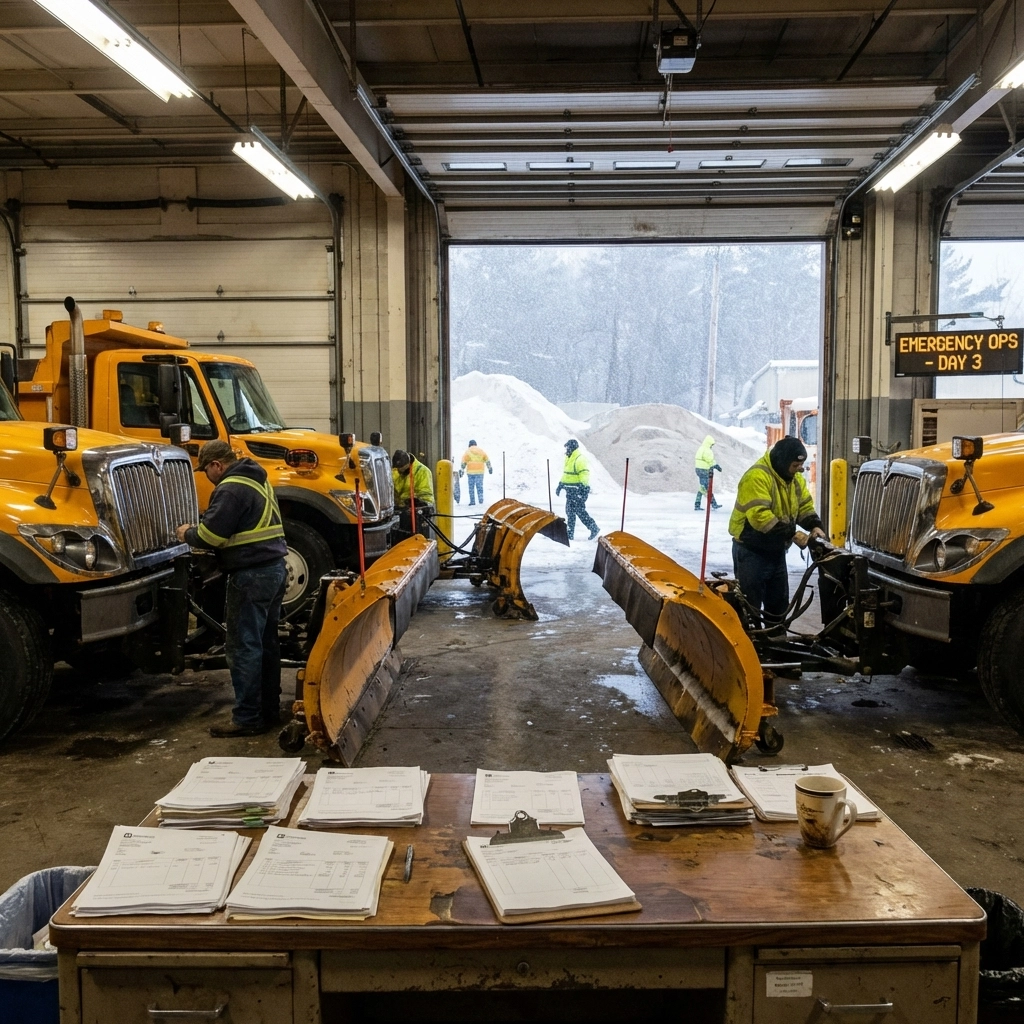
The Ripple Effects of Budget Uncertainty
Why do municipalities struggle with winter cost planning beyond just weather unpredictability? The answer lies in broader organizational challenges that compound the weather variability problem.
Stakeholder communication becomes problematic when winter budgets consistently miss projections. Elected officials may lack detailed understanding of snow removal complexities, leading to unrealistic expectations or pressure to cut winter budgets based on mild years. Citizens often don't understand why snow removal costs vary so dramatically, creating public relations challenges during high-spending winters.
Departmental coordination suffers when winter budgets consume emergency reserves. The fire department's equipment replacement gets delayed, the parks department's seasonal hiring gets reduced, or infrastructure projects get postponed. Snow removal budget overruns don't just affect public works: they impact every municipal service.
Long-term planning becomes nearly impossible when winter costs swing wildly. How do you plan a five-year capital improvement program when 20-30% of your annual operating budget uncertainty comes from weather? Strategic initiatives get shelved, borrowing capacity gets consumed by emergency winter expenses, and municipal growth plans get derailed by unpredictable snow removal costs.
Regional Variations and Shared Challenges
How can cities control snow removal costs across different geographic regions? While specific challenges vary by location, municipalities across snowy regions share common struggles with budget unpredictability and resource allocation.
Northeast municipalities face nor'easter challenges: intense storms that can dump 2-3 feet of snow in 24 hours, requiring maximum resource deployment and extensive contractor support. The salt supply chain becomes strained, equipment operates beyond normal limits, and overtime costs explode.
Midwest communities deal with extended winter seasons and frequent smaller storms that require consistent resource deployment. The cumulative effect of managing 40-50 snow events per season, rather than 8-10 major storms, creates different but equally challenging budget pressures.
Mountain region towns manage elevation-based variations within their boundaries, requiring different equipment and strategies for various neighborhoods. Tourist-dependent communities face additional pressure to maintain higher service levels on key routes, regardless of cost.
Despite these regional differences, the fundamental challenge remains consistent: how do you create financial predictability around inherently unpredictable weather events?
Looking Ahead: The Need for Better Solutions
Municipal finance officers across snowy regions are recognizing that traditional budgeting approaches aren't adequate for managing modern winter cost challenges. The combination of climate unpredictability, increasing service expectations, and tight municipal budgets demands innovative approaches to winter cost management.
What if there was a way to create budget certainty around uncertain weather? Over the next six days, we'll explore how forward-thinking municipalities are discovering parametric insurance solutions that transform unpredictable winter costs into manageable, budgetable expenses.
From understanding the true anatomy of municipal snow costs to exploring how parametric triggers can provide automatic financial relief when Mother Nature exceeds your budget assumptions, this series will guide you through practical solutions that are already helping municipalities sleep better during storm warnings.
Tomorrow, we'll break down the real numbers behind municipal snow operations: from salt costs per lane mile to overtime calculations: giving you the framework to evaluate whether your winter budgeting assumptions align with operational reality.
Ready to explore how your municipality can move from weather-dependent budget stress to predictable winter planning?Contact Insure Connecticut LLC to learn how parametric insurance solutions are helping municipalities across the region transform their approach to winter cost management.
The 3 AM phone calls about storm warnings don't have to trigger budget panic. Let's explore how to change that equation.
Coming Tomorrow: Day 2 - Anatomy of Municipal Snow Costs: Understanding the Real Numbers Behind Winter Operations

Comments