.png)
Fencing & Deck Builders: Navigating Boundary Disputes and Injury Liability
- W. Tom Polowy, MS

- Apr 22
- 9 min read
The High Stakes of Outdoor Construction in Connecticut
Building a deck or installing a fence is more than just a home improvement project; it is an exercise in precision, law, and long-term liability. In Connecticut, where property lines can be centuries old and the terrain varies from the rocky coast of Fairfield County to the rolling hills of Litchfield, the margin for error is razor-thin. As a contractor, you are not just selling a product; you are assuming responsibility for the safety of the household and the sanctity of the neighbor's property line.
The outdoor living boom has significantly increased the demand for high-quality craftsmanship. However, with increased demand comes increased scrutiny. Homeowners are more litigious, and the cost of building materials makes every mistake more expensive. Whether you are operating out of West Hartford or servicing the shoreline, understanding the intersection of construction and insurance is vital for your survival. At Insure Connecticut LLC, we specialize in helping local builders navigate these treacherous waters with small business insurance in Connecticut tailored to the specific risks of the trade.
A single misplaced post or a structural oversight in a ledger board can lead to financial ruin. This guide explores why fencing and deck builders face unique challenges and how the right insurance strategy, ranging from general liability to professional indemnity, serves as your ultimate safety net.
The Nightmare of Property Line Disputes
One of the most common and frustrating challenges for a fence contractor is the boundary dispute. You arrive on-site, the homeowner points to where they want the fence, and you begin digging. Three days later, the neighbor returns from vacation with a survey from 1984 claiming your new cedar privacy fence is six inches onto their land.
The Cost of Being "Off-Line"
When a fence is installed on a neighbor's property, the legal ramifications are immediate. You are often caught in the middle of a "spite fence" war or a simple misunderstanding of property lines.
Removal and Reinstallation: You may be forced to tear down the fence at your own expense and rebuild it in the correct location.
Legal Defense Fees: Even if you followed the homeowner's instructions, the neighbor might sue your business for trespassing or property damage.
Reputational Damage: Word travels fast in Connecticut towns. A public dispute over a property line can tarnish your brand faster than a bad Yelp review.
Why Your General Liability Might Not Be Enough
Standard general liability insurance covers "property damage," but many policies have exclusions for "professional errors" related to the placement of structures. This is where Professional Liability (Errors & Omissions) becomes critical. While general liability handles the fence falling on a neighbor's car, professional liability handles the financial loss resulting from your mistake in identifying the boundary. We often see similarities between these risks and those faced by other outdoor professionals, as discussed in our recent guide on Landscaping Legends regarding property maintenance.

Deck Collapses and the Weight of Liability
Deck building is arguably the most high-risk sector of residential remodeling. A deck is an elevated structure designed to hold significant weight, people, furniture, snow loads, and hot tubs. When a deck fails, it doesn't just result in property damage; it often results in catastrophic personal injury.
The Science of Failure
Most deck collapses occur at the ledger board, the point where the deck attaches to the house. If the flashing is improper, the house rim joist rots. If the bolts are insufficient, the deck pulls away. As the builder, you are liable for these structural failures for years after the job is completed.
Bodily Injury Liability: This is the core of your commercial lines insurance policies. If a guest is injured during a collapse, your policy pays for their medical bills, lost wages, and your legal defense.
Completed Operations Coverage: This specific part of your insurance ensures that if a deck you built three years ago collapses today, you are still protected. Without "Products and Completed Operations" coverage, your liability ends the moment you pack up your tools, leaving you personally exposed to future claims.
Personal Injury Risks on the Job Site
It isn't just the final product that poses a risk. The construction site itself is a minefield. Open post holes, stacks of lumber, and power tools are all "attractive nuisances." If a neighbor’s child wanders onto your site after hours and falls into a hole, the liability rests on your shoulders. Proper site security and robust liability coverage are non-negotiable.
Essential Insurance Coverage for CT Fence and Deck Contractors
Understanding your policy is just as important as knowing your local building codes. You need a multi-layered approach to protection that covers your people, your tools, and your finished work.
General Liability Insurance
This is your foundation. It covers third-party bodily injury and property damage. If your auger hits an underground utility line that wasn't properly marked, or if a visitor trips over a pile of deck boards, this policy responds. For Connecticut contractors, carrying a $1 million/$2 million limit is the bare minimum required to get onto most job sites and satisfy municipal permit requirements.
Workers' Compensation
In Connecticut, if you have employees, even part-time or seasonal workers, you are legally required to carry Workers' Comp. This covers medical expenses and lost wages if a member of your crew is injured on the job. Without it, an injured worker can sue you directly, potentially seizing your business assets. We highly recommend reviewing our resources on workers' compensation insurance in Connecticut to ensure your crew is fully protected.
Inland Marine (Tool and Equipment Coverage)
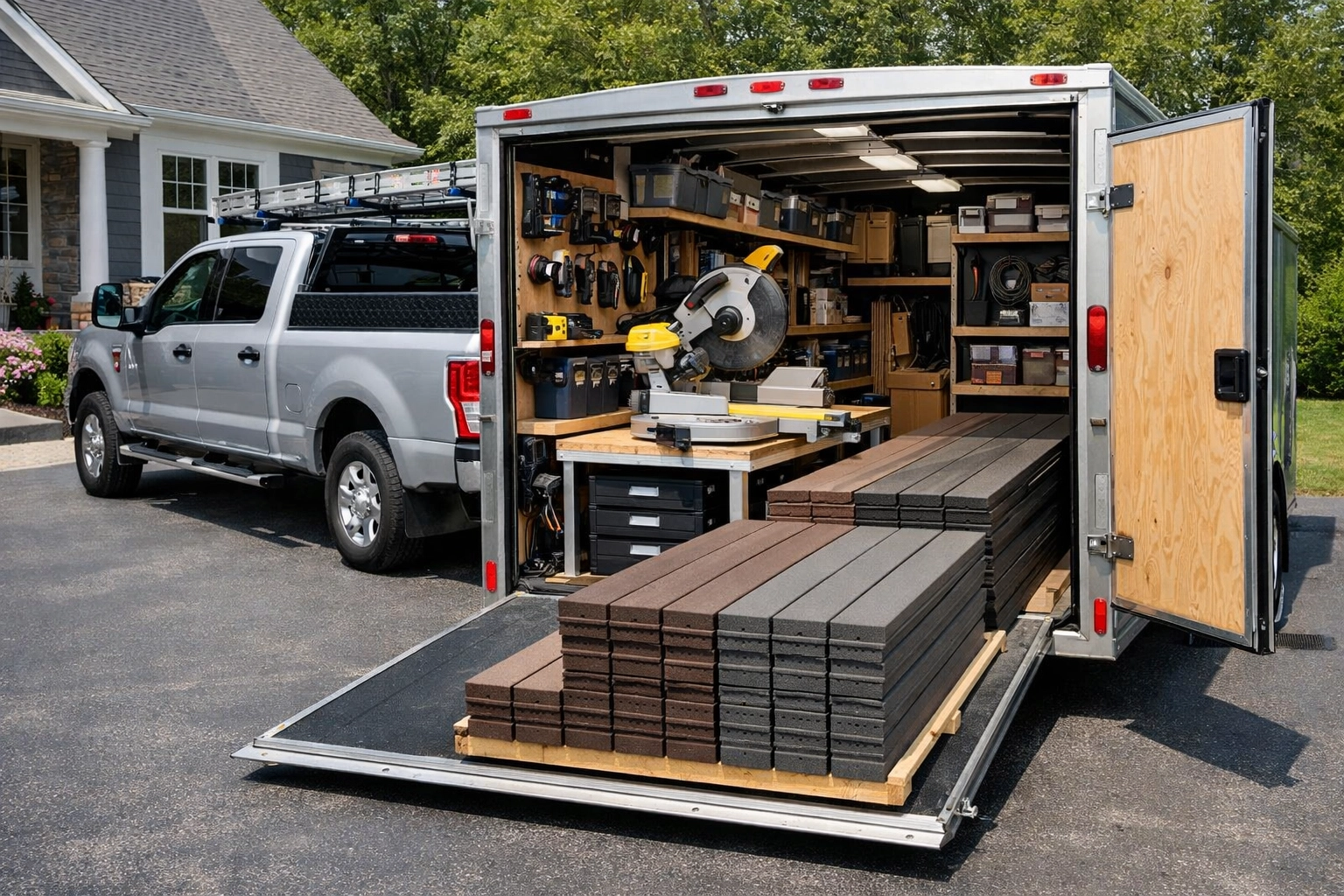
Your trailers, saws, nail guns, and augers are the lifeblood of your business. Standard property insurance often doesn't cover these items while they are in transit or on a job site. Inland Marine insurance protects your gear from theft and damage. Given the rising rates of construction site theft, this is an essential addition. For more on protecting your gear, see our previous article on Tool Theft strategies.
Commercial Auto Insurance
Your work truck is not a personal vehicle when it’s hauling a trailer full of pressure-treated lumber. Personal auto policies will often deny claims if the vehicle was being used for business purposes at the time of an accident. A commercial auto policy ensures that your fleet is covered, whether you're driving a single pickup or a fleet of flatbeds.
Mitigating Risk: Best Practices for the Modern Builder
Insurance is your second line of defense; your first line of defense is a solid risk management strategy. Implementing these best practices will not only lower your insurance premiums over time but also protect your reputation in the local community.
Mandatory Surveys for Fencing
Never rely on a homeowner’s "feeling" about where their property line is. Make it a company policy that a fresh survey is required for any fence installation near a boundary.
The Waiver: If a homeowner insists on a specific placement without a survey, have them sign a hold-harmless agreement and a boundary indemnification waiver. While this doesn't stop a neighbor from suing you, it provides a powerful defense in court.
Call Before You Dig: Always contact "Call Before You Dig" (CBYD) in Connecticut. Utility strikes are a leading cause of property damage claims for fence contractors.
Structural Documentation for Decks
Documentation is your best friend when a claim arises.
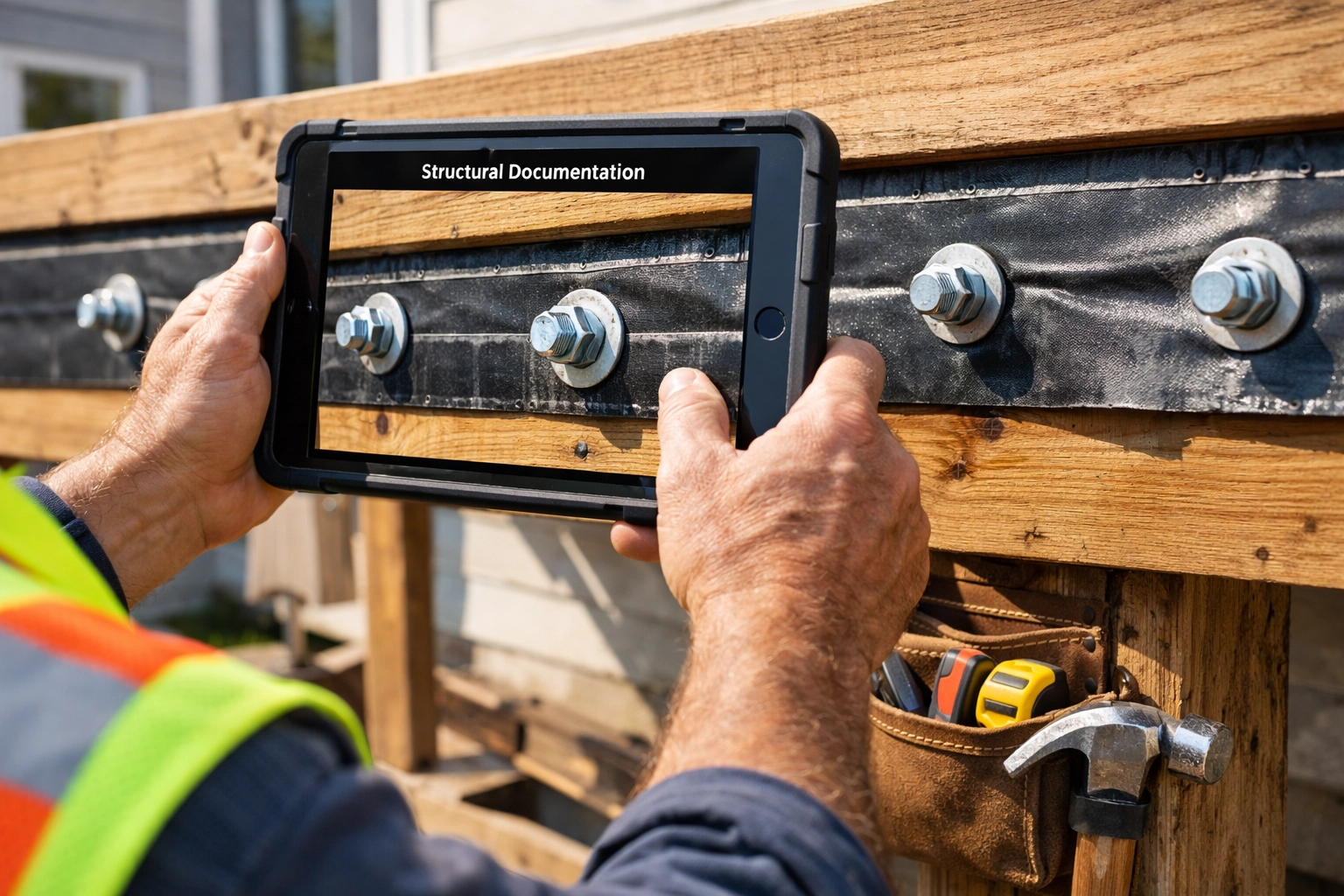
Photo Records: Take photos of the ledger board attachment, the flashing, the joist hangers, and the footing depth before the deck is closed in or finished.
Permit Compliance: Never skip the permit process. A deck built without a permit is a massive liability. If a collapse occurs and the deck wasn't permitted or inspected, your insurance company may have grounds to deny the claim based on "illegal acts" or "failure to follow building codes."
Manufacturer Specs: Follow the specific installation instructions for composite decking and railing systems. If the product fails and you didn't follow the specs, the manufacturer will shift the liability entirely onto you.
Site Safety Protocols
Maintain a clean and secure job site.
End-of-Day Cleanup: Remove debris, secure tools, and cover any open holes.
Signage: Post "Construction Zone" signs to warn visitors and neighbors of potential hazards.
Safety Training: Regularly train your crew on tool safety and fall protection, especially when working on elevated decks.
The Future of the Industry: Trends to Watch
The landscape for Connecticut contractors is shifting. From climate change to evolving legal standards, staying ahead of these trends is essential for long-term success.
Changing Weather Patterns
Connecticut is seeing more frequent and intense storms. This puts extra stress on outdoor structures. Fences are acting as sails in high winds, and decks are facing higher snow loads and increased moisture levels leading to rot. Builders who use superior fastening systems and rot-resistant materials will see fewer warranty claims and liability issues.
The "Right to Repair" and Litigation
We are seeing a trend where homeowners are quicker to involve attorneys for minor defects. This makes having a robust educational insurance library and a clear contract more important than ever. Your contract should clearly define what constitutes a "defect" versus natural weathering.
Increased Oversight on Ghost Policies
Connecticut authorities are cracking down on "ghost" workers' compensation policies, where a contractor claims to have no employees to get a lower rate but then uses "subcontractors" who are actually employees. If you are caught misclassifying workers, the fines are heavy. Ensure you understand the ghost workers' compensation policy rules before you hire your next crew.
Frequently Asked Questions
1. Does my general liability cover me if I accidentally build a fence on the neighbor's property?
Standard general liability covers "accidental" damage to the neighbor's property (like hitting their car), but it may not cover the cost to move the fence if it was a professional error in layout. You often need "Professional Liability" or a specific "Faulty Workmanship" endorsement to cover the costs of redoing the work.
2. Am I liable if a deck I built ten years ago collapses?
Potentially, yes. In Connecticut, the "Statute of Repose" limits the time someone can sue a contractor for structural defects, but it is often 7 to 10 years. However, if "gross negligence" is proven, those timelines can shift. This is why "Completed Operations" coverage is vital for long-term protection.
3. Do I need workers' comp if I only hire independent subcontractors?
If those subcontractors do not have their own workers' comp insurance, the state of Connecticut may consider them your employees in the event of an injury. You should always collect a Certificate of Insurance (COI) from every sub you hire. If they don't have coverage, you must cover them under your policy.
4. How can I reduce my insurance premiums?
The best way to reduce premiums is to prove you are a low risk. Maintain a clean claims history, implement formal safety programs, use written contracts for every job, and bundle your policies (Auto, Liability, Workers' Comp) with a single agency like Insure Connecticut LLC.
5. What should I do if a neighbor threatens to sue over a fence placement?
Stop work immediately. Document the current state of the project with photos. Review your contract and the survey used for the layout. Contact your insurance agent at Insure Connecticut LLC right away to report a "potential claim." Early intervention by an insurance adjuster can often settle disputes before they reach a courtroom.
6. Does my insurance cover damage caused by my heavy equipment to a client's driveway?
Yes, this falls under the "Property Damage" section of your General Liability policy. If your skid-steer cracks a stamped concrete driveway, your insurance will pay for the repairs, minus your deductible.
7. Why is "Care, Custody, and Control" important?
Standard liability policies often exclude damage to property that is in your "Care, Custody, and Control." If you are staining a deck and spill a bucket of sealer on the homeowner’s expensive outdoor kitchen, you need specific endorsements to ensure that the property you are working on is covered, not just the "surrounding" property.
Protecting Your Hard-Earned Reputation
In the fencing and deck building industry, your reputation is your most valuable asset. One significant lawsuit or property line dispute can wipe out years of hard work and positive word-of-mouth. By combining expert craftsmanship with a comprehensive insurance strategy, you ensure that your business remains resilient regardless of the challenges that arise on the job site.
At Insure Connecticut LLC, we understand the local market. We know the difference between a project in a historic district and a new build in the suburbs. We are here to provide the peace of mind you need to focus on what you do best: building the structures that Connecticut families call home. Don't leave your livelihood to chance. Whether you need to review an existing policy or are looking for a request a quote form to start fresh, our team is ready to help.
Protecting your business isn't just about avoiding a payout; it's about ensuring you have the resources to defend your name and continue growing your legacy. Let’s build a safer future for your company together. Reach out to Insure Connecticut LLC today at our West Hartford office or give us a call at 860-440-7324. Your next project deserves the best protection available.

Comments