.png)
Manufacturing Cyber Insurance Reviews: Finding the Right Carrier for Defense Work

For a machine shop in New Britain or an aerospace component manufacturer in East Hartford, cybersecurity is no longer a "IT problem." It is a production problem. If your CNC machines are locked by ransomware or your proprietary CAD files for a defense contract are exfiltrated, your business does not just slow down: it stops.
In the Connecticut defense supply chain, the stakes are even higher. With the full implementation of CMMC 2.0, having robust cyber insurance is often a prerequisite for maintaining your status as a Tier 1 or Tier 2 supplier. But which carrier actually understands the difference between a standard office network and a networked shop floor running 5-axis mills?
This guide reviews the top insurance carriers providing ct business insurance for the manufacturing sector. We look at their claims reputation, their understanding of defense requirements, and how they handle the unique "physical-meets-digital" risks of 2026.
How We Review Manufacturing Cyber Carriers
When evaluating business insurance ct options for the manufacturing sector, we use four specific criteria that matter to shop owners and plant managers:
Incident Response Speed: How fast can they get a forensics team on-site (or remote) to get your spindles turning again?
CMMC/Defense Familiarity: Does the carrier understand Controlled Unclassified Information (CUI) and the regulatory fallout of a breach involving Department of Defense (DoD) data?
Policy Flexibility: Can they wrap in coverage for error and omission insurance if a cyber-driven defect causes a product recall?
Risk Engineering: Do they provide tools to help you pass your next audit, or do they just cash your premium checks?
1. Chubb: The "Gold Standard" for High-Precision Manufacturers
Chubb is widely recognized as the market leader for a reason. They don’t just provide a policy; they provide an ecosystem. For Connecticut aerospace firms dealing with zero-tolerance precision, Chubb’s "Cyber Enterprise Solution" is designed for scale.
The Pros
Elite Incident Response: Chubb’s "Cyber Alert" app connects you to a 24/7 response team that understands manufacturing downtime.
Business Interruption Depth: They are excellent at calculating the actual loss of income when a production line goes dark, moving beyond simple "lost profits" to cover fixed costs and recovery expenses.
Global Reach: If you have a secondary assembly plant overseas, Chubb’s global footprint ensures consistent coverage.
The Cons
Premium Cost: You pay for the quality. Chubb is rarely the "budget" option.
Strict Underwriting: They will demand high levels of cybersecurity maturity. If you haven't implemented MFA (Multi-Factor Authentication) across your entire shop floor, they may decline to quote.

Visual: Close-up of high-precision aerospace turbine blades, representing the level of detail required in modern defense manufacturing.
2. Travelers: Best for Small-to-Mid-Sized CT Machine Shops
Based right here in Hartford, Travelers has a home-field advantage. They have spent decades insuring the "Arsenal of Democracy" in Connecticut and have a deep understanding of the local manufacturing landscape.
The Pros
Simplified Underwriting: For smaller shops (under $25M in revenue), Travelers offers a streamlined process that doesn't require a 50-page technical audit.
Local Adjusters: When a claim happens, there is a high likelihood your adjuster is familiar with ct business insurance law and the local vendor landscape.
Cyber+General Liability Integration: They are masters at bundling cyber with your existing commercial auto insurance or general liability to close coverage gaps.
The Cons
Lower Limits: They may be hesitant to offer the massive $10M+ limits required by some massive defense primes.
Tech Support: While their claims team is great, their proactive "pre-breach" tech tools aren't quite as robust as some of the tech-native carriers.
3. Zurich: Best for International Supply Chain Risk
If your Connecticut facility is part of a larger international group or if you rely heavily on specialized materials from overseas, Zurich’s cyber liability coverage is built for complexity.
The Pros
Supply Chain Focus: Zurich excels at covering "contingent business interruption": when a supplier’s cyber attack stops your production.
Experience: With over a decade in the cyber market, they have a massive database of manufacturing claims to draw from when pricing risk fairly.
High Capacity: They can often sit on top of other policies to provide excess layers of protection.
The Cons
Complex Policies: Their forms are dense. You need a dedicated broker to translate the legalese to ensure your shop floor equipment is actually covered.
Slow to Pivot: As a large global entity, they can be slower to adjust their forms to meet rapidly changing DoD requirements compared to smaller, nimbler carriers.
4. Beazley: The Tech-Forensics Specialists
Beazley is often the go-to for manufacturers who are terrified of the "silent" hack: where someone sits on your network for six months stealing blueprints.
The Pros
Beazley Breach Briefings: They offer incredible data on current threats specifically targeting the industrial sector.
Forensics First: Their policies are heavily weighted toward the cost of "cleaning" the network and verifying that no backdoors remain.
Regulatory Defense: They provide strong coverage for the legal costs associated with regulatory fines, which is a major concern for those under CMMC scrutiny.
The Cons
Focus on Digital: Sometimes their policies can feel a bit "IT-centric," requiring extra work to ensure that physical damage to a CNC controller caused by a hack is explicitly covered under inland marine insurance or a cyber sub-limit.
Carrier Performance Comparison Table (2026)
Carrier | Best For | Claims Handling | Tech Support | Defense/CMMC Ready |
Chubb | Large Aerospace | Exceptional | Industry Leading | High |
Travelers | Small/Mid Machine Shops | Reliable/Local | Standard | Moderate |
Zurich | International Operations | Solid | Robust | Moderate |
Beazley | Data/IP Protection | Fast/Forensic | High-Tech | High |
Coalition | Tech-Forward Shops | Automated/Proactive | Excellent (AI-driven) | Rising |
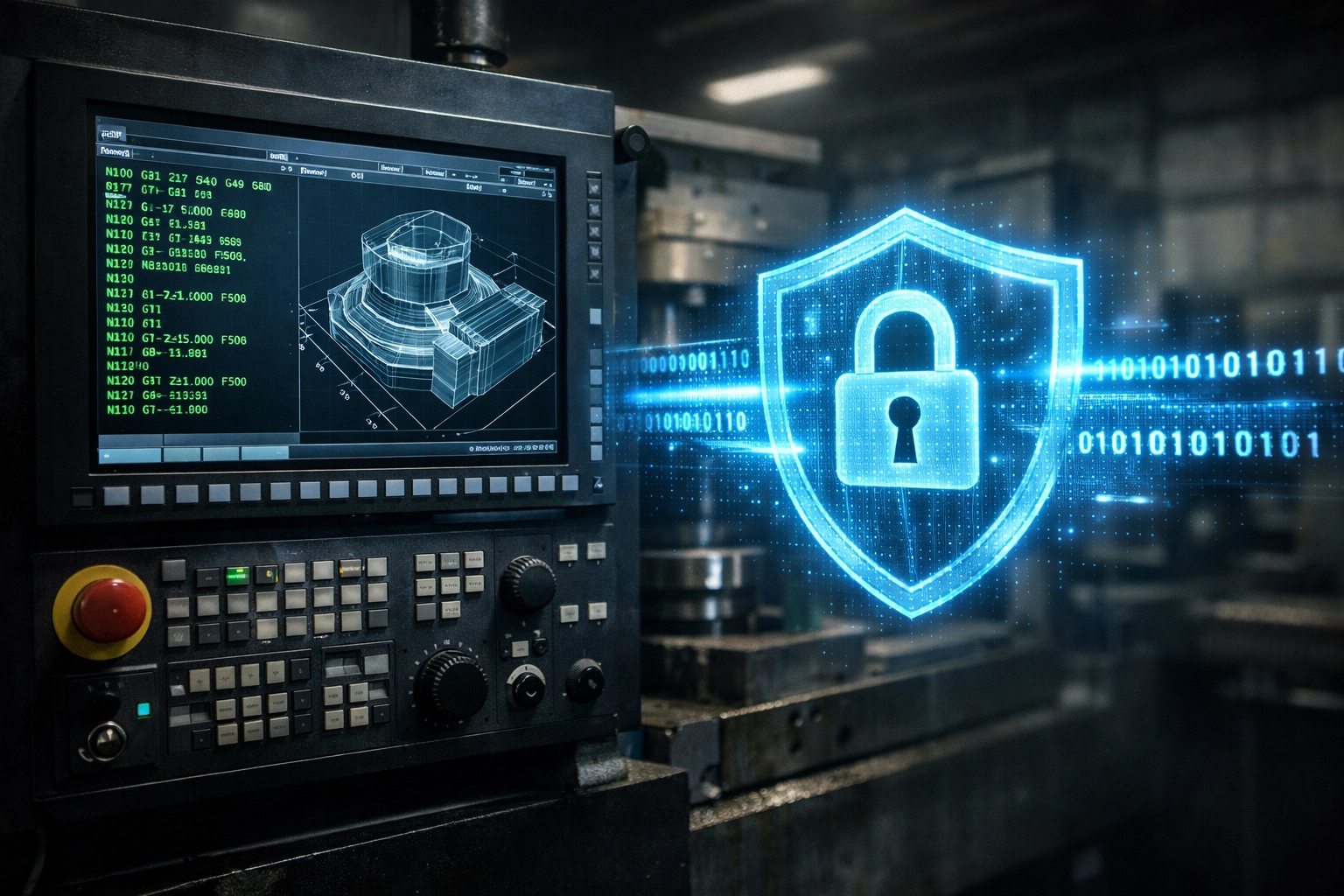
Visual: An industrial control panel with a digital cybersecurity overlay, highlighting the intersection of hardware and software security.
Why "Standard" Cyber Policies Fail CT Defense Manufacturers
The biggest mistake we see at Insure Connecticut LLC is a manufacturer buying a "tech" cyber policy that was written for a law firm or a retail store. Those policies focus on "Privacy Liability": the loss of credit card numbers or SSNs.
For a defense contractor, your biggest risk isn't a lost credit card. It's the loss of Controlled Unclassified Information (CUI). If a carrier’s policy doesn't explicitly address the costs of notifying the DoD or the massive business interruption caused by a government-mandated "stop-work" order during an investigation, the policy is essentially worthless.
Furthermore, you must ensure your policy covers Bricking. If a hacker sends a command that causes your $500,000 Swiss Lathe to crash its spindle into the housing, is that a "cyber" claim or a "property" claim? Most standard policies point the finger at the other one, leaving you with the bill.
The Broker Advantage: Why Insure Connecticut LLC?
Finding the right carrier is only half the battle. The other half is making sure the policy is tailored to your specific shop floor.
At Insure Connecticut LLC, we are independent brokers. We don’t work for Chubb or Travelers; we work for you. Here is why that matters for a CT manufacturer:
Carrier Competition: We take your specs and make these carriers compete for your business. This is the only way to ensure you aren't overpaying for business insurance ct.
Contractual Review: We look at your contracts from primes like Raytheon, Lockheed Martin, or Electric Boat to ensure your insurance limits meet their specific requirements.
Claims Advocacy: If a carrier tries to deny a claim based on a technicality, we are the ones who step in. We know the industry, we know the law, and we know how to fight for our clients.
The Local Touch: We understand the Connecticut landscape. We know that a power outage in the Naugatuck Valley is different from a data breach in Stamford. We are your neighbors, located right in West Hartford.
If you are a business owner or partner looking at succession planning or risk mitigation, you might also be interested in disability buy-out insurance for business owners/partners to protect the long-term viability of your firm.
The "Hug": Why We Do What We Do
We know that manufacturing is the backbone of Connecticut. Our state’s history was built on the precision of the machine tool industry and the bravery of aerospace pioneers. When we walk onto a shop floor and hear the hum of the machines and smell the coolant, we don't just see a "risk" to be insured: we see a legacy to be protected.
We understand the pressure you are under. You're dealing with labor shortages, rising material costs, and now, an ever-evolving digital threat landscape. Our goal is to take the "insurance headache" off your plate so you can focus on what you do best: making things that matter. We aren't just your insurance brokers; we are your partners in keeping Connecticut's industrial engine running.

Visual: A group of diverse manufacturing professionals reviewing a blueprint on a clean, modern factory floor, symbolizing partnership and precision.
FAQ: Manufacturing Cyber Insurance in Connecticut
1. Does my General Liability policy cover cyber attacks?
Almost certainly not. Most modern General Liability policies have "Cyber Exclusions." If you don't have a standalone cyber policy or a very specific endorsement, you are likely self-insuring that risk.
2. We are CMMC Level 1 compliant. Do we still need cyber insurance?
Yes. CMMC is a set of security standards, but it is not a guarantee against a breach. In fact, being "compliant" makes you a more attractive target because hackers know you handle sensitive data. Insurance provides the financial recovery that compliance alone cannot.
3. How much coverage do I actually need for a small shop?
For most CT machine shops with $5M–$10M in revenue, a $1M limit is the bare minimum. However, defense contracts often require $3M or $5M limits. We recommend a "Limit Adequacy" study to determine your actual maximum foreseeable loss.
4. What is "Social Engineering" coverage, and do I need it?
Social engineering covers losses where an employee is tricked into wiring money to a fraudulent account (Business Email Compromise). This is the #1 cause of financial loss for manufacturers today. You absolutely need this coverage.
5. Can I get a discount if I have the CCAT CAP Grant upgrades?
Yes. Carriers love seeing that you've used the CCAT CAP Grant to upgrade your firewalls and security protocols. It shows you are a "proactive" risk, which can lead to lower premiums and higher limits.
6. Will cyber insurance pay my ransom if I'm attacked?
While most policies can cover ransom payments, carriers and the FBI strongly discourage it. Most policies today focus on "Ransomware Reimbursement," but they prioritize "Restoration": using backups and forensics to rebuild your systems without paying the criminals.
Next Steps for Your Shop
Don't wait for a "System Offline" message to find out if your carrier is the right fit. The landscape of ct business insurance is moving too fast for guesswork.
Here is your action plan:
Review your current policy for "Bricking" and "CUI" coverage.
Audit your current MFA implementation: carriers are getting stricter by the day.
Request a quote form from Insure Connecticut LLC to see how your current rates compare to the 2026 market.
We are here to help you navigate the complexities of defense-grade insurance. Let’s make sure your shop is protected, your contracts are secure, and your legacy is safe.
Insure Connecticut, LLC 71 Raymond Road, West Hartford, CT 06107 860-440-7324
Comments