.png)
The Prestige of the Plate: A Guide to Connecticut’s 'Early American' Registration
- W. Tom Polowy, MS

- Apr 8
- 7 min read
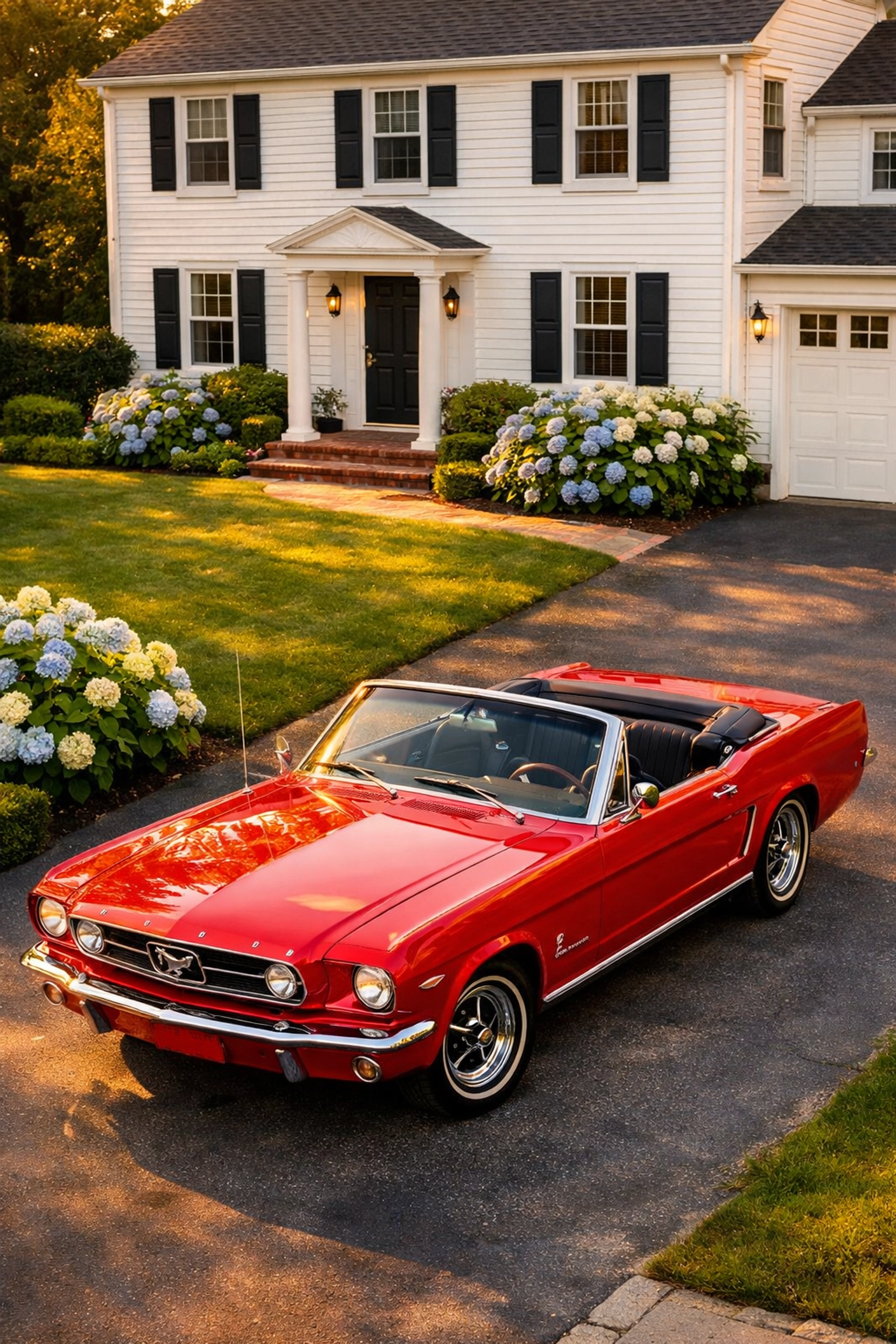
There is a specific kind of magic that happens on a Sunday morning in Connecticut. You’re driving down Route 169 or winding through the Litchfield Hills, and you see it: the glint of polished chrome, the unmistakable silhouette of a 1965 Mustang or a perfectly preserved 1980s Mercedes-Benz. But as an enthusiast, your eyes don't just stop at the paint job. They drift down to the bumper, looking for that specific badge of honor, the "Early American" plate.
Welcome to Day 8 of Collector Car Month here at Insure Connecticut, LLC. If you’ve spent any time at local cars and coffee events from West Hartford to Mystic, you know that these plates are more than just legal identification; they are a statement of historical preservation. Whether you are a lifelong collector or you’ve just inherited your grandfather’s pristine Buick, understanding the "Early American" registration is essential. At Insure Connecticut, LLC, we don’t just help you find the right policy; we help you navigate the entire lifestyle of owning a classic. From ensuring your Personal Articles Floater covers your high-end restoration tools to finding the perfect agreed-value coverage, we are your partners on the road.
The History and Meaning Behind the 'E/A' Legend
The "Early American" plate series isn't a new trend. It’s a tradition that dates back to 1952. Originally, these were porcelain plates with a striking black-on-white aesthetic, featuring the stacked "E/A" legend. Back then, "Early American" was a literal descriptor, the roads were dominated by domestic steel. However, as the decades rolled by and the 20-year rolling window for eligibility continued, the name became a charming misnomer. Today, you’ll see that "Early American" designation on everything from vintage Toyotas to classic Porsches.

Over the years, the design has evolved from flat screened plates to the modern reflective versions we see today. Since late 2015, the DMV has utilized an alphanumeric format (00-ABCD) to accommodate the growing number of enthusiasts in the Nutmeg State. While the look has changed, the prestige remains. Registering your vehicle this way signals to the world, and the tax assessor, that your car is a piece of history, not just a daily commuter.
Why Go 'Early American'? The Benefits and the Fine Print
Choosing an Early American registration isn't just about the vintage aesthetic. It carries significant practical weight, particularly regarding how your vehicle is treated by local municipalities and the state.
The Tax Advantage: The $500 Assessment Rule
Perhaps the most compelling reason Connecticut residents seek these plates is the "antique" tax status. Under Connecticut General Statute § 12-71(b), a vehicle that is at least 20 years old and maintained solely for use in exhibitions, club activities, parades, or other functions of public interest is assessed at a maximum value of $500 for property tax purposes.
Think about that for a second. If you own a pristine 1990s Ferrari worth six figures, your local property tax bill could be astronomical if it were registered as a standard passenger vehicle. With an Early American registration, that assessment is capped, potentially saving you thousands of dollars every year. This is a crucial detail for business owners who might keep a fleet of classic promotional vehicles. We often discuss these types of savings when reviewing Connecticut fleet insurance, as every dollar saved on taxes is a dollar that can go back into maintenance and restoration.
The "Year of Manufacture" (YOM) Privilege
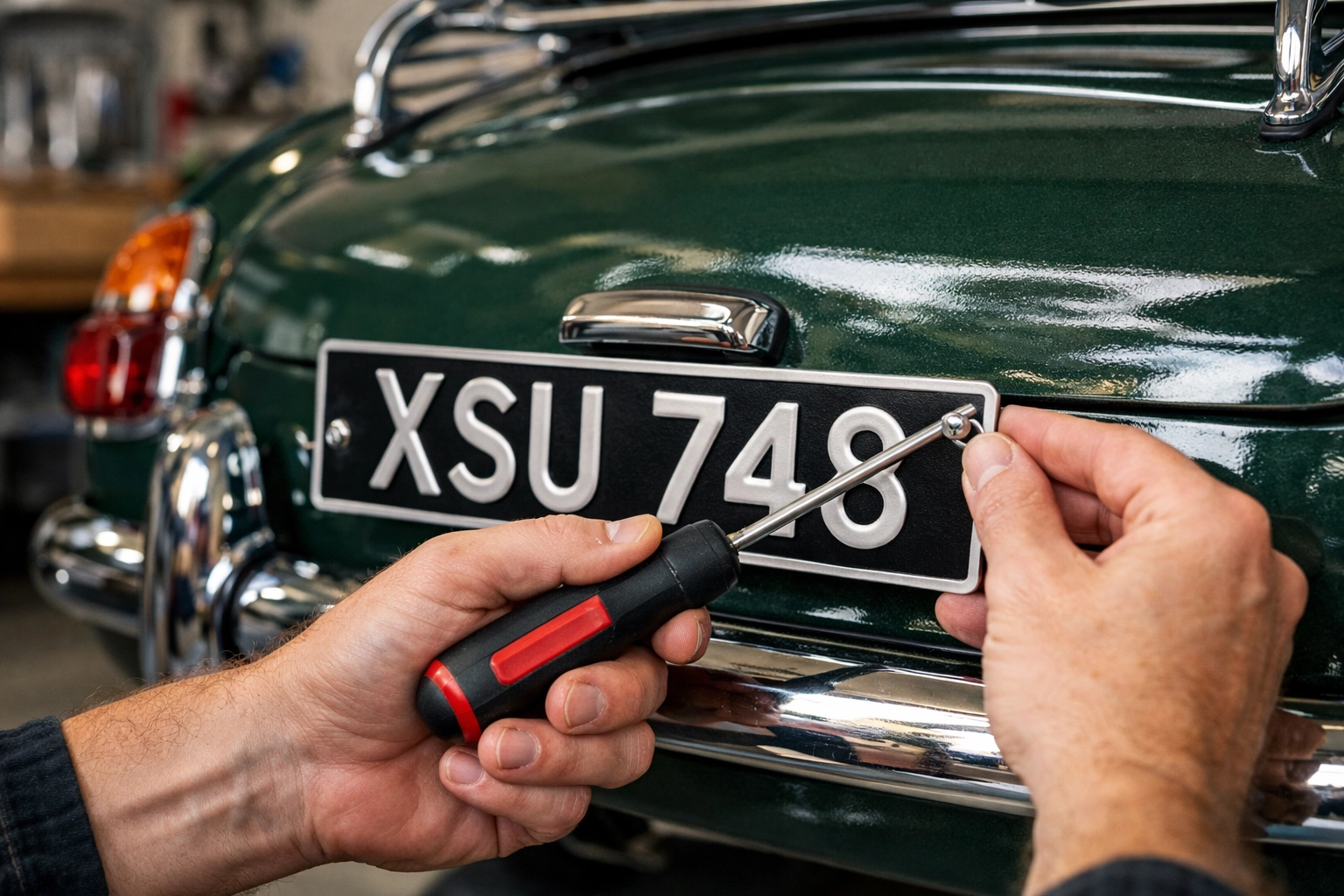
Connecticut offers a unique "Year of Manufacture" program. This allows you to display authentic, period-correct plates from the actual year your car was built. If you have a 1966 Corvette, you can find a set of original 1966 CT plates at an antique show or online. However, there’s a catch: you must still maintain a valid Early American registration. You carry the modern EA plates in the trunk while displaying the vintage ones on the bumpers. It’s the ultimate way to complete a period-correct restoration.
The Trade-Off: Usage Restrictions
The prestige of the plate comes with a "gentleman’s agreement" regarding usage. Connecticut law is clear: these plates are for vehicles used primarily for club activities, exhibits, and parades. If you are caught using your "Early American" registered 1985 Chevy Blazer as a daily driver for your construction business, you run into trouble. For those who need a vehicle for daily work, we highly recommend looking into commercial auto insurance options instead to ensure you have the right liability protection.
How to Get Your Early American Plates: A Step-by-Step Guide
Navigating the Connecticut DMV can feel like a restoration project itself, it takes patience, the right tools, and attention to detail. If you’re heading to the DMV in Hartford or any of the local branches, here is exactly what you need to do to secure your antique status.
Step 1: Confirm Eligibility
Your vehicle must be at least 20 years old. In 2026, this means any vehicle from the model year 2006 or earlier is eligible. It must also be in a condition that reflects its status as a collector's item.
Step 2: Gather Your Paperwork
You will need:
Form H-13B: The standard Connecticut Registration application.
Proof of Insurance: This is where we come in. You cannot register an antique vehicle without a valid Connecticut insurance card. At Insure Connecticut, LLC, we specialize in classic car policies that offer "Agreed Value" coverage, which is far superior to the "Actual Cash Value" found in standard policies.
Ownership Documents: A valid title is required for vehicles newer than 20 years, but for older classics, a previous registration or a supplemental assignment of ownership may be necessary.
Step 3: The DMV Visit
While many services are moving online, specialized registrations like Early American often benefit from an in-person visit or a dedicated mail-in process to ensure the antique status is properly coded for tax purposes. If you’re at the Hartford DMV, be sure to double-check that your "Antique" box is checked on the registration form.
Step 4: Local Tax Assessor Notification
Once you receive your plates, it is a best practice to notify your local town’s tax assessor. While the DMV system usually updates the town, you want to ensure that $500 assessment cap is applied to your next tax bill.
Insuring the Legend: Why Standard Policies Fall Short
One of the biggest misconceptions we encounter at Insure Connecticut, LLC is that a classic car can just be "added" to a standard auto policy. While you can do that, it is often a mistake.
Standard auto insurance is designed for "depreciating assets." If you wreck a 2023 Honda, the insurance company wants to pay you the lowest possible market value. Classic cars, however, are "appreciating assets." A standard policy won't account for the $20,000 you spent on a period-correct engine rebuild or the rarity of your split-window coupe.
When we help you with classic car insurance, we look for policies that offer:
Agreed Value: You and the insurer agree on what the car is worth before a loss happens.
Specialized Claims Handling: If you need a repair, you want a shop that knows how to handle vintage lead-work and lacquer paint, not a high-volume collision center.
Inflation Guards: As the market for classic cars rises, your coverage should too.
For our clients who are business owners and use classic cars for marketing, we also dive deep into how commercial general liability interacts with your specialized vehicle. If your 1950s truck is parked at a trade show and someone trips over the bumper, you need to know you're covered.
Current Trends and the Future of Antique Plates in CT
The world of classic cars is shifting. We are seeing a massive influx of "Youngtimers", vehicles from the 1990s and early 2000s, entering the Early American registration bracket. This has led to a cultural shift at local car shows. The Hartford DMV has seen a rise in registrations for Japanese domestic market (JDM) imports and early SUVs, which are now officially "antiques."
The Rise of Digital Registrations
Connecticut is modernizing. While the plates remain physical, the tracking of these vehicles is becoming more integrated. There have been discussions in the legislature about tightening the "usage" rules to ensure the tax break isn't being abused by people driving 20-year-old beaters as daily commuters. This makes it more important than ever to keep your vehicle in "collector" condition.
Adaptation at Insure Connecticut, LLC
As technology evolves, we are also seeing the intersection of classic cars and modern tech. Some collectors are adding telematics to their vintage fleets to monitor health and location. We stay ahead of these trends, just as we do with trucking telematics, to help our clients find the most innovative ways to protect their investments.

Frequently Asked Questions
How do I know if I have the right amount of coverage for my classic? You should have an appraisal performed or use market guides like Hagerty or Hemmings. We then set an "Agreed Value" on your policy. If the market shifts significantly, call us at 860-440-7324 to update your limit.
Can I use Early American plates on a car I drive to work? Legally, no. These plates are reserved for exhibition and club use. If you need a vehicle for work, even an older one, it should have standard passenger or commercial auto plates.
What happens if my antique car is damaged in a storm? Standard homeowners insurance usually excludes motor vehicles. You need a dedicated auto policy with comprehensive coverage. In Connecticut, where winter storms can be brutal, ensuring your storage facility is also covered is key. See our Winter Storm Guide for more on property protection.
Are motorcycles eligible for Early American plates? Yes! Connecticut issues Early American motorcycle plates following the same 20-year rule and usage restrictions.
Can I bundle my classic car insurance with my business or home policy? Often, yes. Bundling can lead to significant savings. We specialize in looking at your entire "risk portfolio," from your small business general liability to your weekend cruiser.
Conclusion: Drive the Legend, Protect the Investment
The "Early American" plate is a symbol of Connecticut’s rich automotive culture. It represents a commitment to history, a savvy financial move for tax purposes, and a ticket into a community of passionate enthusiasts. Whether you are navigating the paperwork at the Hartford DMV or sourcing a vintage 1970s plate for a YOM display, the process is part of the joy of ownership.
At Insure Connecticut, LLC, we understand that your collector car is more than just a machine. It’s an era, a memory, and a significant asset. Our team at 71 Raymond Road in West Hartford is here to make sure that as you celebrate Collector Car Month, you do so with the peace of mind that only expert, localized insurance advice can provide.
Don’t leave your classic's future to chance. Whether you're worried about flood insurance gaps in your garage or you need to update your fleet's liability, we are here to help.
Ready to protect your piece of history? Contact Wojciech Polowy and the team at Insure Connecticut, LLC today at 860-440-7324 for a comprehensive review of your classic car coverage.

Comments